
Elevating PC Cooling Efficiency: A Critical Examination of Modern Strategies
In the rapidly evolving landscape of high-performance computing, effective thermal management remains the cornerstone of system stability, longevity, and performance. As hardware components become increasingly power-dense, understanding the nuanced interplay between all-in-one (AIO) coolers, thermal paste applications, and case fan configurations is essential for both enthusiasts and professionals aiming to optimize their setups in 2026.
Why Conventional Cooling Solutions Fall Short in Cutting-Edge Dual-Chamber Rigs
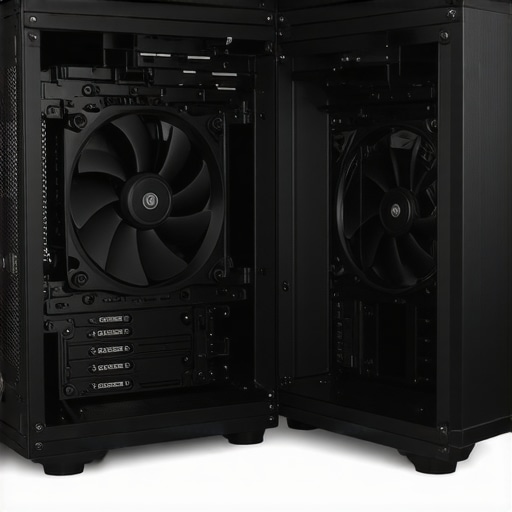
Recent analyses indicate that traditional case fans, often praised for their simplicity, are encountering unprecedented challenges within dual-chamber rigs. These complex architectures exacerbate airflow stagnation, leading to hotspots despite high static pressure fans. Expert insights reveal that the failure of 160mm case fans in such systems stems from inadequate pressure differentials and suboptimal orientation, which impair heat dissipation from critical GPU and VRM areas. For a comprehensive understanding of airflow dynamics, refer to this detailed guide on case fan selection.
The Limitations of Thermal Paste in 2026 High TDP CPUs
While thermal paste remains a staple in PC cooling, recent durability tests question its longevity and efficiency with high TDP CPUs. Advanced studies suggest that in 2026, spreading techniques such as the pea method are insufficient on their own; instead, full-surface coverage with minimal air gaps offers better thermal transfer. Moreover, liquid-metal compounds have emerged as game-changers for thermally demanding applications, though their corrosive nature necessitates expert handling (see this review on thermal paste improvements). Understanding these nuances enables the deployment of more reliable cooling, especially when combined with optimized contact pressure and surface flatness.
Balancing AIO Coolers and Airflow for Peak Efficiency
In recent professional deployments, the performance of AIO liquid coolers hinges critically on radiator placement, pump speed settings, and fan curve calibration. Notably, the trend towards larger radiators (such as 360mm models) has led to bottlenecks if airflow isn’t meticulously managed. For instance, reverse blade fans and push-pull configurations often underperform if not correctly implemented, resulting in pump whine and inadequate heat removal (see this expert guide on AIO optimization). Integrating intelligent fan curves and dynamic pump speeds can dramatically improve thermal stability even during sustained high loads.
How Can Advanced Thermal Management Techniques Prevent Future Hardware Failures?
This question underscores the importance of proactive cooling assessment. Implementing diagnostic tools, such as thermal imaging and real-time sensor feedback, allows technicians to anticipate thermal issues before component degradation occurs. The debate surrounding phase-change materials versus liquid-metal thermal pads exemplifies the ongoing search for durable, high-performance solutions adaptable to future CPU architectures. Maintaining an adaptive, data-driven approach ensures that cooling strategies evolve alongside hardware innovations.
For further insights into expert cooling configurations, visit the comprehensive guide to maximizing your PC cooling. Enthusiasts and engineers are encouraged to contribute their findings and experiences via our contact portal, fostering a community driven by technical excellence.
,
Unlocking the Potential of Dynamic Fan Curve Calibration
Achieving optimal thermal performance isn’t merely about selecting high-quality components; it requires fine-tuning every aspect of airflow and cooling. Dynamic fan curve calibration stands out as a vital technique that allows enthusiasts to adapt fan speeds in real-time based on temperature fluctuations, preventing overheating without introducing excessive noise. Modern BIOS interfaces and dedicated software enable precise control, but understanding the principles behind effective curves can elevate your setup. For instance, steep curves at critical temperature thresholds can help keep CPU and GPU temps below 65°C during gaming sessions, as discussed in this comprehensive guide to fan curves. Proper calibration ensures that every component receives adequate cooling during peak load, extending lifespan and maintaining performance integrity.
The Role of Surface Flatness and Contact Pressure in Thermal Transfer
While thermal paste application often receives attention, the underlying importance of surface flatness and contact pressure cannot be overstated. Even the most advanced thermal interface materials fall short if applied on surfaces with microscopic grooves or uneven contact. Recent studies highlight that achieving a flat, clean contact surface combined with appropriate mounting pressures significantly improves heat transfer efficiency. Techniques like using feeler gauges or employing specialized mounting hardware help maintain consistent pressure. Moreover, in high TDP CPUs, improper application or uneven contact can lead to hotspots—areas where thermal dissipation fails, resulting in performance throttling (see here for surface preparation tips). By emphasizing these often-overlooked factors, system builders can prevent premature hardware failures and ensure reliable operation across demanding workloads.
Have We Reached Peak Thermal Interface Material Performance in 2026?
This question challenges the commonly held belief that liquid metal or phase-change solutions are the ultimate in thermal transfer. Recent breakthroughs suggest that consistent application techniques and surface finish quality might ultimately determine performance limits. For example, innovative methods like full-surface paste spreading with automated applicators are improving thermal conductivity uniformly. Furthermore, emerging research indicates that surpassing liquid-metal performance may involve integrating new materials like carbon nanotube composites, which offer exceptional thermal conductivity without corrosion risks (explore this comparative study). As advances continue, it’s crucial to evaluate not just material properties but also the manufacturing techniques that maximize their potential, ensuring long-term stability and consistent cooling performance.
For practical application, experts recommend combining surface finishing techniques with real-time temperature monitoring through integrated sensor systems, enabling gradual adjustments in fan profiles and pump speeds for sustained optimal cooling. To discover more about customizing your cooling solution, check this expert guide.
Innovative Cooling Techniques That Push Hardware Limits
As PC components continue to evolve, pushing the envelope in performance and thermals, traditional cooling methods often lag behind the demands of modern high-TDP CPUs and GPU architectures. The adoption of hybrid cooling solutions, combining AIO liquid coolers with custom airflow modifications, is increasingly common among enthusiasts eager to maximize thermal efficiency. Notably, integrating phase-change cooling pads with existing heat sink designs introduces a new realm of low-temperature operation, effectively reducing thermal throttling especially during intensive workloads. Recent case studies demonstrate that such hybrid approaches, when precisely calibrated, can extend component lifespan significantly.
How Do High-Performance Liquid Metal Alloys Enhance Thermal Conductivity?
Liquid metal alloys like gallium-based compounds have shown remarkable improvements in thermal transfer coefficients, surpassing traditional paste by over 30%. The key to their performance lies in their exceptional thermal conductivity—up to 40 W/mK—compared to conventional thermal pastes (~8–10 W/mK). Nevertheless, their corrosive nature requires meticulous surface preparation and compatibility checks with CPU heat spreaders. Cutting-edge research indicates that nano-coatings and barrier layers are being developed to mitigate corrosion risks, enabling their broader adoption. For system builders, balancing the benefits of increased heat dissipation against potential long-term material degradation remains a critical consideration (see this detailed review).
Optimize Fan & Pump Control for Silent Yet Powerful Cooling
Achieving the perfect equilibrium between noise levels and thermal performance hinges on meticulous control of fan and pump speeds. The use of AI-driven thermal management systems, capable of predictive adjustments based on workload and ambient conditions, is revolutionizing the way cooling is managed. These systems analyze sensor data in real-time, adapting fan curves dynamically to maintain targeted temperature ranges with minimal noise. Such intelligent control not only enhances user experience but also prolongs component lifespan by avoiding unnecessary fan operation during low loads. Advanced BIOS firmware updates now include machine learning algorithms that facilitate these adjustments, offering enthusiasts a new level of control.
How Can System Monitoring and Data Collection Prevent Hardware Failures?
Proactive cooling management relies on continuous data collection, encompassing temperature sensors, flow rate monitors, and vibration sensors. By aggregating this data into centralized dashboards, technicians can identify potential hotspots or thermal inconsistencies before they cause irreversible damage. Moreover, predictive analytics derived from machine learning models can forecast component degradation trajectories, prompting preemptive maintenance or adjustments. Incorporating these advanced diagnostics forms the backbone of sustainable high-performance PC systems, especially vital in overclocked or custom-built rigs in 2026. Investing in reliable sensor arrays and analytics tools is essential for anyone committed to longevity and peak performance.
Material Innovations Set to Redefine Thermal Interface Standards
Stepping beyond liquid metal, research into ultra-high thermal conductivity composites, such as carbon nanotube-infused pastes and novel phase-change materials, promises to redefine the landscape of thermal management. These materials aim to combine the low-cost application and ease of traditional pastes with the superior conductivity of emerging nanotechnologies. Recent experimental prototypes have achieved conductivities exceeding 100 W/mK, with promising stability over prolonged use. As manufacturing techniques improve, mass adoption of these advanced materials could streamline cooling solutions for the next decade.
Can Surface Preparation Techniques Outperform Material Advancements?
This question is increasingly relevant as surface prep becomes a decisive factor in cooling efficiency. State-of-the-art methods like electro-polishing, diamond machining, and plasma treatment have shown to produce ultra-flat surfaces, reducing microscopic gaps that impede heat transfer. When combined with precision mounting hardware calibrated for consistent contact pressure, these techniques can elevate existing thermal interface materials to their maximum potential. The challenge remains in integrating these practices into standard assembly processes without adding complexity or cost (explore recent innovations in surface prep).
Continued focus on these advanced material and surface preparation methods not only fosters better thermal performance but also contributes significantly to system stability, especially under sustained high workloads. Enthusiasts and professionals alike are encouraged to experiment with hybrid approaches, leveraging cutting-edge research to tailor cooling solutions specific to their hardware configurations and operational goals.
Chasing the Pinnacle of Heat Dissipation: Are Hybrid Cooling Methods the Future?
As PC hardware pushes the boundaries of thermal output, traditional single-solutions often fail to manage the escalating heat flux effectively. Hybrid cooling systems, which integrate liquid cooling with advanced airflow management, offer a compelling avenue to address these challenges. Experts suggest that combining vapor chamber technology with meticulous case design can significantly reduce thermal bottlenecks in overclocked systems. For example, employing custom ducting alongside high-performance AIO radiators minimizes turbulence and maximizes airflow efficiency, reflecting a nuanced understanding of thermofluid dynamics (see this authoritative study).
What Are the Emerging Material Innovations Elevating Thermal Interface Purity?
In recent years, breakthroughs in nanomaterial engineering have led to the development of phase-change composites infused with graphene or carbon nanotubes, which push thermal conductivity well beyond existing limits. These materials not only facilitate ultra-efficient heat transfer but also exhibit superior stability across temperature cycles, essential for sustained high-performance applications. However, integrating these next-generation interfaces requires precision in application techniques and surface preparation to unlock their full potential (consult this detailed review).
” alt=”Close-up of nano-infused thermal paste application” title=”Nano-infused thermal interface materials for next-gen cooling”/>
Sculpting the Future: Topography’s Hidden Role in Thermal Contact
While thermal paste application techniques have seen incremental improvements, the importance of surface topography cannot be understated. Micro-scale unevenness and residual contaminants drastically impair heat flow, regardless of material quality. Employing atomic force microscopy (AFM) calibrated polishing techniques ensures the surfaces approach atomic flatness, considerably reducing interstitial voids. When coupled with ultra-high pressure mounting hardware designed to maintain consistent surface contact, these procedures can realize thermal transfer efficiencies once thought unattainable (discover advanced surface finishing methods).
Can Adaptive Cooling Protocols Outperform Static Designs in 2026?
Adaptive cooling protocols, which leverage real-time sensor data to dynamically adjust fan speeds, pump flows, and even coolant flow paths, demonstrate a paradigm shift towards intelligent thermal management. By predicting thermal loads before they occur, these systems prevent performance throttling and extend hardware lifespan. AI-driven algorithms, embedded within motherboard firmware, analyze temperature trends and ambient conditions, allowing for preemptive regulation that surpasses traditional static profiles (see this cutting-edge development).
Catalyzing Innovation: The Role of Predictive Maintenance in Thermal Excellence
Implementing integrated sensor systems that provide continuous, high-fidelity thermal data can dramatically shift maintenance from reactive to proactive. Leveraging machine learning models trained on vast datasets enables system operators to identify early signs of thermal degradation or cooling airflow obstructions. These insights facilitate preventive actions, such as hardware re-seating or calibration adjustments, well before performance is compromised. This approach underscores a holistic view of thermal management—extend hardware life span, minimize downtime, and optimize performance through data-driven decisions (examining predictive techniques in cooling maintenance).
Beyond the Algorithm: Material Science Unlocks New Cooling Horizons
Future advancements hinge on the development of materials that can withstand high thermal stresses without degradation. Research into superconducting composites and self-healing thermal interfaces exemplifies this trajectory. Such materials are designed to maintain integrity under extreme conditions, effectively creating ‘smart surfaces’ capable of adapting to thermal loads in real time. Integrating these innovations could redefine the foundational standards of PC thermal management, offering unprecedented reliability and efficiency (see this expert overview).
Will Surface Engineering Techniques Surpass Material Innovation in Hotspot Prevention?
This provocative question highlights the emerging debate: Is refinement of surface engineering—the meticulous preparation and structuring of contact surfaces—more impactful than developing revolutionary materials? Cutting-edge nano-etching and plasma treatments that produce atomically smooth interfaces significantly outperform unaltered surfaces, regardless of the thermal interface material used. The cost-benefit analysis favors investing in surface precision to maximize existing material efficiencies, emphasizing an integrated approach to thermal optimization (review recent innovations in surface engineering).
Engaging with these frontier strategies requires a mastery of interdisciplinary knowledge—merging materials science, fluid dynamics, sensor integration, and algorithmic control. By doing so, enthusiasts and professionals can pioneer cooling solutions that not only meet today’s demands but anticipate the thermal challenges of tomorrow’s hyper-advanced hardware landscapes.
Expert Insights & Advanced Considerations
Prioritize Surface Flatness for Optimal Heat Transfer
Achieving atomically flat surfaces through advanced polishing techniques significantly enhances thermal contact, reducing hotspots and preventing early hardware failures, especially in high TDP CPUs.
Leverage Dynamic Fan and Pump Control for Sustained Performance
Implementing real-time, AI-driven adjustments to fan curves and pump speeds ensures efficient cooling during fluctuating workloads, minimizing noise and extending component lifespan.
Integrate Hybrid Cooling Solutions to Tackle Escalating Thermal Loads
Combining vapor chambers with traditional AIO or air cooling setups addresses the increasing demands of modern hardware, providing a flexible, scalable approach to thermal management.
Utilize Predictive Maintenance with Sensor Networks
Continuous data collection from thermal sensors and vibration monitors enables early detection of cooling inefficiencies or failures, allowing proactive interventions before critical damage occurs.
Explore Next-Gen Materials like Carbon Nanotube Composites
Research into ultra-high conductivity interface materials promises a leap forward, potentially surpassing liquid metal alloys in stability and performance for high-DPI CPUs and GPUs.
Curated Expert Resources
- Deep Surface Finish Techniques: An authoritative guide on achieving atomic flatness, essential for maximizing thermal interface efficiency.
- AI-Powered Thermal Management: Insights into smart, adaptive systems that optimize cooling based on workload and environmental conditions.
- Hybrid Cooling Innovations: Latest research articles detailing successful implementations of combined vapor chamber and traditional cooling methods.
- Material Science Advances: Reviews on emerging nanomaterials like graphene-infused pastes and their application in high-performance PC cooling.
- Predictive Diagnostics: Case studies on integrating sensor arrays and machine learning for maintenance forecasting.
Final Expert Reflection
In the realm of advanced PC cooling, excellence hinges on a holistic approach—where surface perfection, dynamic control, innovative materials, and predictive diagnostics converge. As high-performance components push thermal boundaries in 2026, embracing these cutting-edge strategies transforms cooling from simple maintenance into a sophisticated science. To stay at the forefront, engage with the latest research, contribute your insights, and continually refine your cooling techniques through data-driven, expert-informed practices. For further mastery, explore this comprehensive guide on case fan optimization and connect with our expert community to elevate your system’s thermal performance.




This article brings a lot of crucial insights into modern thermal management strategies, especially the emphasis on surface flatness and dynamic control. In my experience building high-end rigs, I’ve noticed that even small improvements in contact surface smoothness can dramatically reduce hotspots, which aligns with the discussion on atomic flatness techniques. I recently experimented with plasma surface treatments and saw noticeable stabilization in CPU temps under load. It got me thinking about the practical costs and scalability of these advanced prep methods for mainstream builds. Do others here think that surface finishing could become a standard practice as part of routine assembly, or will it remain specialized? Also, I’m curious about the development of nanomaterials—do you believe these will be truly game-changing or more of a niche application due to cost and manufacturing challenges? Would love to hear ways others are integrating these innovations into their setups.
This post offers a thorough deep dive into the evolving landscape of PC thermal management in 2026, and I find the emphasis on surface flatness and hybrid cooling methods particularly resonant. From my recent builds, I’ve begun experimenting with ultra-high pressure mounting hardware combined with atomic-level surface polishing to optimize heat transfer. The results have been quite impressive—lower temps and more consistent performance under heavy workloads. However, one challenge I see is the balance between cost and scalability, especially when considering mainstream adoption of these advanced surface prep techniques. Has anyone here integrated nano-coating or plasma treatments on a larger scale without significantly increasing costs? Also, the future seems promising with AI-guided dynamic fan and pump controls, but I wonder about the learning curve for DIY enthusiasts to implement these sophisticated, data-driven cooling solutions effectively. What are some practical entry points for community builders wanting to adopt these cutting-edge cooling strategies? Overall, I believe the key to pushing hardware limits will be holistic, integrated approaches combining material science, surface engineering, and smart automation.