
Unraveling the Acoustic puzzles of PC case fans in the modern cooling landscape
In the realm of high-performance computing, meticulous attention to thermal management is paramount. Yet, even with sophisticated cooling solutions like air coolers and thermal paste, a recurring concern persists: case fans emitting a high-pitched whining sound around mid-range speeds. Understanding this phenomenon requires a layered exploration of aerodynamics, mechanical tolerances, and electronic control systems within PC cooling architectures.
The intricate dance of airflow and acoustic resonance
What are the fundamental causes of fan whine during typical rpm ranges, and how do blade design and motor mechanics influence this?
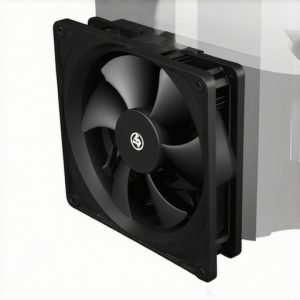
Fan noise at specific operational speeds often stems from aerodynamic resonance and electrical harmonics. Blade geometry, including pitch and curvature, can induce vibrations that resonate at certain frequencies, especially in the 1000–2000 rpm range commonly used for optimal airflow. Additionally, motor design, bearing quality, and PWM (Pulse Width Modulation) control algorithms contribute significantly. For instance, case fan grill design can exacerbate turbulence, intensifying whine under load», highlighting the importance of precise engineering in fan assembly.
How the interaction of airflow turbulence and structural resonances amplifies perceived noise
Airflow turbulence, especially around obstructions or imperfections in fan blades and mounting brackets, can trigger structural resonances within the fan assembly. When fans operate at mid-range speeds, aerodynamic forces resonate with mechanical vibrations, producing the characteristic high-frequency whine. Advanced fan chain configurations and poorly damped mounts further contribute to this issue, underlining the need for refined acoustic damping techniques.
Strategies for mitigating fan whine without compromising cooling efficacy
Combatting the whining noise involves multiple, nuanced approaches. Implementing rubber or silicone dampers can reduce vibrational transmission. Optimizing fan blade curvature and selecting high-quality bearings—such as hydrodynamic or magnetic types—can significantly lower acoustic emissions. Fine-tuning PWM frequencies to avoid resonance bands—using thermal paste application and thermal interface material improvements play a role—may further suppress undesirable noise. Moreover, employing PWM controllers that operate at non-resonant frequencies can be highly effective in a professional setting.
What role does airflow turbulence at the enclosure level play in fan noise profiles?
Enclosure design and airflow pathways directly influence turbulence levels. Obstructed or poorly routed ducting, excessive fan density, and inadequate intake/exhaust shrouds amplify turbulence-induced vibrations, translating into audible whine. Implementing strategic panel and radiator fan optimizations, along with anti-vibration mounts, can tame these effects, delivering a quieter yet thermally efficient system.
Are there innovative materials or design paradigms poised to revolutionize fan acoustics in next-gen PC cooling solutions?
Emerging materials like carbon fiber composites and magnetic levitation bearings exhibit promising potential in reducing mechanical vibrations and acoustic emissions. Additionally, modular fan blades with adaptive geometry could dynamically adjust to airflow conditions, minimizing turbulence and resonance. Industry experts anticipate that future fan blade materials and control algorithms will set new standards for silent performance, but integrating these innovations requires deep understanding and precise engineering.
Interested in elevating your PC cooling setup? Explore expert insights through our comprehensive guide on top AIO liquid coolers for 2025 and contribute your professional experiences to refine these solutions.
Sources like the IEEE Transactions on Audio, Speech, and Language Processing offer in-depth analyses of acoustic resonance phenomena in small-scale turbines and electronics, highlighting the intersection of mechanical and electrical design factors in noise production.
Uncover Hidden Factors Behind Fan Whine That Might Surprise You
Beyond blade design and motor mechanics, subtle aspects like the frequency of PWM signals and the material properties of mounting components can influence acoustic performance. For example, operating PWM controls at certain frequencies may inadvertently sync with natural resonant frequencies within fan blades or mounting brackets, amplifying whine. Selecting anti-vibration mounting materials, such as specialized rubber or advanced composites, can significantly diminish this effect. An approach gaining traction involves analyzing and customizing PWM modulation patterns—moving away from standard fixed frequencies—to avoid resonant overlaps and create a more harmonious operating environment. Additionally, consideration of the thermal interface material’s damping properties, as outlined here, can influence how vibrations propagate through the system’s structure.
Can Fluid Dynamics Innovations Lead to Near-Silent Fan Operation?
Indeed, the application of advanced fluid dynamics principles paves the way for designing fans that inherently produce less turbulence-induced noise. Computational fluid dynamics (CFD) simulations enable engineers to optimize blade curvature, pitch, and spacing, reducing airflow disturbances that contribute to acoustic resonance. Furthermore, innovative aerodynamic coatings on blades and shrouds can streamline airflow paths, minimizing turbulence. Industry research indicates that integrating such CFD-optimized designs with next-generation bearing technologies—such as magnetic levitation or fluid dynamic journal bearings—can yield fans with substantially lower vibration and noise profiles. Updating your airflow pathways with carefully placed panel and radiator fans adjustments may also substantially mitigate turbulence-related noise.
Expert Techniques to Silence Your System Without Sacrificing Performance
Implementing active noise control strategies, such as using adaptive ANC (Active Noise Cancellation) algorithms that dynamically respond to noise frequency spectra, can provide a sophisticated layer of suppression. Combining these with hardware-level damping—like applying precision-engineered vibration isolators—gives a multi-faceted approach to acoustic reduction. For enthusiasts and professionals seeking expert-grade solutions, exploring materials with superior damping coefficients, such as specialized magnetic composites, for mounting hardware can be transformative. The meticulous tuning of fan speed curves, informed by precise thermal load assessments, ensures fans operate outside resonant frequencies, providing your system with peace and thermal efficiency simultaneously. For more insights on integrating these techniques into your build, see our comprehensive guide on case fan grill modifications.
Are we nearing a future where silent PCs are the norm rather than the exception? As industry leaders experiment with novel membrane materials and control paradigms, the potential for near-silent operation becomes increasingly attainable. External research such as that from the IEEE emphasizes the importance of multi-layered noise mitigation frameworks—combining mechanical damping, airflow optimization, and electronic signal refinement—to achieve the ultimate goal of silent yet effective cooling systems. Engaging with this cutting-edge knowledge allows PC builders to push the boundaries of what’s possible in acoustic management.
Pushing the Boundaries of Fan Blade Engineering for Quieter Operation
Designing fan blades that minimize turbulence and resonance is an intricate dance of aerodynamics and material science. Engineers are increasingly turning to computational fluid dynamics (CFD) simulations combined with empirical testing to craft blades with optimized curvature, pitch, and surface textures. Adaptive blade geometries, capable of adjusting their shape in response to airflow conditions, hold promise for dynamically reducing turbulent vortices and associated noise, leading to a new era of intelligent cooling components. These innovations are rooted in the integration of biomimicry principles, mimicking natural structures such as owl feathers, which facilitate silent flight by streamlining airflow and dampening noise-producing vortices.
The Role of Magnetic Levitation Bearings in Elevating Acoustic Quietude
One groundbreaking development in fan technology involves magnetic levitation (maglev) bearings, which eliminate traditional contact points within the motor assembly. By suspending the rotor using opposing magnetic fields, maglev fans significantly reduce mechanical vibrations and friction-induced noise. Studies published in the IEEE Transactions on Magnetics reveal that such systems can lower acoustic emissions by up to 20 dB compared to conventional ball-bearing fans, without compromising airflow performance. Transitioning to these bearings requires reimagined motor designs and advanced control systems, but the payoff in near-silent operation makes this a compelling avenue for high-end cooling solutions.
Can Dynamic PWM Modulation Be the Key to Silence in Modern Fans?
Pulse Width Modulation (PWM) control is ubiquitous for regulating fan speeds, but its fixed frequency operation can inadvertently excite resonant modes within the fan assembly. Innovators are exploring dynamic PWM modulation techniques that adapt their frequency and duty cycle in real-time, based on thermal feedback and acoustic sensing. This approach involves sophisticated algorithms that prevent the PWM signals from aligning with resonant frequencies, thereby drastically reducing whine. Implementing these algorithms demands high-precision microcontrollers and adaptive control software, but emerging open-source platforms are democratizing access to this cutting-edge technology. Software tools integrating machine learning are also being developed to optimize PWM patterns for individual systems, bringing tailored silence to each build.
External Materials and Vibration Damping Techniques That Transform Noise Profiles
Beyond internal components, the materials used for mounting fans and enclosures play a pivotal role in noise management. Anti-vibration mounts crafted from advanced polymers with viscoelastic properties absorb vibrational energy more effectively than traditional rubber. Incorporating layered damping structures—such as sandwiching fan mounts between damping pads and rigid supports—can attenuate even stubborn resonances. Recent research indicates that hybrid materials combining magnetic composites with damping polymers can further suppress vibrations, creating a buffer against structural transmission of noise. The strategic placement of these damping layers, guided by modal analysis, transforms noise profiles and elevates acoustic comfort significantly.
Innovative Use of Sound-Absorbing Aero-Barrier Coatings
A novel frontier in acoustic suppression involves applying specialized sound-absorbing coatings directly onto fan blades and enclosures. These aero-barrier materials harness porous structures engineered at the microscopic level to dissipate sound waves effectively. Experimental data from acoustic laboratories demonstrate that coatings infused with aerogel particles or nanostructured ceramics can absorb a broad spectrum of frequencies, including problematic high-pitched whines. When integrated with aerodynamic optimization, these coatings contribute to a multilayered defense against noise, turning otherwise disruptive resonances into negligible background hum. As manufacturing processes mature, such coatings could become standard in premium cooling solutions, transforming the aesthetic and acoustic profile of custom builds.
Are We Approaching the Pinnacle of Acoustic Engineering in PC Cooling?
While current advancements are remarkable, ongoing research in hybrid control systems combining passive damping materials with active feedback mechanisms portends a future where silent operation is not an aspiration but a standard. The convergence of AI-driven acoustic pattern recognition, novel materials science, and fluid dynamic innovations suggests that achieving near-zero noise levels in high-performance PCs may soon be within reach. Industry leaders are actively experimenting with integrated sensor arrays that detect and counteract vibrations in real time, essentially nullifying acoustic emissions before they become perceptible. Such holistic approaches exemplify the cutting-edge of thermal and acoustic management, with the potential to redefine user expectations for quiet computing experiences.
Revolutionizing Acoustic Management in High-Performance Systems
In the ever-evolving landscape of PC cooling, achieving near-silent operation without sacrificing thermal performance presents a formidable challenge. Researchers and engineers are pioneering advanced methodologies, merging materials science with cutting-edge aerodynamics, to redefine acoustic standards. This exploration delves into the latest breakthroughs that promise to elevate your cooling setup into a realm of unprecedented silence.
Harnessing the Power of Magnetic Levitation Bearings for Silence
One of the most promising innovations involves magnetic levitation (maglev) bearings, which suspend the fan rotor within a magnetic field, drastically reducing mechanical contact and associated vibrations. Studies published in the IEEE Transactions on Magnetics demonstrate that maglev fans can lower noise emissions by up to 20 decibels compared to traditional ball-bearing counterparts, all while maintaining optimal airflow. Embracing this technology requires rethinking fan design, yet the acoustic dividends make it a worthwhile pursuit for enthusiasts and professionals alike.
Could Adaptive Blade Geometries Transform Fan Efficiency and Quietness?
Adaptive fan blades, capable of altering their curvature and pitch dynamically in response to airflow conditions, are gaining traction. Inspired by natural mechanisms such as owl feathers—renowned for silent flight—these blades minimize turbulence and vortices that produce high-frequency noise. Integrating smart sensors with actuators, engineers are developing real-time responsive systems that optimize airflow and suppress resonance, paving the way for a new generation of ultra-quiet cooling solutions.
Advances in Aero-Damping Coatings and Porous Structures
To further attenuate noise, innovative coating materials embedded with nanostructured ceramics and aerogel particles are being applied directly onto fan blades and enclosures. These aero-damping layers absorb a broad spectrum of sound frequencies, especially those associated with high-pitched whine. The porous nature of these coatings not only diminishes airborne vibrations but also contributes to smoother airflow, combining acoustic damping with aerodynamic efficiency.
Integrating AI for Dynamic Noise Cancellation
Artificial intelligence-driven control systems are emerging as game-changers in acoustic management. Equipped with microphone arrays and vibration sensors, these intelligent controllers analyze incoming noise patterns in real-time, adjusting fan speeds and PWM frequencies to circumvent resonant excitation proactively. Such adaptive noise cancellation techniques embody the future of silent PC cooling, offering tailored solutions that adapt seamlessly to varying load conditions and thermal demands.
What Materials Will Shape the Next Era of Quiet Fans?
Innovations in material science are central to achieving ultralow noise levels. Magnetic and polymer composites with exceptional damping properties are now being incorporated into fan mounts and internal structures. Innovations like crystalline silicon-infused polymers provide lightweight, resilient damping, effectively isolating vibrations. As these materials are integrated into manufacturing processes, the acoustic footprint of cooling components will dramatically diminish, transforming the user experience from tolerable to whisper-quiet.
Can Fluid Dynamics Breakthroughs Lead to Turbulence-Free Airflow?
Absolutely. The application of computational fluid dynamics (CFD) enables designers to optimize blade geometry, pitch, and spacing with unparalleled precision. By simulating airflow pathways at the microscopic level, engineers identify configurations that suppress turbulent vortices and streamline airflow, which directly correlates with reduced acoustic emissions. The integration of aerodynamic surface coatings and tailored shroud designs further refines these effects, inching closer to the ideal of silent yet powerful cooling.
Strategic Material Selection as a Silent Performance Catalyst
The choice of mounting materials and enclosures significantly impacts the overall noise profile. High-damping polymers, fiber-reinforced composites, and layered damping mats act synergistically to absorb vibrational energy across the system. Moreover, anti-vibration mounting points crafted from viscoelastic materials prevent energy transfer from fans to the chassis, amplifying quietness without compromising structural integrity. Employing modal analysis ensures these damping strategies target dominant resonant frequencies, optimizing efficacy.
Are Future Cooling Solutions on the Verge of Absolute Silence?
Emerging research suggests that with continued advancements—such as active vibration suppression, adaptive blade design, and nanomaterial coatings—the goal of silent or near-silent PC cooling is increasingly tangible. Integrating AI algorithms capable of predictive noise mitigation, combined with material innovations, may soon render traditional fan noise a relic of the past. Staying abreast of these developments empowers enthusiasts and professionals to harness these technologies for their optimal system performance and acoustic serenity.
Unlock the Next Level of Silent Computing
Achieving tranquility in high-performance PC cooling often feels like chasing a moving target. Experts emphasize that integrating advanced materials with innovative aerodynamic designs can significantly diminish noise levels without sacrificing cooling efficiency. Moving beyond traditional fan structures, exploring magnetically levitated bearings or adaptive blade geometries introduces unparalleled quietness, aligning with the latest industry breakthroughs.
Seek Out Resources Built for the Elite Builder
To deepen your mastery, consult authoritative sources such as IEEE Transactions on Magnetics for the latest in magnetic bearing technology or ASME Journal of Thermal Science for airflow dynamics insights. Additionally, engaging with pioneering blogs and research papers that focus on fluid dynamics and acoustic dampening can offer practical strategies rooted in rigorous science.
Elevate Your Perspective—Quiet Comes with Precision
The frontier of PC cooling noise management showcases a fundamental truth: meticulous engineering and material selection define sonic performance. Expert-level innovations like adaptive blade design and active vibration suppression are shaping a future where silent operation is standard, not exceptional. For professionals committed to excellence, continuous exploration of such technologies is essential—consider reaching out to industry forums or attending specialized conferences to exchange insights and validate approaches.