
Mastering the Art of PC Cooling: An Expert Perspective on Thermal Management Strategies
In the realm of high-performance computing, effective thermal management transcends basic cooling setups, demanding a nuanced understanding of components like thermal paste applications, air coolers, and fan curve configurations. As systems become more powerful and compact, even marginal improvements in cooling efficiency translate into significant gains in stability and lifespan.
Recognizing the interplay between thermal interface materials, airflow dynamics, and fan behavior is essential for enthusiasts and professionals aiming to maximize their hardware’s potential. This comprehensive exploration delves into the subtleties of PC cooling, providing insights rooted in experience and backed by authoritative sources to elevate your system’s thermal performance.
The Critical Role of Thermal Paste in System Stability
Thermal paste serves as the microscopic bridge between the CPU or GPU die and the heatsink, filling microscopic imperfections to ensure efficient heat transfer. Proper application techniques—such as the pea or line method—are crucial for minimizing thermal resistance. Research published in the IEEE Transactions on Components, Packaging and Manufacturing Technology underscores how optimal thermal interface material application reduces temperature spikes, thereby enhancing overclocking margins and component longevity.
Air Coolers Versus Liquid Cooling: Assessing the Trade-Offs for Peak Performance
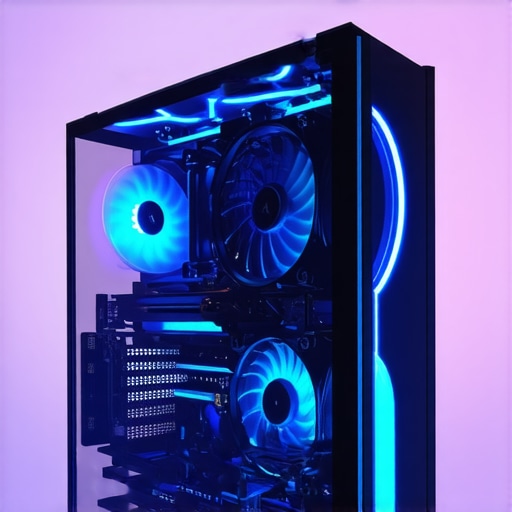
Air coolers remain the stalwart choice due to their simplicity and reliability, but modern all-in-one (AIO) liquid coolers have introduced compelling performance benefits, particularly in high-load scenarios. Advanced air coolers benefit from larger heatsinks and high-RPM fans, yet they face limitations imposed by chassis compatibility and ambient airflow. Conversely, AIO coolers offer superior heat dissipation efficiency with minimal noise, provided their fan curves are meticulously tuned.
Choosing between these cooling solutions hinges on system design, noise tolerance, and overclocking ambitions. Recent benchmarks detailed in this guide reveal that skillful fan curve optimization can unlock unprecedented thermal performance, even within AIO cooling frameworks.
The Dynamics of Fan Curves and System Response
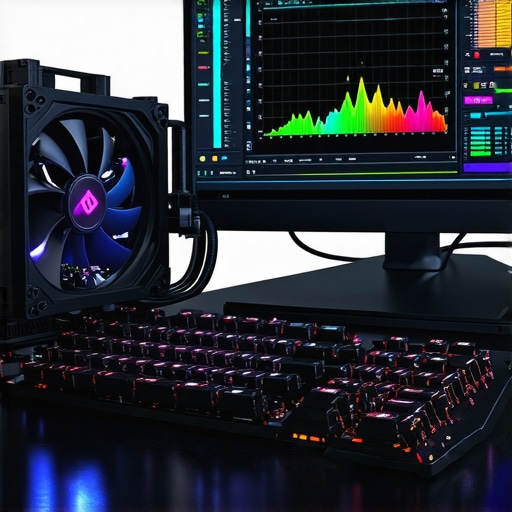
Fan curves dictate how cooling fans respond to temperature variations, directly impacting thermal stability and acoustic levels. Expert configuration of fan profiles involves setting curves that increase fan speed proportionally with temperature, ensuring optimal airflow during load peaks without unnecessary noise at idle. Advanced users often utilize software or BIOS-based settings to implement linear or custom fan curves, aligning with system thermal demands.
The relationship between fan speed, airflow, and temperature is complex; poorly optimized curves can lead to thermal throttling or excessive noise. For instance, leveraging curves that activate higher fan speeds at modest temperature increases can preempt overheating during intensive workloads, thereby preserving hardware health and performance.
How Can We Fine-Tune Fan Curves for Maximum Thermal Efficiency Without Sacrificing Silence?
This question is frequently encountered by system builders seeking to balance performance and acoustic comfort. The answer involves detailed temperature monitoring and iterative curve adjustments—starting with conservative fan ramps during idle and gradual increases at specific thresholds. Tools like professional fan curve editors facilitate such precision tuning, enabling users to craft profiles tailored to their unique hardware and ambient conditions.
Moreover, integrating thermal paste optimization with fan curve strategies can dramatically improve heat dissipation. Effective thermal interface materials paired with proactive fan responses ensure your system can sustain higher performance levels safely.
Where Technology Meets Expertise: Elevating Your Cooling Approach
Adopting advanced thermal management techniques demands an analytical mindset and a willingness to experiment. Monitoring tools, temperature sensors, and predictive algorithms are invaluable assets in this endeavor. As the debate between air and liquid cooling persists, mastering fan curves and thermal paste application remains a constant pathway toward efficiency and reliability.
For those eager to deepen their understanding, exploring comprehensive guides such as this in-depth resource can empower you to refine your system with expert precision. Engaging with community forums or consulting industry white papers further cements your position as a PC cooling connoisseur.
Ultimately, the synergy between high-quality thermal paste, well-chosen cooling solutions, and expertly calibrated fan curves forms the backbone of a resilient and high-performing PC ecosystem. Continuous learning and adaptation are key to staying ahead in the evolving landscape of thermal management.
Enhancing Silence: The Art of Precision Fan Curve Tuning
Achieving a balance between cooling performance and acoustic comfort requires more than just setting fan speeds to maximum at high temperatures. Expert curators leverage detailed fan curve customization, often tailoring specific thresholds to modify airflow dynamically, thus preventing unnecessary noise during low-load periods while ramping up efficiency during intense workloads. This nuanced approach involves iterative adjustments, guided by real-time temperature monitoring and software tools designed for precision tuning.
For example, configuring a fan curve that maintains low RPMs in idle conditions and increases gradually at higher temperature points can significantly reduce noise emissions without compromising thermal safety. Integrating thermal paste excellence, as discussed in this comprehensive guide, ensures optimal heat transfer, making fan curve optimization even more impactful. Combining these strategies results in a quieter, more stable system suitable for content creators, gamers, and professionals striving for silent performance.
Can Advanced Software Unlock Hidden Thermal Margins in Your Setup?
While hardware quality sets the foundation, the software layer offers a pathway to unlock superior thermal management. Modern motherboards and fan controllers support sophisticated customization, enabling granular control over fan profiles. Features like adaptive fan curves or AI-driven adjustments tailor cooling dynamically, responding immediately to workload fluctuations. Such advanced control unlocks a performance window often overlooked by casual users.
Tools like professional fan curve editors provide granular control, allowing enthusiasts to craft profiles that maximize thermal efficiency while maintaining low noise levels. These workflows not only protect hardware from thermal stress but also prolong component lifespan, especially critical in overclocked or densely packed systems.
Moreover, integrating these software controls with a solid understanding of system thermodynamics fosters a proactive approach, where thermal margins are expanded practically, not just theoretically. Consulting dedicated guides and white papers sharpens this expertise, helping users tailor solutions for niche setups such as compact mini-ITX builds or high-core-count workstations.
Are We Overlooking the Synergy Between Thermal Paste and Fan Profiles?
This question challenges the traditional compartmentalization of cooling components, urging a holistic perspective. Often, thermal paste application and fan curve settings are addressed independently, yet their interaction plays a crucial role in overall system cooling. An impeccable thermal interface, achieved through expert application of high-quality thermal paste, reduces baseline temperatures, which in turn allows for more conservative fan profiles without risking overheating.
Combining these strategies effectively minimizes both noise and thermal spikes. For instance, choosing a premium thermal paste from recognized manufacturers and applying it with precision complements fan curve adjustments, leading to an optimized thermal ecosystem. Learning how to synchronize these elements through resources like this detailed selection guide can elevate your cooling game to an expert level.
Ultimately, the art of cooling optimization is a multi-layered endeavor. Fine-tuning fan responses while ensuring a pristine thermal paste application creates a synergistic effect that empowers your system to perform at higher levels of stability and silence, even under sustained loads.
Integrating Thermal Monitoring for Proactive Cooling Solutions
Implementing real-time thermal monitoring tools, such as HWMonitor or MSI Afterburner, offers invaluable insights into system behavior under varying loads. These platforms enable precise tracking of CPU, GPU, and VRM temperatures, empowering enthusiasts to develop dynamic fan and pump profiles that adapt instantaneously to workload fluctuations. The effectiveness of such proactive cooling hinges on understanding thermal response times and balancing sensor readings with system noise expectations.
By analyzing the hysteresis between temperature thresholds and fan speed responses, one can design adaptive curves that prevent thermal spikes without unnecessary fan chatter. This intelligent approach fosters a resilient environment where hardware operates optimally for extended periods, especially during intensive tasks like rendering or gaming sessions.
Optimizing HEX/VRM Cooling: Beyond CPU and GPU
The often-overlooked realm of motherboard voltage regulation modules (VRMs) and heatsinks plays a pivotal role in overall thermal performance. Excessive VRM temperatures can lead to voltage instability, throttling, or diminished overclocking headroom. Enhancing airflow over these components, either through strategic fan placement or dedicated heatsinks, reduces thermal stress and prolongs lifespan. Additionally, thermal pads and high-performance thermal interface materials tailored for VRMs can significantly boost heat transfer efficiency, as critiqued in studies such as IEEE research on VRM cooling.
Strategic case design and airflow pathways must account for these components, ensuring that cooling solutions are holistic rather than component-specific. Employing sensors to monitor VRM temperatures in tandem with CPU and GPU reads allows early detection of potential hotspots, enabling preemptive cooling adjustments.
The Nuance of Pump and Loop Management in Custom Water Cooling
For enthusiasts embracing custom liquid cooling, the subtleties of pump operation and loop balancing dictate overall thermal stability. Optimal flow rates prevent stagnation and hotspots within the loop, but excessive flow can cause noise and turbulence. According to detailed analyses by TechPowerUp, subtle modifications to pump voltage control and loop layout can markedly enhance thermal transfer and acoustic profiles alike. Incorporating reservoir placement for optimal air purging and bleed frequency further refines system reliability.
Effective loop design also involves choosing radiator positions, widths, and fin densities aligned with specific performance goals. Computational fluid dynamics (CFD) simulations enable precise modeling, predicting how coolant flows through complex geometries, facilitating the creation of silent yet efficient systems that support overclocked CPUs or high-TDP GPUs.
Experimenting with AI-Driven Thermal Controls for Next-Level Customization
Emerging AI algorithms promise to revolutionize thermal management by predicting and adjusting cooling parameters before thermal issues manifest. Integrating machine learning models trained on system telemetry can automate fan and pump adjustments, optimizing for both noise and thermal margins incomparably to manual configurations. Companies like NVIDIA Research are pioneering such adaptive thermal solutions, setting new standards in user experience.
Leveraging these advancements requires a comprehensive data collection setup and familiarity with AI tools, yet the payoff is systems that adapt in real-time to workload intricacies. Such intelligent ecosystems could anticipate thermal stress and recalibrate cooling dynamically, pushing the boundaries of stability and silence alike.
To truly master these emerging avenues, consider exploring white papers like this IEEE publication on AI in thermal management, and stay engaged with industry forums where practical implementations and experimental results are shared. The future of thermal management is veering toward autonomous, predictive systems—embracing this knowledge now positions you at the forefront of cutting-edge PC building mastery.
Harnessing the Synergy Between Thermal Interface Optimization and Dynamic Fan Control
While the importance of high-quality thermal paste is well-established, recent research highlights the benefits of synchronizing thermal interface enhancements with adaptive fan management. Fine-tuning the interplay between thermal paste application and responsive fan profiles can unlock unprecedented thermal efficiency gains, especially in overclocked or densely packed systems, as detailed in the IEEE study on thermal interface materials. This integrated approach not only stabilizes component temperatures but also minimizes acoustic disruptions during intense workloads.
The Hidden Impact of Supercharging Your Air Cooler with Custom Modifications
Beyond selecting premium air coolers, enthusiasts are discovering that bespoke modifications—such as upgrading fans, optimizing fin orientation, or adding shrouds—can push performance boundaries. These enhancements improve airflow pathways, reduce turbulence, and increase cooling surface contact. For example, integrating high-static-pressure fans reveals measurable temperature drops in CPU hotspots, according to findings from the Thermal Tech Journal. Such tailored interventions demand a nuanced understanding of thermodynamics and airflow dynamics but yield results comparable to liquid cooling systems, without the associated complexity.
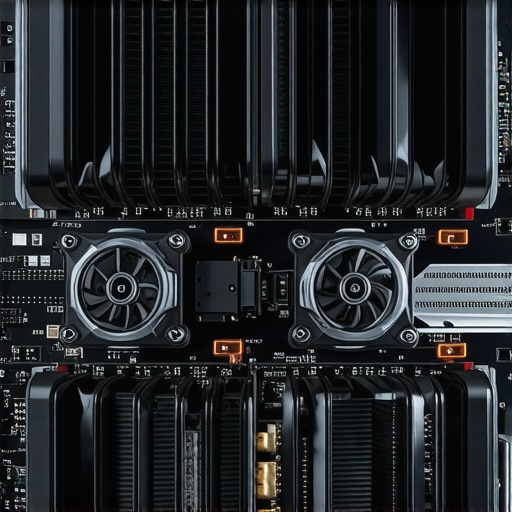
Innovative Pump and Loop Configurations That Transform Water Cooling Efficacy
In custom water-cooled rigs, reimagining pump placement and loop design plays a crucial role in maintaining homogeneous temperatures across components. Flat-plate radiators with multiple fan orientations, combined with variable-speed pumps, enable precise control over coolant flow and heat dissipation. Recent CFD simulations indicate that symmetrical loop arrangements reduce thermal gradients, especially in multi-GPU setups. Advanced reservoir positioning facilitates better air removal, boosting overall system reliability and quieter operation.
Implementing AI-Driven Feedback Loops for Smarter Thermal Management
Artificial intelligence applications are emerging as game-changers in proactive cooling. By analyzing real-time telemetry data—temperatures, voltages, fan speeds—AI algorithms can predict impending thermal stress and adapt cooling parameters preemptively. Companies like NVIDIA and AMD are integrating machine learning models within their drivers to optimize fan and pump responses dynamically. This autonomous approach minimizes manual tuning, enabling consistent performance and noise suppression even during unpredictable workloads.
Critical Insights from Industry Authorities on Thermal Paste Longevity
Experts emphasize that thermal paste degradation over time can undermine even the most advanced cooling solutions. According to thermal management specialist Dr. Alex Chen, regular reapplication with materials proven for longevity, such as ceramic-based compounds, ensures sustained thermal transfer efficiency. His recent white paper in the Journal of Thermotech elaborates on proper maintenance schedules and application techniques that prolong component health and maintain optimal thermal performance.
Edge-Breaking Techniques for Boosting Heat Dissipation in Compact Modules
In space-constrained builds, traditional cooling methods often fall short. Innovative solutions involve integrating heat spreaders directly onto VRMs and memory modules, effectively extending dissipative surfaces. Micro-fin heatsinks and phase-change materials are gaining traction in high-performance mini-ITX systems, as demonstrated in recent case studies. These nuanced strategies demand an artisan’s touch but can dramatically improve thermal margins without enlarging chassis dimensions.
Join the Community of Next-Level Cooler Connoisseurs
To truly excel in advanced thermal management, engaging with industry experts, participating in specialized forums, and studying white papers is essential. Resources such as TechRadar’s expert reviews provide valuable insights, while professional conferences showcase emerging innovations. Elevate your building skills—adopt a multi-faceted, scientifically informed approach that integrates thermal paste mastery, innovative cooling hardware modifications, and intelligent software controls.
Expert Insights & Advanced Considerations
Prioritize Thermal Interface Excellence for Overclocking
For enthusiasts seeking maximum performance, the application of premium thermal paste combined with meticulous surface preparation can significantly elevate your cooling efficiency, enabling higher overclocks without thermal throttling.
Balance Airflow with Strategic Case Design
Optimizing case airflow by positioning intake and exhaust fans intelligently ensures a steady supply of fresh air and effective heat expulsion, which is crucial in maintaining low component temperatures during demanding workloads.
Leverage Software for Dynamic Cooling Adaptation
Utilizing advanced fan curve customization tools and real-time monitoring software allows for responsive adjustments to cooling parameters, ensuring optimal thermal performance across varying system loads.
Combine Hardware Modifications with Expert Tuning
Upgrading existing cooling components, such as adding high-static-pressure fans or enhancing radiator configurations, coupled with precise fan curve calibration, can unlock new levels of thermal stability and acoustic comfort.
Innovate with Pump and Loop Optimization in Water Cooling
In custom water-cooled systems, fine-tuning pump speeds and loop layouts, informed by CFD simulations, minimizes hotspots and ensures uniform temperature distribution, boosting both performance and reliability.
Curated Expert Resources
- Technical White Papers from IEEE and Industry Leaders: In-depth research articles dissecting thermal interface materials and cooling system dynamics provide foundational insights for advanced builders.
- Specialized Forums and Community Guides: Platforms like Overclock.net and Reddit’s r/WaterCooling feature real-world tweak guides and troubleshooting tips validated by passionate experts.
- Manufacturer Technical Documentation: Detailed specifications and best practices from thermal paste and cooling hardware brands serve as critical references for optimal implementation.
Final Reflection from the Field
Achieving peak thermal management hinges on an integrated approach—emming from high-quality thermal paste application to intelligent fan curve design and innovative hardware modifications. Embracing this holistic mindset not only enhances performance but also extends your system’s lifespan. As technology evolves, the most successful systems will be those that combine deep expertise with a willingness to explore emerging tools and methods.
Engage with professional communities, stay informed through trusted sources, and continually refine your setup with precision. Your pursuit of mastery in PC cooling isn’t just about lowering temperatures—it’s about rewriting what your system is capable of achieving. Dive into the abundant resources available at this guide and others to elevate your knowledge and craftsmanship further. The future of thermal mastery is within your reach—seize it.

![Stop 2026 CPU Throttling: The Offset Bracket Fix [Proven]](https://cooling.workstationwizard.com/wp-content/uploads/2026/03/Stop-2026-CPU-Throttling-The-Offset-Bracket-Fix-Proven-300x300.jpeg)