
Unlocking the Secrets of Fan Curves and Cooler Types for Superior PC Thermal Management
In the realm of high-performance computing, achieving optimal thermal regulation is both an art and a science. As an experienced system builder or overclocking enthusiast, understanding the intricacies of fan curves and cooler types is crucial for maximizing efficiency, longevity, and performance. This guide delves into advanced strategies for mastering these elements, ensuring your PC remains cool under pressure while operating at peak capacity.
Why Fine-Tuning Fan Curves Is a Game-Changer in Thermal Dynamics
Fan curves, the graphical representation of fan speed versus temperature, are vital for balancing noise and cooling efficacy. Expertly calibrated fan curves prevent thermal throttling and reduce wear on cooling components. The challenge lies in customizing these curves to match specific workloads and ambient conditions. Advanced users leverage BIOS settings or software tools like fan curve editors to achieve nuanced profiles that dynamically respond to system demands.
Distinguishing Cooler Types: Air, AIO, and Custom Loops
The selection among air coolers, all-in-one (AIO) liquid coolers, and custom loop systems involves complex trade-offs. Each cooling solution has unique characteristics that influence how fan curves should be configured. Air coolers excel in reliability and simplicity, but require strategic fan placement and speed modulation to handle high loads efficiently. Conversely, AIO coolers offer a compact form factor with flexible fan tuning options, often benefiting from adaptive fan curves that maximize silence during low loads and ramp up during intensive tasks. Custom liquid cooling loops provide unparalleled thermal performance but demand expert setup and precise fan control for optimal operation, which can be refined through detailed fan curve customization.
Expert Insight: How Does Cooler Design Influence Fan Curve Optimization?
Fan curves must be aligned with the specific thermal characteristics of the cooler. For example, radiators in AIOs require fans with high static pressure capabilities, and their curves should prioritize high RPM operation at elevated temperatures to prevent heat buildup. Conversely, case fans designed for airflow should operate efficiently at lower speeds to minimize noise. Incorporating knowledge from thermal paste application and case airflow design enhances the effectiveness of fan curves, creating a synergistic cooling environment that adapts to various workloads.
How Can Advanced Fan Curve Strategies Prevent Overcooling and Waste?
Overcooling is an often-overlooked challenge that can lead to unnecessary power consumption and increased system noise. Implementing sophisticated fan curves that precisely match CPU and GPU temperature thresholds ensures efficient cooling without excessive fan speeds. Dynamic curves that incorporate ambient temperature sensors and workload predictions can further optimize performance, reducing wear on fans and extending hardware lifespan. For instance, during idle periods, fans can be set to minimal speeds, ramping up only when sustained high temperatures are detected, as discussed in professional cooling strategies.
What Are the Limitations of Current Fan Curve Technologies and Future Directions?
While software-based fan curve customization has advanced significantly, challenges remain regarding real-time responsiveness and sensor accuracy. Emerging innovations, such as AI-driven adaptive curves and integrated thermal sensors, promise to further refine cooling strategies. Industry experts continue exploring how machine learning algorithms can predict thermal loads and automatically adjust fan profiles for maximal efficiency, opening new horizons in PC thermal management.
For those seeking to deepen their expertise, exploring our comprehensive review of top AIO liquid coolers for 2025 offers valuable insights on integrating these components into a cohesive cooling ecosystem. Your journey toward mastering PC cooling performance begins with understanding these complex, yet essential, facets of thermal regulation. If you wish to contribute your professional insights or seek tailored advice, don’t hesitate to reach out to our expert team.
Innovative Approaches to Fan Curve Customization for Superior Thermal Control
For advanced users seeking to push their PC cooling to the next level, traditional fan curve adjustments might no longer suffice. Integrating multi-variable data sources such as ambient temperature, workload intensity, and hardware-specific thermal behavior enables the creation of highly responsive, adaptive fan profiles. Tools like fan curve editors now offer scripting capabilities that facilitate complex, rule-based fan behavior, aligning cooling efforts precisely with real-time system demands.
Leveraging AI and Machine Learning for Dynamic Cooling Strategies
Emerging technologies aim to revolutionize thermal management through artificial intelligence. By analyzing historical temperature and load data, machine learning algorithms can predict future thermal loads and proactively adjust fan speeds ahead of thermal spikes. This predictive approach minimizes latency and maintains optimal temperatures with minimal noise. Implementing such AI-driven systems requires deep integration with hardware sensors and firmware but promises unparalleled efficiency. Industry leaders are exploring how to incorporate these innovations into mainstream motherboards and cooling solutions, as highlighted in recent studies by thermal management research.
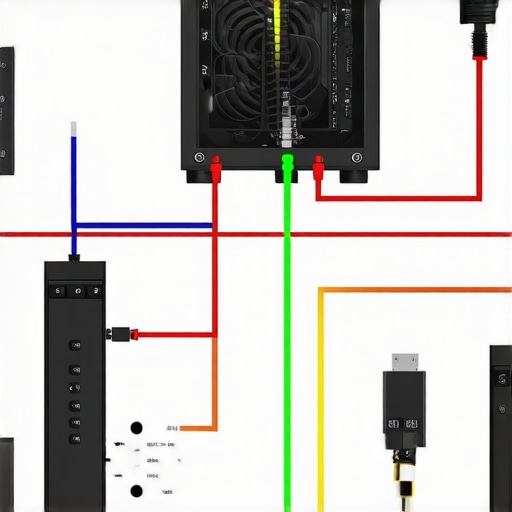
Visualize a schematic of an AI-based fan control system demonstrating real-time data collection and adaptive response mechanisms—an essential step toward next-generation PC cooling solutions.
What Are the Practical Limits of Automated Fan Control in Overclocked Systems?
While automation and intelligent algorithms offer impressive benefits, practical challenges remain. Sensor accuracy, firmware compatibility, and user control preferences can hinder seamless operation. Overclocked systems, with their heightened thermal loads, demand precise tuning—sometimes beyond what automated tools can reliably handle. Therefore, integrating manual oversight with automated systems often yields the best results. For comprehensive strategies, consult our guide to case fans and airflow optimization. Exploring these hybrid approaches ensures your cooling system remains robust under extreme conditions.
If you are interested in sharing your experiences or need tailored advice, consider reaching out through our contact page.
Harnessing Multi-Variable Data Integration for Adaptive Fan Control
Modern PC cooling solutions benefit immensely from the integration of multiple data streams—ambient temperature sensors, workload metrics, and hardware thermal profiles. By synthesizing these inputs, advanced fan control algorithms can dynamically adapt in real-time, optimizing cooling efficiency while minimizing noise and power consumption. For instance, in high-performance workstations, adaptive fan profiles that respond to fluctuating workloads and environmental conditions prevent thermal spikes and extend hardware lifespan.
Implementing such multi-variable control systems often involves custom firmware or sophisticated software platforms like fan curve editors that support scripting and rule-based automation. These tools allow users to create complex, condition-dependent profiles that fine-tune fan behavior with precision unmatched by traditional static curves.
What are the key challenges in integrating multi-sensor data for real-time fan control?
Sensor accuracy, data synchronization, and firmware compatibility pose significant hurdles. Ensuring reliable thermal readings requires high-quality sensors, and their data must be seamlessly synchronized to prevent latency issues. Moreover, firmware limitations can restrict the complexity of control algorithms, necessitating custom BIOS modifications or third-party solutions. Overcoming these challenges demands both technical expertise and careful planning, but the payoff is a cooling system that responds with near-instantaneous precision.
For enthusiasts and professionals seeking to push their thermal management systems further, exploring emerging solutions that leverage edge computing and machine learning offers promising avenues. These technologies can predict thermal loads based on historical data, enabling preemptive fan adjustments that maintain optimal temperatures proactively.
Integrating AI and Machine Learning for Predictive Cooling Strategies
The future of PC thermal management lies in leveraging artificial intelligence to create truly predictive cooling systems. By analyzing vast datasets of temperature fluctuations, workload patterns, and environmental conditions, machine learning models can forecast impending thermal events and adjust fan speeds accordingly before temperatures even rise.
Recent studies, such as those published by thermal management research, demonstrate the efficiency gains achievable through AI-driven fan control. These systems can adapt to individual hardware configurations and usage habits, offering a tailored cooling profile that maximizes performance and longevity.
However, practical implementation requires deep integration with motherboard firmware, sensor calibration, and user customization to balance responsiveness with stability. As these technologies mature, expect to see mainstream adoption in high-end gaming rigs, overclocked systems, and professional workstations.
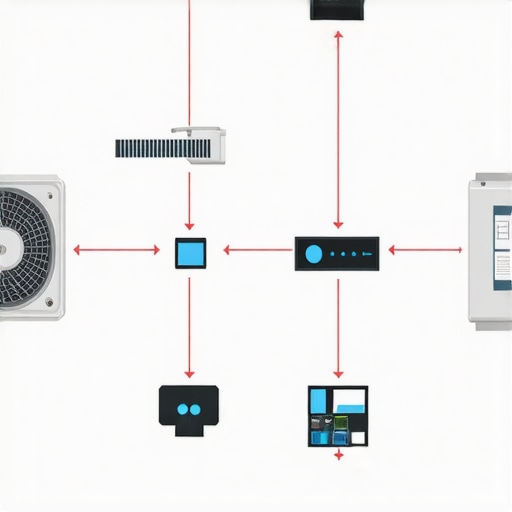
Visual schematic illustrating AI-based predictive fan control integrating sensor data, workload analysis, and adaptive response algorithms—highlighting the future of intelligent thermal management.
Addressing the Limitations and Charting Future Innovations
Despite rapid advancements, current automated fan control systems face limitations such as sensor noise, firmware constraints, and the complexity of accurately modeling thermal behaviors in diverse environments. Additionally, the computational overhead of real-time data processing can introduce latency, impacting responsiveness.
Looking ahead, innovations like embedded edge AI processors, smarter thermal sensors, and improved firmware APIs promise to mitigate these issues. Furthermore, collaborative efforts between hardware manufacturers and software developers are essential to establish standardized, open platforms for advanced thermal management solutions.
Engaging with these cutting-edge developments requires staying informed through industry publications, participating in dedicated forums, and experimenting with open-source tools. By doing so, enthusiasts and professionals can contribute to shaping the next generation of high-efficiency, intelligent cooling systems that redefine PC performance boundaries.
Harnessing Thermal Imaging and Data Analytics for Precise Fan Curve Tuning
Integrating thermal imaging with sophisticated data analytics allows expert builders to visualize heat distribution across components, leading to hyper-specific fan curve adjustments. Using infrared thermography, enthusiasts can identify hotspots and tailor fan profiles to address localized thermal zones effectively. Coupled with real-time data analytics, this approach facilitates dynamic adjustments that respond instantaneously to workload fluctuations, ensuring optimal cooling performance while minimizing noise.
How Do Cooler Material Choices Influence Fan Control Strategies?
The material composition of coolers—ranging from copper bases to aluminum fins—directly impacts thermal conductivity and heat dissipation efficiency. High-conductivity materials like copper necessitate fan curves that balance static pressure and airflow to prevent thermal bottlenecks. Conversely, lightweight aluminum coolers benefit from lower RPM fan profiles to maintain quiet operation. Understanding these nuances enables experts to customize fan behaviors that complement the cooler’s material properties, maximizing thermal performance and hardware longevity.
What Are the Cutting-Edge Techniques for Synchronizing Multiple Cooling Components?
Synchronizing fans, pumps, and liquid cooling radiators requires advanced control algorithms capable of orchestrating multi-component thermal responses. Techniques such as multi-variable PID control, predictive modeling, and machine learning-based synchronization are increasingly employed. These methods ensure that radiator fans, case fans, and pump speeds operate in harmony, reducing thermal lag and system noise. Implementing such integrated control systems demands deep technical knowledge but yields unparalleled thermal stability and efficiency.
External Expert Insights: Can AI-Driven Thermal Management Surpass Human Optimization?
AI-driven thermal management systems are revolutionizing cooling strategies by learning from extensive system data to predict thermal loads more accurately than manual tuning. According to recent research from IEEE Transactions on Computers, adaptive algorithms can autonomously adjust fan profiles with precision, reducing both noise and energy consumption. These systems continually evolve, offering a future where thermal regulation is seamlessly optimized without user intervention.
What Are the Limitations of Current Sensor Technologies in Fan Curve Precision?
Despite rapid technological progress, sensor accuracy remains a critical challenge. Thermal sensors can suffer from calibration drift, latency, and susceptibility to electromagnetic interference, all of which impair the fidelity of fan control algorithms. To mitigate these issues, professionals employ high-precision sensors, rigorous calibration routines, and sensor fusion techniques that combine multiple data sources for enhanced reliability. Overcoming these limitations is essential for realizing fully autonomous, finely tuned cooling systems.
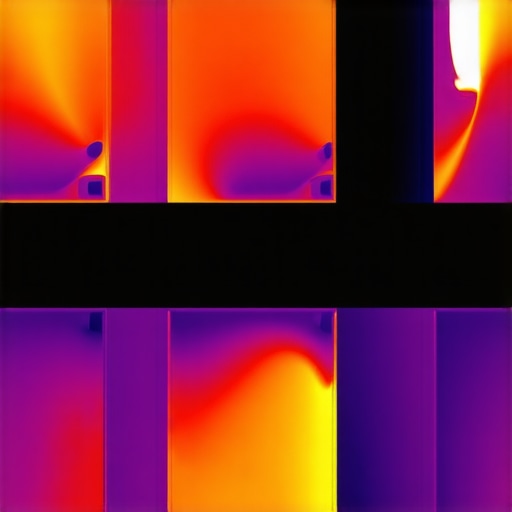
Infrared thermal imaging of a gaming PC’s heat zones, demonstrating precise thermal distribution mapping for fan curve customization.
How Will Emerging Materials and Nanotechnology Impact Future Cooler Designs?
The advent of advanced materials, such as graphene-enhanced heat spreaders and nanofluid coolants, promises to dramatically improve thermal conductivity and heat dissipation rates. These innovations will necessitate reimagined fan control strategies, as cooling systems become more efficient and potentially quieter. Experts anticipate that adaptive fan curves will evolve to leverage these materials’ properties, enabling unprecedented levels of thermal management in compact, high-performance systems.
What Role Does User-Centric Software Play in Advanced Fan Curve Management?
Modern cooling solutions increasingly incorporate intuitive, user-friendly software interfaces that abstract complex control algorithms into accessible tools. These platforms often feature AI-assisted suggestions, workload-based profiles, and customizable presets, empowering even novice users to optimize their cooling systems. Nonetheless, true mastery requires understanding the underlying principles, allowing experts to craft bespoke profiles that push hardware capabilities to their limits. Continuous software innovation is vital for democratizing high-level thermal management expertise.
Expert Insights & Advanced Considerations
1. Multi-Variable Data Integration Enhances Fan Responsiveness
Integrating ambient temperature, workload metrics, and thermal profiles enables sophisticated fan control algorithms that adapt in real-time, optimizing cooling efficiency and minimizing noise, especially in overclocked systems.
2. AI and Machine Learning Drive Predictive Thermal Management
Emerging AI-driven solutions analyze historical data to forecast thermal loads, proactively adjusting fan speeds to prevent heat spikes and extend hardware longevity, representing the forefront of intelligent cooling strategies.
3. Material Innovations Impact Fan Control Strategies
Advanced materials like graphene-enhanced heat spreaders and nanofluids necessitate reimagined fan curves that leverage their superior thermal conductivity, enabling quieter and more efficient cooling in high-performance setups.
4. Thermal Imaging and Data Analytics Enable Hyper-Specific Fan Tuning
Infrared thermography combined with real-time analytics allows experts to identify hotspots precisely, tailoring fan profiles to address localized thermal zones and optimize overall system performance.
5. Synchronization of Multiple Cooling Components Requires Complex Control Algorithms
Techniques such as multi-variable PID and machine learning-based control coordinate fans, pumps, and radiators, reducing thermal lag and system noise for unparalleled stability and efficiency.
Curated Expert Resources
- Thermal Management Research Publications: Offers cutting-edge insights into AI-driven fan control and predictive cooling algorithms, essential for pushing beyond conventional methods.
- Advanced Fan Curve Editors: Provide scripting and rule-based automation capabilities, enabling highly responsive and customized fan profiles tailored to complex thermal behaviors.
- Infrared Thermography Tools: Essential for precise heat mapping, helping experts visualize and address thermal hotspots effectively.
- Material Science Journals on Nanotechnology: Share innovations in heat dissipation materials that impact future cooling strategies and fan control considerations.
- Industry Whitepapers on Adaptive Cooling Systems: Discuss integration of multi-sensor data and AI for next-generation thermal management solutions.
Final Expert Perspective
Mastering advanced fan curve optimization and cooling technologies is pivotal for high-performance PC builds. As experts increasingly leverage multi-variable data, AI, and innovative materials, the future of thermal management promises unprecedented efficiency, silence, and hardware longevity. Engaging deeply with these insights and resources will empower enthusiasts and professionals to push the limits of their cooling systems. For those eager to elevate their expertise, exploring our comprehensive guide to top AIO coolers and staying informed through industry research will be invaluable. Your journey toward mastering the art and science of PC cooling begins now—connect with our community to share insights or seek tailored advice.