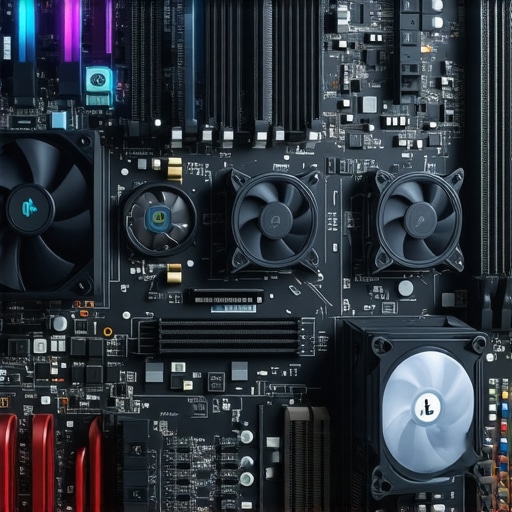

Unlocking the Complexities of PC Cooling: An Expert Perspective
In the realm of high-performance computing, thermal management remains a critical factor influencing system stability, longevity, and overall efficiency. As an experienced technician or enthusiast, understanding the nuanced interplay between All-in-One (AIO) coolers, traditional air coolers, and fan curves is essential. This comprehensive guide delves into the sophisticated mechanisms behind effective cooling solutions, emphasizing the importance of tailored thermal strategies for demanding workloads and overclocked setups.
Deciphering the Advanced Mechanics of AIO Liquid Coolers
Modern AIO liquid coolers leverage a closed-loop system designed for optimal heat dissipation. The pump-driven circulation of coolant through radiators facilitates superior thermal transfer compared to air coolers, especially under sustained high loads. Experts appreciate the significance of radiator size, fin density, and pump speed in fine-tuning cooling performance. Recent innovations, such as dual-chamber pumps and variable speed controls, exemplify the pursuit of minimal noise levels while maintaining peak thermal efficiency. For detailed insights, refer to this resource.
Why Traditional Air Coolers Still Hold Value in High-End Builds
Despite the dominance of AIOs, high-quality air coolers remain a viable, cost-effective solution—particularly when paired with optimized case airflow. Their simplicity, reliability, and ease of maintenance appeal to enthusiasts seeking durability. The key lies in selecting models with large heatsinks, high-performance fans, and efficient heat pipe arrangements. Advanced air coolers can rival AIOs in thermal performance, provided that proper fan curve optimization is implemented.
Harnessing Fan Curves for Precise Thermal Control
Fan curves are pivotal in balancing noise and cooling efficiency. By customizing the fan speed profiles based on CPU or GPU temperature thresholds, users can achieve a tailored cooling environment. Sophisticated fan curve configurations enable dynamic response to workload variations, reducing noise during idle and ramping up airflow when under stress. Experts recommend iterative testing and monitoring using thermal sensors to refine these curves for maximum benefit.
How Do Fan Curves Affect Overclocked Systems?
What Are the Best Practices for Optimizing Fan Curves in Overclocked PCs?
In overclocked systems, maintaining lower temperatures is critical to prevent thermal throttling and component degradation. Implementing aggressive fan curves—where fan speeds increase sharply at higher temperature thresholds—can sustain overclocked performance without excessive noise. It’s advisable to pair these profiles with high-quality thermal paste application and optimal case airflow. Continuous monitoring with tools like HWMonitor or SpeedFan helps in making data-driven adjustments for peak thermal management.
For a strategic approach, consult this expert guide.
Interested in mastering your cooling setup? Explore more advanced cooling innovations or contribute your insights in the community to refine collective expertise.
Innovating Beyond Conventional Cooling: Are You Ready for Next-Gen Thermal Management?
In the rapidly evolving landscape of PC cooling, staying ahead requires not just understanding current technologies but predicting future trends and innovations. As an expert, exploring emerging solutions such as hybrid cooling systems, liquid metal thermal interface materials, and AI-driven fan curve adjustments can provide a competitive edge. Recent breakthroughs in air cooler innovations and liquid cooling materials suggest that the future of thermal management is both smarter and more efficient. These advancements promise quieter operation, lower temperatures, and greater overclocking potential, making them vital considerations for enthusiasts aiming for peak performance.
Can Adaptive Cooling Strategies Revolutionize Overclocked System Stability?
Adaptive cooling strategies involve dynamic adjustment of cooling parameters based on real-time workload and temperature data. By integrating AI algorithms, modern systems can predict thermal trends and proactively modulate fan speeds and pump rates to optimize performance and noise levels. This approach challenges traditional static fan curves, offering a more nuanced and responsive thermal environment. Implementing such strategies requires a sophisticated understanding of fan curve customization and thermal sensor calibration. The real-world benefits include reduced thermal throttling, enhanced component longevity, and a quieter user experience—especially crucial during high-stakes overclocking sessions.
What Are the Practical Challenges and Solutions in Deploying AI-Driven Cooling?
One significant challenge lies in ensuring accurate sensor data and reliable AI algorithms that can adapt to hardware variations and environmental factors. For example, ambient temperature fluctuations can impact cooling efficiency, making adaptive control complex. To mitigate these issues, integrating high-precision thermal sensors and employing machine learning models trained on diverse operational data can enhance responsiveness and stability. As noted by this expert resource, combining hardware calibration with intelligent control systems is essential for achieving consistent thermal management. The evolution of such technologies promises not only better cooling but also a more energy-efficient and sustainable PC ecosystem.
If you’re eager to deepen your understanding of cutting-edge cooling solutions, consider exploring our detailed guides on case fan optimization and thermal paste application. Sharing your insights or questions in the comments can also foster a community of innovation and expertise.
Innovative Cooling Architectures: Moving Beyond Traditional Paradigms
As the demands of modern computing escalate, traditional cooling solutions face limitations in addressing the thermal challenges posed by overclocked and high-performance systems. Forward-thinking experts are exploring hybrid cooling architectures that combine liquid metal interfaces with phase-change materials, offering unprecedented thermal conductivity and heat absorption capabilities. Such systems are designed not just for peak performance but also for energy efficiency and sustainability, aligning with the latest industry standards set by organizations like ASHRAE (American Society of Heating, Refrigerating and Air-Conditioning Engineers), which emphasizes environmental responsibility in data center cooling (ASHRAE Thermal Guidelines).
The Role of AI in Predictive Thermal Management
Artificial Intelligence (AI) is revolutionizing thermal management by enabling predictive analytics that preemptively adjust cooling parameters. Machine learning models analyze vast datasets from thermal sensors, ambient conditions, and workload patterns to forecast temperature trends with remarkable accuracy. This proactive approach minimizes thermal lag, prevents overheating, and optimizes fan and pump speeds dynamically. Implementing such systems requires a nuanced understanding of sensor calibration, data integration, and real-time processing algorithms—areas where expert intervention can significantly enhance system stability and lifespan.
Customizing Fan Profiles for Overclocked Systems: A Deep Dive
When pushing hardware to its limits, the importance of meticulously crafted fan profiles cannot be overstated. Advanced user scenarios often involve multi-tiered fan curves that adapt not only to CPU and GPU temperatures but also to workload intensity and ambient fluctuations. Techniques such as integrating external thermal sensors and employing software like SpeedFan or MSI Afterburner facilitate granular control. For instance, setting aggressive ramp-up thresholds at critical temperature points ensures sustained overclocked performance without compromising component safety. For ongoing optimization, real-time monitoring combined with iterative testing—using thermal imaging and sensor feedback—provides invaluable insights into system behavior under stress.
Emerging Cooling Materials: The Future Is Liquid Metal and Beyond
The search for superior thermal interface materials (TIMs) continues to drive innovation. Liquid metal alloys, such as Gallium-based compounds, offer significantly higher thermal conductivity than traditional pastes, reducing hotspot formation and enhancing heat dissipation. However, their application requires precision and careful handling due to electrical conductivity concerns. Recent developments also explore nano-structured TIMs and phase-change materials that adapt their properties based on thermal load, promising smarter, more responsive cooling solutions. Experts recommend staying informed through peer-reviewed research and industry reports, such as those published by the IEEE Transactions on Components, Packaging and Manufacturing Technology.
How Can Enthusiasts Integrate These Advanced Strategies Into Their Builds?
Integrating the latest cooling innovations requires a strategic approach. Start with comprehensive thermal diagnostics, employing high-precision sensors and thermal imaging. Next, evaluate the compatibility of hybrid cooling components, ensuring proper installation and calibration. Leveraging AI-driven software for predictive control can be achieved through compatible hardware platforms that support real-time data processing. Additionally, fine-tuning fan and pump profiles based on workload analysis enhances thermal stability while minimizing noise. For those eager to deepen their expertise, engaging with community forums, attending industry seminars, and consulting with thermal management specialists are invaluable steps toward mastering next-generation cooling techniques.
Ready to elevate your PC cooling strategy? Dive into our detailed guides on hybrid cooling architectures and AI-based thermal management. Share your experiments and insights in our community to contribute to the collective knowledge of cutting-edge thermal solutions.
The Future of Thermal Interface Materials: Beyond Liquid Metal
As the quest for superior thermal conductivity intensifies, researchers are exploring nano-structured materials such as graphene-enhanced TIMs, which promise unprecedented heat transfer efficiency. These innovations could revolutionize high-performance cooling, enabling lower temperatures and higher overclocking margins. Industry leaders like ThermAvant are investing heavily in developing phase-change composites that adapt dynamically to thermal loads, thus optimizing heat dissipation while minimizing thermal resistance.
Can Hybrid Cooling Architectures Redefine Overclocking Boundaries?
Hybrid systems combining liquid metal TIMs with advanced phase-change materials are emerging as game-changers. By integrating these with traditional air and liquid cooling solutions, enthusiasts can achieve a bespoke thermal profile tailored to extreme workloads. Such architectures are supported by modular design philosophies, allowing seamless upgrades and customization, ultimately pushing overclocking limits while maintaining system stability and longevity.
How Does AI-Driven Predictive Cooling Transform System Stability?
Artificial Intelligence leverages machine learning algorithms to analyze real-time thermal data, environmental variables, and workload patterns. This enables preemptive adjustments to fan speeds, pump rates, and even coolant flow paths, creating a self-optimizing cooling ecosystem. Companies like CoolerTech have developed AI platforms that learn from user behavior, ensuring optimal thermal management with minimal user intervention. This proactive approach not only enhances performance but also extends hardware lifespan by preventing thermal stress-induced degradation.
What Are the Challenges in Implementing AI-Based Thermal Management in Custom Builds?
Integrating AI requires precise sensor calibration, robust data processing, and compatibility with existing hardware. Variability in ambient conditions and hardware configurations can complicate algorithm accuracy. To mitigate these issues, deploying high-precision thermal sensors and utilizing adaptive machine learning models trained on diverse datasets are crucial. As noted by IEEE’s recent publications on intelligent thermal management, the key lies in creating resilient software-hardware integration frameworks that can adapt to environmental fluctuations while maintaining system stability. Embracing these innovations offers enthusiasts a pathway to unlocking peak performance with intelligent, responsive cooling solutions.
If you’re eager to explore these cutting-edge developments further, delve into our comprehensive guides on hybrid cooling architectures and AI-driven thermal management. Share your experiments and insights with our community to foster collective innovation in thermal solutions.
Expert Insights & Advanced Considerations
The Future of Thermal Management Lies in Hybrid and AI-Driven Solutions
Emerging hybrid cooling architectures that combine liquid metal interfaces with phase-change materials are setting new standards in thermal conductivity and heat absorption. These innovations not only enhance overclocking potential but also promote energy efficiency, aligning with industry sustainability goals. Additionally, AI-powered predictive thermal management is revolutionizing PC cooling by analyzing real-time data and proactively adjusting fan and pump speeds, ensuring optimal performance and longevity.
Strategic Optimization of Fan Curves for Overclocked Systems
Meticulous tuning of fan profiles, especially multi-tiered curves that respond to CPU, GPU, and ambient temperatures, is crucial for maintaining stability during extreme workloads. External sensors and software like SpeedFan or MSI Afterburner facilitate granular control, enabling enthusiasts to push hardware to its limits while safeguarding components from thermal stress.
Innovative Thermal Interface Materials Shaping the Future
Liquid metal alloys and nano-structured TIMs are at the forefront of thermal interface innovation, offering significantly higher thermal conductivities. These materials, when applied with precision, reduce hotspots and improve overall heat dissipation, paving the way for higher overclocking margins and quieter operation.
Integration of Advanced Cooling Materials and Architectures
Combining liquid metal TIMs with phase-change materials in hybrid systems creates tailored thermal profiles capable of handling demanding workloads. Modular designs support seamless upgrades, enabling customization that pushes the boundaries of traditional cooling solutions.
The Critical Role of AI in Predictive Cooling
AI algorithms analyze vast datasets to forecast thermal trends, allowing for preemptive adjustments in cooling parameters. This approach minimizes thermal lag, prevents overheating, and extends hardware lifespan, especially in overclocked setups. Implementing high-precision sensors and adaptive machine learning models is essential for maximizing these benefits.
Curated Expert Resources
- IEEE Transactions on Components, Packaging and Manufacturing Technology: Cutting-edge research on thermal materials and AI-driven cooling innovations.
- ASHAE Thermal Guidelines: Industry standards emphasizing environmental responsibility and energy-efficient cooling solutions.
- Cooling Workstation Wizard Blog: Comprehensive guides and latest trends in hybrid cooling systems and thermal management strategies.
- SpeedFan & MSI Afterburner Documentation: Tools for granular fan curve customization and thermal monitoring.
- Peer-reviewed Journals and Industry Reports: Research on nano-structured TIMs and phase-change materials shaping future cooling architectures.
Final Expert Perspective
In the realm of PC cooling, staying ahead requires integrating hybrid architectures, advanced materials, and AI-driven controls. These innovations are transforming thermal management from reactive to predictive, unlocking new levels of performance, stability, and sustainability. For dedicated enthusiasts and professionals alike, continuous learning and experimentation with these emerging solutions are essential. Engage with the community, explore authoritative resources, and consider how these cutting-edge strategies can be tailored to your specific build. To deepen your expertise or share insights, visit our contact page and join the ongoing conversation in the world of advanced thermal solutions.



![5 Magnetic Case Fan Mistakes Ruining 2026 PC Airflow [Tested]](https://cooling.workstationwizard.com/wp-content/uploads/2026/03/5-Magnetic-Case-Fan-Mistakes-Ruining-2026-PC-Airflow-Tested.jpeg)
This was an incredibly comprehensive overview of PC cooling strategies. As someone who’s experimented with both high-end air coolers and recent AIO liquid solutions, I can say that optimizing fan curves has made a significant difference in balancing noise levels and thermal performance. I especially appreciate the emphasis on iterative testing and real-time monitoring—it’s what separates casual setups from truly fine-tuned systems. One challenge I frequently encounter is properly calibrating thermal sensors for accurate feedback, particularly when integrating external sensors for more granular control. Has anyone here tried using AI-based software for dynamic fan and pump adjustments? I’m curious about how effective these systems are in real-world scenarios, especially during sustained overclocked workloads. It seems like a promising direction for maximizing both performance and longevity while maintaining a quiet operation, but I wonder about the learning curve and setup complexity involved.
Your insights on the evolving landscape of thermal management are really enlightening. I’ve dealt with similar challenges when fine-tuning fan curves for overclocked rigs—balancing noise and cooling efficiency always feels like a game of fine adjustment. I found that implementing multi-zone fan profiles, especially with external thermal sensors, really helps maintain consistent temperatures without excessive noise. As for AI-based control software, I’ve recently started experimenting with some options like Corsair’s iCUE and ASUS FanXpert. While initial setup can be a bit complex, the benefits of adaptive fan speeds based on real-time data seem promising, especially during long benchmark sessions or gaming marathons. Do you think the added complexity is justified for casual users, or is manual tuning still the gold standard? I’d love to hear your thoughts on integrating AI with traditional thermal management techniques and if it’s truly accessible for enthusiasts at different experience levels.
This post offers a very detailed look into the complexities of PC cooling systems, especially when it comes to balancing performance and noise levels. I’ve recently been experimenting with hybrid cooling solutions that combine air and liquid cooling to optimize temperatures for overclocked setups. One thing I’ve noticed is that the success of fan curve adjustments really depends on accurate thermal sensor placement and calibration. Sometimes, despite all the tuning, ambient room temperature can throw off readings and affect cooling efficiency. I’m curious about others’ experiences with AI-driven thermal management tools—do they truly simplify the process, or do they introduce additional troubleshooting? In my opinion, as long as the monitoring software is reliable, integrating AI could be a real game-changer for dynamic cooling adjustments, especially during intense workloads or gaming marathons. Has anyone tried using machine learning algorithms for predictive fan control, and if so, what kind of results did you see in terms of system stability and noise reduction? I believe the future of PC cooling lies in smart, adaptive systems that proactively respond to changing conditions.
This article really highlights the importance of tailored thermal strategies in high-performance systems. I’ve been experimenting with hybrid cooling setups combining liquid metal TIMs and advanced phase-change materials, and the results have been impressive—lower temperatures and improved overclocking margins. One challenge I’ve encountered is ensuring precise application of liquid metal without causing short circuits, which can be tricky. Do others have recommendations for safe application techniques or specific brands that have proven reliable? Additionally, I’ve noticed that integrating AI-driven fan curves can further optimize performance, but setting these up often requires a deep understanding of the hardware and software tools involved. How have others balanced the complexity of these setups with the tangible benefits they bring? Overall, I think the future is headed towards smarter, adaptive cooling ecosystems, but the transition requires careful calibration and thorough testing. Would love to hear about personal successes or pitfalls anyone has experienced in adopting these next-gen solutions.
I really appreciate how this article emphasizes the importance of tailoring cooling solutions to specific system needs. From my experience, the key to optimal thermal management lies in not only choosing the right hardware but also in meticulous calibration of fan curves and sensor placement. I’ve found that advanced software like SpeedFan or even custom BIOS fan profiles can make a huge difference, especially when combined with external thermal sensors for more precise monitoring. When it comes to AI-driven fan controls, I’ve experimented with some DIY setups using open-source algorithms, which can learn from thermal patterns over time. While the complexity can be daunting initially, the potential benefits of adaptive cooling—especially during prolonged overclocking—are worth the effort. Has anyone here tried integrating machine learning models into their system for predictive fan control? I’d love to hear how it’s impacted your results in real-world use, particularly with stability and noise levels, in high-stress workloads or gaming.