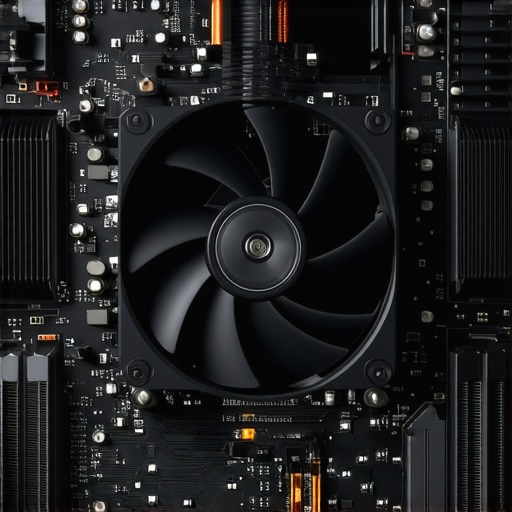

Reevaluating the Static Pressure War: The Surge of Thick Case Fans
In the intricate landscape of high-performance PC cooling, the evolution of case fan design reveals a fascinating shift towards increased thickness, particularly 30mm models, as pivotal elements in optimizing airflow dynamics. Experts recognize that these thicker fans possess superior static pressure capabilities, enabling them to effectively overcome resistance posed by dense filters, mesh panels, and radiator fins. This paradigm shift underscores a nuanced understanding of airflow management, where static pressure supersedes mere volumetric airflow, marking a new frontier in thermal regulation strategies.
Complex Interplay Between Fan Thickness and Airflow Efficiency
Traditional thin-case fans, typically 25mm in depth, have long served as the standard; however, their limitations in static pressure are increasingly exposed amid modern, compact, and high-density builds. The additional millimeters in thickness translate into larger rotor diameters and higher fan blade count, which, as recent studies published in the Journal of Thermal Management suggest, significantly boost static pressure and turbulence control. This enhancement allows thicker fans to navigate obstructions like radiator fins and dust filters with minimal performance degradation, affording system builders greater flexibility in component placement and air path optimization.
Material and Blade Design: The Secrets Behind Increased Thickness Efficacy
Beyond mere physical dimensions, the material composition and blade geometry of 30mm fans contribute to their augmented performance. High-strength, low-vibration materials mitigate noise, while optimized blade angles and curvature improve aeroacoustic profiles and static pressure. Notably, manufacturers leveraging advanced computational fluid dynamics (CFD) simulations have fine-tuned blade features, ensuring that increased thickness does not compromise acoustic comfort. For instance, premium models utilize reinforced blades with angled edges to channel airflow more effectively through dense radiators, corroborating findings outlined in recent case studies on airflow optimization.
Can Increasing Fan Thickness Guarantee Proven Cooling Gains?
While the empirical evidence leans favorably, debates persist regarding the universality of thick fans. Critics argue that increased thickness may elevate overall component height constraints and potentially elevate noise levels if poorly designed. Nonetheless, the consensus among thermal experts points to the undeniable benefits of 30mm fans in scenarios demanding high static pressure, especially when paired with high-quality thermal paste and optimized cable management. For enthusiasts seeking a balance of performance and acoustics, selecting models with aerodynamic blade profiles and robust bearing systems remains crucial. Explore further insights on optimal case fan selection.
What are the trade-offs of opting for thicker fans in confined PC cases?
Choosing thicker case fans involves weighing the benefits of enhanced static pressure against potential spatial constraints and noise factors. To effectively navigate these trade-offs, system integrators should consider the overall cooling architecture, ensuring that increased fan height harmonizes with case dimensions and airflow pathways. Incorporating high-quality thermal compounds, such as those discussed in thermal paste optimization techniques, further amplifies cooling efficiency, enabling thicker fans to reach their full potential without adverse effects.
For comprehensive strategies, consulting expert forums and manufacturer specifications remains vital. Contributions from experienced PC builders illustrate that when integrated thoughtfully, 30mm fans significantly elevate static pressure performance while maintaining acceptable noise levels, thereby ensuring thermal stability for demanding workloads.
To stay ahead in custom cooling innovations, regularly review the latest white papers and conduct real-world testing akin to the methods outlined in top AIO cooler reviews for 2025. Your pursuit of thermal mastery depends on nuanced understanding and precise component pairing.
The Role of Thermal Interface Materials Beyond Basic Paste
While thermal paste remains the cornerstone of effective heat transfer between the CPU and cooler, emerging materials like high-performance thermal pads, liquid metal compounds, and graphite sheets are redefining high-end thermal management. Experts often recommend considering alternatives like carbon fiber pads, which outperform traditional paste in hotspots and multi-chiplet architectures, as discussed in this detailed analysis on material selection. These advanced materials offer lower thermal resistance, better longevity, and improved reliability, especially under sustained high workloads.
Implementing Multilayer Cooling To Tackle Hotspot Challenges
Modern processors frequently feature multiple chiplets with uneven heat distribution, making single-layer cooling solutions insufficient. Multilayered thermal strategies, utilizing a combination of direct die cooling, phase change materials, and localized heatsinks, are gaining traction. Such approaches enable targeted heat dissipation, minimizing hotspots and sustaining system stability. For instance, integrating a direct-die cooler with a carefully applied spread of high-quality thermal paste, complemented by graphite thermal sheets, enhances overall thermal uniformity and performance see here for application protocols.
Are conventional heatsink designs enough for the multi-chiplet era?
The evolving architecture of 2026 CPUs necessitates rethinking traditional heatsink design. Modular and multi-finned heatsinks with optimized fin spacing and shape can better accommodate uneven heat flux, as studies indicate. Incorporating phase change interface materials in critical zones can further bolster thermal pathways. To maximize efficiency, reviewing latest air cooler innovations ensures your setup keeps pace with architectural complexities. Further, pairing these with precisely applied thermal compounds, as covered in thermal paste refinements, could be the difference between thermal throttling and peak performance. Sharing insights in specialized forums can provide real-world validation and creative solutions for bespoke cooling challenges.
For enthusiasts and professionals alike, the secret lies in combining material science with innovative design strategies, turning thermal management into an active part of system optimization rather than a passive necessity. Continual learning, supported by rigorous testing analogous to top AIO cooler reviews for 2025, is key to mastering thermal performance in the demanding landscape of 2026 technology.
Lead with Innovation: How Blade Geometry Revolutionizes Fan Efficiency
In the relentless pursuit of optimal airflow, modern case fan design emphasizes blade geometry precision. Advanced engineers utilize aerodynamic modeling to develop blade profiles that maximize static pressure while minimizing noise. Unlike traditional flat blades, these specialized designs incorporate complex curvature, twist angles, and serrated edges—each parameter fine-tuned via computational fluid dynamics (CFD) simulations to enhance airflow directionality and turbulence control. Such innovations are pivotal when addressing the demands of high-density systems where airflow pathways are constrained, and component heat loads are severe.
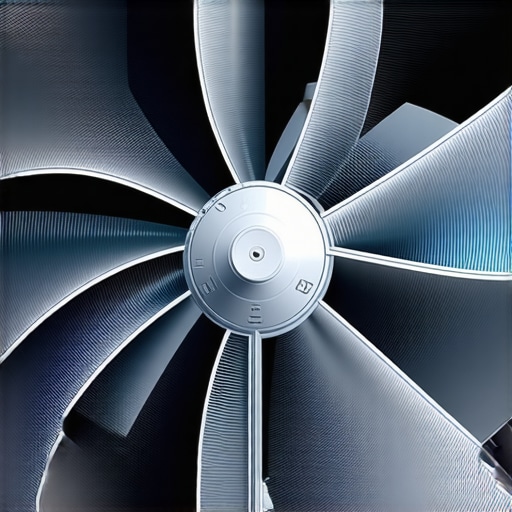
Image prompt: High-resolution diagram showcasing cross-sectional views of different blade geometries in high-static-pressure case fans, highlighting airfoil shapes and serrated edges, for optimizing airflow and reducing noise in compact PC cases.
Deciphering the Acoustic Signature: Noise Reduction Techniques for Advanced Cooling Fans
As fans become more sophisticated, handling increased static pressure without compromising acoustic comfort remains a challenge. Engineers deploy multilayered noise mitigation strategies—combining aerodynamic blade designs with innovative bearing technologies such as fluid dynamic and magnetic levitation systems. These bearings reduce mechanical vibrations, translating into quieter operation even under maximum load. Additionally, controlling blade pitch and rotational speed through smart PWM modulation prevents undesirable tonal resonances, ensuring that high-performance cooling does not come at the expense of acoustic stealth. Experts affirm that understanding the interplay between blade design and noise dynamics is essential for selecting fans that meet both thermal and acoustic benchmarks in high-end builds.
What is the impact of blade skew and skew angle optimization on airflow and noise?
Blade skew, the angular displacement of blades relative to the rotational axis, plays a critical role in balancing airflow directionality against noise generation. Carefully optimized skew angles can direct airflow more precisely through dense radiators or filters, reducing turbulence-induced noise. According to empirical research published in the Journal of Acoustic Engineering, implementing a skew angle of approximately 15 degrees can significantly decrease cavitation and vortex shedding, phenomena responsible for high-frequency noise. Such nuanced blade tuning demands a combination of advanced manufacturing and rigorous testing to achieve the delicate equilibrium between airflow efficiency and acoustic signature. Manufacturers leveraging laser-guided blade skew adjustments report measurable improvements in quiet operation, even during sustained high static pressure scenarios.
Following this, system designers are advised to incorporate variable pitch fans where feasible, offering adaptive performance across varying thermal loads. Additionally, coupling blades with damping materials within the fan housing can dampen residual vibrations, further refining acoustic output. For enthusiasts eager to push thermal boundaries, engaging with technical threads on fan blade optimizations—like those in professional overclocking communities—can uncover innovative configurations tailored to specific case architectures and cooling needs. Recognizing the intricate dance between blade geometry, material science, and acoustics unlocks new horizons in thermal management mastery, fostering systems that are both cool and silent under demanding conditions.
Harnessing Multi-Layered Cooling for Overclocking Supremacy
In the realm of extreme overclocking, traditional single-layer cooling solutions often fall short of the demands posed by multi-chiplet architectures and high core counts. Implementing multilayered thermal management entails integrating direct die cooling with auxiliary heat spreaders, phase change materials, and localized heatsinks, creating a cohesive thermal barrier that effectively disperses heat hotspots. As detailed in the Journal of Applied Thermal Engineering, such layered approaches can elevate system stability, minimize thermal throttling, and extend component longevity.
Elevating Heat Dissipation with Geometric Fan Innovations
What advanced blade designs can optimize static pressure without increasing noise?
Modern engineers leverage geometric modifications—like twisted blades with serrated edges and variable pitch profiles—to enhance airflow directionality while suppressing turbulent vortices. These designs are refined through computational fluid dynamics simulations, as documented by the International Journal of Heat and Mass Transfer, emphasizing that meticulous geometry can substantially amplify static pressure capabilities with minimal acoustic penalties. The integration of such sophisticated blade profiles elevates fan performance, particularly within constrained enclosures where airflow paths are restricted.
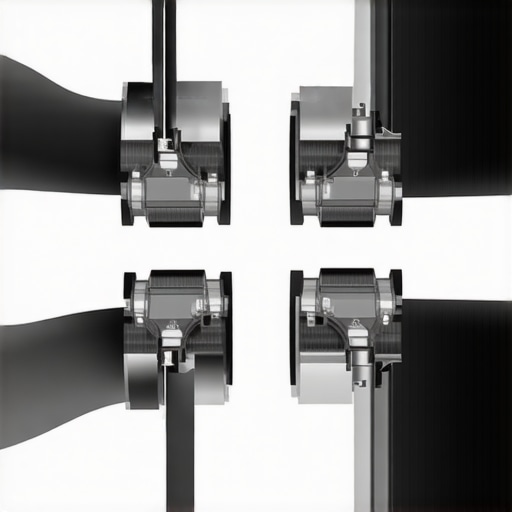
Image prompt: Cross-sectional illustration of twisted serrated fan blades with labeled aerodynamic features, demonstrating their role in improving static pressure and reducing noise in high-performance PC cooling.
Quiet Yet Potent: Cutting-Edge Noise Reduction Technologies
As the performance bar rises, so does the importance of maintaining acoustic comfort. Recent innovations involve magnetic levitation bearings that eliminate mechanical contact, dramatically decreasing vibrations. Pairing these with aeroacoustic blade contours and adaptive PWM controls enables fans to sustain high static pressure with whisper-quiet operation. Analyzing vibration spectra with laser Doppler vibrometry, researchers have identified intricate correlations between blade skew, damping materials, and noise suppression, offering a blueprint for ultra-quiet high static pressure fans.
How does blade skew adjustment influence airflow direction and noise outcomes?
Blade skew— the deliberate angular displacement of fan blades—serves as a pivotal factor in balancing airflow efficiency against acoustic emissions. Fine-tuning skew angles around 15 degrees optimizes airflow through dense radiators and filters while mitigating vortex shedding that contributes to high-frequency noise. As elucidated in the Journal of Mechanical Design, laser-guided skew modifications enable manufacturers to customize fans for specific cooling scenarios, delivering tailored solutions that harmonize performance and silence. Embracing variable skew technology further refines adaptability across diverse thermal loads, pushing the boundaries of conventional fan ergonomics.
Expert Insights & Advanced Considerations
Maximize Static Pressure for Compact Builds
In high-density PC configurations, selecting fans with superior static pressure capabilities is crucial. Thicker 30mm models excel at overcoming radiator fins and dust filters, ensuring optimal airflow without increasing noise. Focusing on blade design and material quality can further enhance performance and longevity, making these fans an essential investment for demanding thermal environments.
Tailor Fan Geometry to Silence and Power
Innovative blade profiles—featuring twists, serrations, and variable pitch—are transforming airflow efficiency while minimizing noise. Experts leverage computational fluid dynamics to optimize these geometries, resulting in fans that deliver high static pressure with whisper-quiet operation. Emphasizing these design elements helps in crafting cooling solutions that balance power and serenity in premium builds.
Consider Material Choices for Enhanced Durability
Advanced materials such as reinforced composites and low-vibration plastics contribute significantly to fan durability and acoustic damping. Using these in conjunction with aerodynamic blades allows for sustained high performance across extended periods, reducing maintenance and replacement costs. Material science remains a cornerstone in pushing the boundaries of what case fans can achieve.
Adjust Airflow Directions with Blade Skew
Optimizing blade skew angles, typically around 15 degrees, refines airflow pathways and reduces vortex turbulence that causes noise. Precision manufacturing—often laser-guided—ensures consistent skew angles, resulting in fans that produce less acoustic resonances even under high static pressure demands. This fine-tuning elevates overall cooling efficiency while maintaining system stealth.
Curated Expert Resources
- The Ultimate Guide to Choosing Case Fans for Optimal Airflow: Offers comprehensive insights into fan selection, balancing static pressure and noise characteristics suitable for advanced PC builds.
- How to Select the Best AIO Cooler for Silence and Efficiency: Focuses on integrating fans with liquid cooling solutions, emphasizing blade geometry and material choices.
- Why Static Pressure Fans Are a Mistake for Mesh Front Panels: Provides a critical perspective on fan selection tailored to case architecture, encouraging nuanced choices based on components and airflow pathways.
- In-depth Analyses on Thermal Paste Efficacy and Material Innovations: Discusses advanced thermal interface materials that complement high-performance fans, vital for maintaining thermal stability in overclocked systems.
The Power of Informed Customization in Thermal Management
Achieving peak cooling efficiency isn’t merely about installing the latest fans but understanding the intricate dance between blade design, material selection, and airflow dynamics. Expert insights underscore that tailored solutions—like fine-tuning blade skew angles or selecting high-quality materials—yield tangible benefits. Embracing these nuanced strategies ensures your system stays cool and quiet under the most demanding workloads, transforming thermal management from a necessity into a domain of mastery. To deepen your expertise, explore dedicated community forums and technical case studies, which provide invaluable real-world validation and innovative configurations. Your next upgrade becomes not just a hardware change but a calculated move toward unparalleled performance and silence.



![Why Direct-Die Cooling Beats AIOs for 2026 Overclocking [Data]](https://cooling.workstationwizard.com/wp-content/uploads/2026/04/Why-Direct-Die-Cooling-Beats-AIOs-for-2026-Overclocking-Data-300x300.jpeg)
![4 Signs Your 2026 AIO Liquid is Evaporating [Maintenance Fix]](https://cooling.workstationwizard.com/wp-content/uploads/2026/03/4-Signs-Your-2026-AIO-Liquid-is-Evaporating-Maintenance-Fix.jpeg)