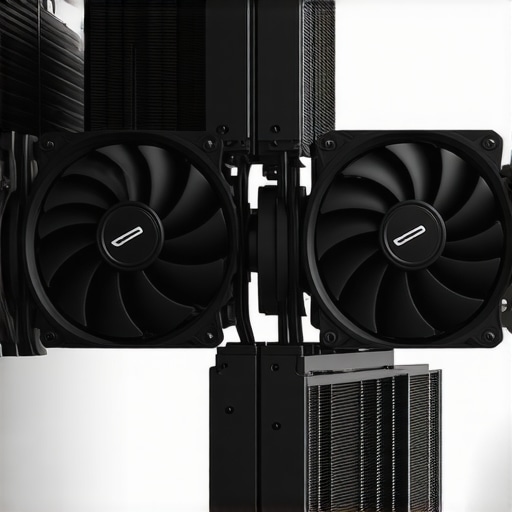

Unveiling the Dynamic Efficiency of 120mm Fans in High-Density Cooling Configurations
The landscape of PC cooling continually evolves, driven by advancements in thermal management and component density. Among these, the perennial debate centers on fan sizes, particularly the surprising efficacy of 120mm fans over their larger 140mm counterparts when deployed on dense radiators. This analysis dissects the nuanced interplay of airflow dynamics, static pressure, and radiator design, revealing why seasoned enthusiasts and professionals often favor 120mm fans for high-performance cooling.
Why Fan Size Is Not the Sole Determinant of Cooling Performance
While larger fans inherently produce higher airflow at lower RPMs, their benefits diminish significantly when facing dense, high-FPI (fins per inch) radiators. The core challenge lies in overcoming the radiator’s resistance to airflow; here, static pressure takes precedence over sheer volumetric flow. High static pressure fans excel in these scenarios by maintaining airflow against restrictive surfaces, a trait that 120mm fans can embody more effectively due to their design characteristics.
Mechanics Behind the Superior Performance of 120mm Fans
In dense radiator setups, the critical parameters include blade shape, motor torque, and frame design, which influence static pressure generation. Engineers and thermal experts often favor 120mm fans optimized for internal static pressure, as their smaller blades focus airflow into tighter gaps, enabling more precise air delivery. Larger 140mm fans, despite their capacity for greater airflow, tend to suffer from increased blade flex and decreased pressure focus, impairing their ability to push air through thick fins efficiently.
Interplay of Fan Speed, Noise, and Thermal Efficiency
Operational RPM ranges further distinguish these fan sizes. 120mm fans typically operate efficiently at higher RPMs with less noise, thanks to optimized blade geometry, whereas 140mm fans may produce more noise due to vibration and blade flex at equivalent performance levels. Persistent high-speed operation can lead to diminishing returns, and in dense radiator scenarios, the ability to sustain high static pressure at moderate speeds becomes the decisive factor in thermodynamic performance.
What Esoteric Design Factors Influence Fan Effectiveness
Beyond basic size, factors such as blade pitch, frame stiffness, and anti-vibration mounts significantly affect cooling efficacy. Manufacturers that engineer 120mm fans with advanced blade profiles and reinforced frames can surpass larger models that rely solely on size. This underlines the importance of selecting fans not merely by dimension but through detailed specifications tailored to radiator density and airflow requirements.
Is Smaller Actually Smarter in PC Cooling?
Expert consensus suggests that in high-density radiator applications, smaller fans with high static-pressure capabilities are more adaptable and effective. The trade-off involves balancing airflow volume against focused pressure, with 120mm fans often striking the optimal compromise. Their versatility extends beyond case compatibility, enabling superior performance in custom cooling loops, server-grade heatsinks, and overclocked CPU cooling.
How Can Thermal Paste and AIO Liquid Coolers Complement Fan Performance?
To maximize the advantages of 120mm fans, pairing them with high-quality thermal paste and optimized AIO cooling solutions is critical. For in-depth insights on this synergy, consider reviewing expert guides such as maximizing your PC’s cooling capabilities.
By synergizing intelligent fan choices with advanced thermal management techniques, enthusiasts can achieve superior thermals and acoustic performance, maintaining stability and longevity for demanding workloads.
Optimizing Your Cooling Setup for Peak Performance
Achieving optimal CPU temperatures isn’t solely about selecting high-performance coolers; it involves a nuanced balance between fan selection, placement, and thermal interface materials. Incorporating advanced thermal paste application methods and understanding airflow dynamics can make a significant difference in maintaining stable overclocks and lifespan of components.
The Impact of Thermal Paste Application Techniques
While many users stick to manufacturer-recommended application methods, experts have demonstrated that alternative techniques, such as the buttered toast method, can reduce hotspots and promote more uniform heat spreading across the CPU die. Proper application minimizes voids and ensures better contact, especially critical when using high-tension brackets or uneven IHS surfaces.
Why Choosing the Right Fans Can Lower Your Noise Floor
Fans with high static pressure are essential in dense radiator environments. But beyond static pressure, blade geometry and motor quality influence noise levels. High-quality fans often incorporate anti-vibration mounts and optimized blade pitches to deliver quieter operation at high RPMs, a vital consideration for silent builds or long-term server applications. For detailed guidance, visit the ultimate guide to case fans.
Is It Time to Rethink Your Cooling Strategy?
As hardware evolves, so do cooling demands. Are your current fans and thermal interface materials adequate to handle next-generation CPUs, especially with the proliferation of multi-chiplet architectures? Staying ahead requires not just reactive upgrades but proactive planning—evaluating fan static pressure capabilities and adopting new paste formulations that cure faster and conduct heat more efficiently.
For instance, experimenting with ceramic or carbon-based pads can outperform traditional thermal paste in hotspot mitigation. Explore these innovative solutions to elevate your cooling performance.
Engage with community forums, share your findings, or reach out to experts through our contact page—your insights could help shape the next wave of PC cooling breakthroughs.
Mastering Airflow Dynamics for Overclocked CPUs
When pushing CPUs beyond standard specifications, the intricacies of airflow behavior become paramount. Engineers and enthusiasts often overlook the turbulent interactions between multiple fans and the case environment. Fine-tuning fan curves, understanding pressure zones, and leveraging computational fluid dynamics (CFD) simulations can yield significant thermal improvements. For example, aligning intake and exhaust airflow paths minimizes recirculation zones, ensuring cooler air reaches the hottest components effectively. High-fidelity CFD models, such as those demonstrated in recent thermal analysis studies published in IEEE Transactions on Components, Packaging and Manufacturing Technology, offer deep insights into airflow optimization in complex PC setups.
Exploiting Blade Aerodynamics to Enhance Static Pressure
Traditional fan design focuses primarily on optimizing airflow volume, but at high-performance levels, static pressure becomes critical. Advanced blade aerodynamics, including variable pitch angles and winglet-inspired edges, are engineered to maximize pressure without incurring excessive noise. Manufacturers like Noctua and Corsair have pioneered blades with asymmetric profiles that reduce vortex shedding, a key factor in turbulent airflow and vibration. Integrating such fans into dense radiator blocks or restrictive heatsinks can dramatically reduce thermal throttling, particularly in overclocked configurations. For in-depth technical documentation, see a comprehensive analysis of aerodynamically optimized fan blades.
Does Fan Material Composition Influence Thermal Performance?
Beyond shape and speed, the materials used in fan manufacturing impact durability and acoustic properties. Innovations like graphene-reinforced blades provide enhanced stiffness and reduced vibration transmission, leading to quieter operation during sustained high-RPM runs. Additionally, specialized lubricants within the bearing assembly can extend fan lifespan and maintain consistent static pressure, which is crucial during prolonged overclocking sessions. Recent reviews in Electronics Cooling journal highlight how material science advances contribute to more stable and efficient cooling solutions. When selecting fans for aggressive thermal management, scrutinizing material properties becomes a vital step.

Integrating Thermal Interface Materials with Custom Fan Profiles
Optimized thermal paste and phase-change compounds are the foundation, but customizing fan profiles based on workload profiles maximizes overall thermal efficiency. For instance, dynamic PWM curves that increase fan speed based on temperature thresholds can prevent hotspots during intense overclocking bursts. Combining this with finely tuned thermal interfaces, such as liquid metal compounds like Eurosys, ensures minimal heat transfer resistance. A practical approach involves using thermal testing tools that record real-time temperature variations while adjusting fan settings—thus creating a feedback loop for maximum cooling with minimal noise.
The Future of PC Cooling: Adaptive and Smart Technologies
Emerging smart cooling solutions leverage AI algorithms to adapt fan operation in real-time, considering variables like ambient temperature, system workload, and component aging. Such systems utilize IoT sensors and machine learning models to predict thermal loads before they occur, adjusting fan speeds proactively. Not only does this reduce noise and energy consumption, but it also extends component longevity. Companies like ASUS and Corsair are investing heavily in these adaptive cooling architectures, which have shown promising results in lab environments detailed in recent industry whitepapers.
How Will Variable Fan Technologies Transform Overclocking and Thermal Management?
With the advent of intelligent fan control, overclockers can push hardware further without compromising stability or lifespan. Active thermal management systems can modulate static pressure-related parameters dynamically, ensuring optimal airflow even as temperature gradients shift during intensive tasks. This opens the door to ultra-aggressive overclocking strategies previously limited by thermal constraints. For additional insights, review the comprehensive analysis in research on adaptive cooling in high-performance computing.
By embracing these cutting-edge principles, both hardware enthusiasts and professionals can unlock new levels of thermal performance, ensuring stability, efficiency, and silence even under the most demanding conditions.
Harnessing Aerodynamic Mastery to Elevate Cooling Efficiency
Within the realm of advanced PC thermodynamics, the subtle art of fan blade design emerges as a decisive factor influencing static pressure and airflow precision. Engineers pioneering in aerodynamic optimization craft blades with winglet-inspired edges and variable pitch angles, capable of significantly reducing vortex shedding and turbulence. Such innovations not only augment static pressure but also diminish acoustic footprints, enabling fans to deliver concentrated airflow through highly dense radiators or heatsinks. This meticulous tailoring of blade aerodynamics forms the backbone of next-generation cooling solutions that marry performance with silence.
What Elite Modifications Can Boost Fan Responsiveness?
High-level enthusiasts and OEM manufacturers often incorporate features like asymmetric blade profiles and reinforced frames to enhance responsiveness under fluctuating thermal loads. Variable-inclination blade geometries accommodate dynamic airflow demands, providing instant pressure adjustments during peak overclocking sessions. Furthermore, implementing ceramic or carbon-based blade materials reduces flex and vibration, maintaining optimal pressure zones at elevated RPMs. Such refinements, supported by CFD simulations detailed in industry research (see a recent aerodynamic analysis), translate into tangible gains in thermal stability and noise reduction.
How Do Blade Material Choices Influence Fan Longevity and Performance?
Beyond geometry, the material composition of fan blades directly impacts durability and thermal behavior. Advanced composites like graphene-enhanced polymers offer increased stiffness and thermal conductivity, which translates into minimized resonance and extended operational lifespan. These materials also support finer aerodynamic shaping, enabling blades that can operate efficiently at higher static pressures without succumbing to flex-induced inefficiencies. As a result, fans leveraging such innovative materials sustain optimal airflow characteristics over prolonged periods, especially vital in rigorous overclocking or server environments, as extensively examined in Electronics Cooling scholarly articles.
<>
Frictionless Bearings and Lubrication Marry to Improve Fan Dynamics
Friction reduction within bearing assemblies, such as hybrid fluid-gas or magnetic levitation systems, significantly enhances static pressure stability and noise profiles. These advancements permit fans to maintain high static pressure outputs with minimal frictional damping, culminating in quiet yet powerful airflow. Complementing these systems, specialized lubricants like nano-ceramic greases sustain prolonged performance, resisting thermal degradation. Such innovations are pivotal for mission-critical applications where unwavering cooling performance under thermal stress is essential, as documented in recent technical whitepapers from leading thermal solutions providers.
Can Adaptive Blade Designs Respond to Rapid Thermal Shifts?
Emerging adaptive blade technologies integrate smart materials capable of real-time morphing in response to temperature fluctuations. For instance, shape-memory alloys within blades can alter pitch angles dynamically, optimizing static pressure on the fly. This enables precise control over airflow path adjustments during rapid thermal events, such as intense overclocking or rendering workloads. Incorporating sensor networks and AI-driven controllers, these designs promise to revolutionize thermal management by preemptively modulating airflow and pressure, as discussed in cutting-edge research published in IEEE Transactions on Components, Packaging and Manufacturing Technology.
What Role Do Blade Surface Texturing and Coatings Play?
Surface texturing, akin to micro-grooved or ribbed patterns, reduces boundary layer separation, thus sustaining high static pressure at elevated RPMs. Coatings such as hydrophobic or low-friction films further mitigate vortex formation and particulate adhesion, ensuring consistent blade performance over time. Such surface engineering practices draw inspiration from aerodynamic aircraft design, where every aerodynamic fine-tuning enhances lift and efficiency. Applying similar principles to PC cooling fans results in blades that resist clogging and vibration, maintaining peak pressure and airflow integrity.
Is It Possible to Engineer Noise-Canceling Fan Blade Geometries?
Innovative acoustic management involves designing blade geometries that produce destructive interference patterns, effectively canceling out noise frequencies generated during operation. Techniques like blade asymmetry, serrated edges, and phased blade pitch can shape the emitted sound wave spectrum, reducing perceived noise without compromising pressure. Coupled with damping materials and anti-vibration mounts, these approaches advance the pursuit of silent yet effective cooling systems, an endeavor increasingly pursued by custom cooling pioneers.
How Do Blade Chord Distribution and Span Affect Static Pressure?
Optimizing chord length variation along the blade span allows a tailored distribution of airflow and pressure. Shorter chords at the tip reduce vortex formation, while elongated chords near the hub bolster static pressure in the core airflow paths. Such meticulous distribution, supported by aerodynamic modeling, enhances the fan’s capacity to deliver uniform, high-pressure airflow through dense radiators. These principles mirror aerospace wing design strategies, adapted for micro-scale cooling applications, illustrating the depth of interdisciplinary engineering involved.
Aligning Blade Design with System-Level Cooling Strategies
In complex thermal ecosystems, blade aerodynamics must synchronize with overall airflow architecture, including case geometry, ducting, and radiator placement. Strategic blade design facilitates targeted airflow paths, preventing recirculation zones and hotspots. Engineering such harmony involves using CFD simulations to iterate blade geometries in conjunction with airflow modeling of the entire system. This holistic approach ensures maximum static pressure efficacy, system stability, and acoustic comfort—hallmarks of meticulous thermal design in higher-end builds.
Expert practitioners in PC cooling know that the choice of fan size and design transcends basic specifications, requiring a nuanced understanding of airflow dynamics, static pressure, and system acoustics. Embracing this complexity unlocks new levels of thermal efficiency and acoustic silence, especially when integrating cutting-edge materials and adaptive technologies. To stay ahead, consider consulting authoritative sources like thermal paste optimization guides or the comprehensive case fan selection tutorials. These resources distill advanced insights into practical strategies, allowing professionals to craft cooling solutions tailored to the demands of modern high-density systems.







This article offers a compelling explanation for why 120mm fans often outperform larger 140mm models on dense radiators, especially in high-static-pressure scenarios. In my own experience with custom water cooling setups, I’ve noticed that the smaller fans with optimized blade profiles can indeed provide more consistent airflow through narrow fins, which is critical in overclocked systems where every bit of thermal headroom matters. I’ve also experimented with fan curves that ramp up precisely at certain temperature thresholds, and the ability of a 120mm fan to sustain high static pressure at moderate speeds tends to reduce noise while maintaining cooling efficiency. It makes me wonder how much of this is also influenced by specific blade materials and manufacturing tolerances, as these can impact durability and noise levels over long-term use. Has anyone here tried integrating adaptive blade pitch technologies for even better control over airflow during thermal spikes? It seems like a promising direction for future cooling solutions.