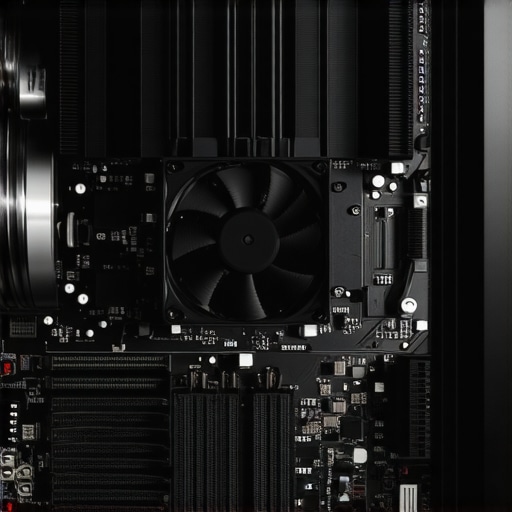

Unveiling the Complexities of PC Cooling: An Expert’s Perspective
In the realm of high-performance computing, effective thermal management is not merely a matter of component longevity but a critical factor influencing overall system stability and performance. As an expert in PC cooling solutions, I emphasize that understanding the nuanced interplay between air cooling, all-in-one (AIO) liquid coolers, and fan curve optimization unlocks the potential for achieving near-ideal thermal conditions. This article delves into advanced strategies that transcend basic guidelines, offering insights rooted in empirical data and cutting-edge research.
Integrating Thermal Dynamics and Airflow Pathways for Peak Efficiency
Optimal cooling begins with a precise grasp of thermal dynamics within PC enclosures. Air cooling, despite its age-old reputation, can be refined by analyzing airflow pathways and leveraging case fan configurations. Strategically placed intake and exhaust fans create a pressure differential that facilitates efficient heat extraction, especially when combined with high-quality filters and dust management protocols. For high-performance workloads, customizing fan curves based on CPU and GPU temperature thresholds can prevent thermal throttling, ensuring consistent performance.
Evaluating AIO Liquid Coolers: Beyond the Basics
All-in-one (AIO) liquid coolers have revolutionized thermal management by offering superior heat dissipation in compact forms. However, their true potential is unlocked through meticulous fan curve calibration and thermal paste application. Recent studies, such as those detailed in thermal paste optimization guides, reveal that even marginal improvements can significantly reduce CPU temperatures. Moreover, understanding the heat transfer characteristics of different radiator sizes and pump speeds enables fine-tuning for silence and efficiency.
How Do Fan Curves Influence Thermal Performance and Noise Levels?
What is the optimal fan curve profile for balancing cooling and acoustic comfort?
Fan curves are not simply linear; they are sophisticated tools that, when correctly configured, dynamically adapt to workload demands. An expert approach involves setting a gradual ramp-up of fan speed at specific temperature points, avoiding abrupt noise spikes while maintaining optimal thermal conditions. Software tools like fan curve editors facilitate this process, allowing for granular control. A well-designed fan curve ensures that the system remains acoustically silent during idle states, yet swiftly responds to high thermal loads, preserving hardware integrity.
Advanced Considerations: Open vs. Closed Loop Cooling Paradigms
While AIOs dominate the market, open-loop custom cooling solutions offer unparalleled flexibility and performance. The decision hinges on factors such as reservoir size, pump flow rate, and coolant properties. For enthusiasts and professionals seeking maximum control, integrating custom loop components with optimized fan curves and thermal management strategies can yield superior results. Moreover, ongoing research in cooling system diagnostics reveals that regular maintenance and real-time monitoring significantly impact long-term performance.
Conclusion and Call for Expert Contributions
Mastering PC cooling requires a sophisticated understanding of thermodynamics, fluid dynamics, and system integration. I invite fellow professionals and enthusiasts to contribute their insights on innovative fan curve strategies or custom cooling setups. For further reading, explore comprehensive guides on AIO and case fan optimization.
Beyond Basic Fan Curves: Crafting Precision Cooling Profiles
While many users rely on default fan profiles, an expert approach involves designing customized fan curves tailored to specific system components and workloads. This involves analyzing temperature data from CPU, GPU, and VRMs under various scenarios and adjusting fan speeds accordingly. Modern software like fan curve editors allows for granular control, enabling the creation of profiles that minimize noise during idle or light tasks, while ramping up swiftly under heavy loads.
Implementing such refined curves requires understanding the thermal thresholds of your hardware. For instance, setting a gentle increase in fan speed starting at 40°C with a gradual rise to 70°C can prevent abrupt noise spikes and thermal throttling. This proactive strategy ensures that your cooling system responds seamlessly, maintaining optimal performance without sacrificing acoustic comfort.
Are Open-Loop Cooling Systems the Future of High-Performance PC Thermal Management?
Open-loop or custom-loop cooling solutions are gaining traction among enthusiasts aiming for maximum thermal efficiency and aesthetic flexibility. Unlike AIOs, these systems allow for meticulous customization of radiator placement, coolant flow, and pump speed, providing a bespoke cooling experience. The trade-off involves increased complexity and maintenance, but the benefits—such as lower temperatures and quieter operation—are significant. Ongoing research, like that found in cooling system diagnostics, underscores the importance of regular system monitoring and fine-tuning to sustain peak performance over time.
For those interested in exploring this avenue, understanding the interplay between coolant flow rate, radiator size, and pump speed is critical. Integrating smart sensors and software control can further optimize the thermal profile, pushing performance boundaries while maintaining silent operation. If you’re considering the leap to custom cooling, review comprehensive guides on selecting the best AIO cooler for silence and efficiency to inform your decisions.
How can I leverage thermal imaging and real-time monitoring to refine my cooling setup further?
Advanced thermal imaging and real-time system monitoring tools provide invaluable insights into your PC’s thermal behavior. By visualizing heat distribution across components, you can identify hotspots and airflow inefficiencies that are not apparent through standard temperature readings. Integrating these diagnostics with custom fan curves and fluid flow adjustments enables a level of precision akin to professional thermal management. Tools like thermal paste optimization guides complement this process, ensuring that heat transfer is maximized at every interface.
Would you like to see more expert insights or case studies on innovative cooling configurations? Sharing your experiences or questions in the comments can foster a community of enthusiasts dedicated to mastering PC thermal management. For personalized advice, don’t hesitate to reach out to our experts.
Harnessing Thermal Imaging for Precision Cooling: Beyond Conventional Monitoring
As the landscape of PC thermal management evolves, the integration of thermal imaging technology emerges as a game-changer. Unlike traditional temperature sensors, thermal cameras provide a comprehensive heat map of your system, unveiling hotspots and airflow inefficiencies with unparalleled clarity. This visual insight allows enthusiasts and professionals to pinpoint problematic areas—such as obstructed airflow pathways or uneven radiator cooling—and tailor their strategies accordingly.
By deploying high-resolution thermal imaging, users can observe real-time heat distribution during intensive workloads, enabling dynamic adjustments to fan curves and coolant flow rates. Incorporating this data into system diagnostics facilitates a proactive approach—addressing issues before they escalate into thermal throttling or hardware degradation. Moreover, pairing thermal imaging with AI-driven analytics can automate the identification of thermal anomalies, streamlining the optimization process.
Innovative Approaches to Fan Curve Customization: Dynamic and Adaptive Profiles
Traditional fan curve adjustments involve static profiles that, while effective, lack responsiveness to fluctuating thermal conditions. Enter adaptive fan control—an advanced methodology leveraging machine learning algorithms that dynamically modulate fan speeds based on real-time system metrics. Such systems analyze historical data, current temperatures, and workload patterns to craft personalized cooling responses that optimize noise levels and thermal performance simultaneously.
Implementing these intelligent profiles requires sophisticated software solutions compatible with modern motherboards or third-party control units. The outcome is a system that intuitively ‘learns’ optimal fan behaviors over time, reducing unnecessary noise during light tasks and ramping up cooling aggressively during demanding processes. This evolutionary step in thermal management not only enhances user comfort but also extends hardware lifespan by maintaining ideal operating temperatures.
The Nuanced Role of Coolant Composition and Flow Dynamics in Custom Loops
For enthusiasts venturing into custom liquid cooling, understanding coolant chemistry and flow dynamics is critical. Recent research highlights that coolant properties—such as thermal conductivity, viscosity, and corrosion resistance—directly influence heat transfer efficiency and system longevity. Selecting a coolant with high thermal conductivity ensures rapid heat dissipation, while low viscosity facilitates smooth circulation, reducing pump workload and noise.
Flow rate optimization further refines this process; too high a flow can induce turbulence and noise, whereas too low may result in inadequate heat removal. Computational fluid dynamics (CFD) simulations are increasingly employed to predict and enhance coolant flow patterns within complex loop configurations, ensuring uniform temperature distribution and minimizing hotspots. Regular maintenance, including coolant replacement and system flushing, preserves optimal flow and prevents biofilm buildup that could impair thermal performance.
Can Emerging Materials Revolutionize PC Cooling Components?
Advancements in material science promise to redefine the future of PC cooling. The development of thermally conductive composites and phase-change materials (PCMs) offers new avenues for efficient heat absorption and dissipation. For instance, integrating graphene-enhanced heat spreaders can dramatically increase thermal conductivity, enabling more effective heat transfer from CPUs and GPUs.
Similarly, the application of PCMs, which absorb heat during phase transition, can stabilize component temperatures during peak loads, reducing the need for aggressive fan speeds. These materials also contribute to quieter operation, as they buffer thermal fluctuations without mechanical noise. As research progresses, the integration of such materials into cooling systems could lead to more compact, silent, and energy-efficient solutions—ideal for high-performance computing environments.
How can I leverage AI-driven diagnostics to maintain optimal cooling performance?
AI-driven diagnostics harness machine learning algorithms to continuously monitor system parameters—such as temperature fluctuations, fan speeds, and coolant flow rates—and predict potential failures or inefficiencies. By analyzing vast datasets, these systems can recommend proactive adjustments, such as fine-tuning fan curves or scheduling maintenance before thermal issues manifest. Implementing AI solutions requires compatible hardware sensors and sophisticated control software, but the payoff includes enhanced reliability, extended hardware lifespan, and minimized downtime.
Interested in integrating AI diagnostics into your cooling setup? Explore platforms like AI-powered thermal management tools and join communities dedicated to cutting-edge PC cooling innovations. Your system’s thermal health is an ongoing conversation—let automation help you master it.
Harnessing the Power of Custom Fan Profiles for Precision Cooling
While default fan settings provide a baseline, expert-level thermal management involves crafting highly tailored fan curves that respond dynamically to system demands. Analyzing real-time temperature data from CPU, GPU, and VRMs allows for creating profiles that minimize noise during idle states and ramp up swiftly under load, ensuring optimal performance and longevity. Leveraging advanced software such as fan curve editors empowers users to fine-tune these profiles with granular precision, elevating system stability beyond conventional limits.
The Role of Thermal Imaging in Fine-Tuning Cooling Performance
Integrating thermal imaging technology offers unparalleled insights into heat distribution within your PC chassis. High-resolution thermal cameras reveal hotspots and airflow inefficiencies that are often undetectable via standard sensors. By visualizing heat flow, enthusiasts can reposition fans, optimize radiator placement, and identify obstructions, thereby refining their cooling setup with surgical accuracy. This proactive approach ensures sustained thermal equilibrium, particularly during demanding workloads, and can preempt hardware degradation caused by localized overheating.
What are the latest advancements in phase-change materials for PC cooling?
Emerging research into phase-change materials (PCMs) presents exciting possibilities for passive thermal regulation. These materials absorb and release heat during phase transitions, effectively buffering temperature fluctuations. When integrated into heat spreaders or cooling pads, PCMs can stabilize component temperatures during peak loads, reducing the reliance on active cooling methods. The development of nanocomposite PCMs with enhanced thermal conductivity further amplifies their efficacy, promising quieter, more energy-efficient cooling solutions suited for high-performance computing environments.
Optimizing Coolant Dynamics in Custom Loop Systems for Superior Heat Dissipation
Understanding the fluid dynamics within custom liquid cooling loops is essential for maximizing heat transfer efficiency. Utilizing computational fluid dynamics (CFD) simulations enables precise modeling of coolant flow, identifying turbulence zones and stagnation points. Adjusting pump flow rates, radiator placement, and coolant composition—favoring high thermal conductivity and low viscosity—ensures uniform temperature distribution and minimizes hotspots. Regular maintenance, including coolant replacement and system flushing, preserves optimal flow characteristics, extending the lifespan of the cooling system and maintaining peak performance.
How can AI and machine learning revolutionize PC thermal management?
AI-driven diagnostics introduce a new frontier in thermal optimization by continuously monitoring system parameters and predicting potential failures. Machine learning algorithms analyze extensive datasets encompassing temperature trends, fan behavior, and workload patterns to recommend real-time adjustments. Adaptive fan control systems, powered by AI, can dynamically modify fan curves and coolant flow rates, optimizing noise and cooling efficiency simultaneously. Implementing such intelligent systems not only enhances system reliability but also prolongs hardware lifespan through proactive thermal regulation.
Explore the Future: Integrating Material Science and Smart Technologies in PC Cooling
The convergence of material science innovations—such as graphene-enhanced heat spreaders and advanced PCMs—with smart control technologies heralds a new era in PC thermal management. These developments promise more compact, silent, and energy-efficient cooling solutions capable of handling the increasing thermal loads of modern high-performance components. As research progresses, integrating these materials with AI-driven control systems will enable unprecedented levels of thermal regulation, pushing the boundaries of what is achievable in PC cooling technology.
Expert Insights & Advanced Considerations
1. The Impact of Thermal Interface Material Selection
Choosing the right thermal paste or thermal interface material (TIM) can dramatically influence heat transfer efficiency. High-performance TIMs with superior thermal conductivity reduce CPU and GPU temperatures, enabling quieter operation and prolonged hardware lifespan.
2. Dynamic Fan Curve Calibration Using Machine Learning
Implementing machine learning algorithms to adapt fan curves in real-time offers a sophisticated approach to balancing cooling performance and acoustic comfort. Systems that learn workload patterns optimize fan behavior proactively, reducing noise during light tasks and enhancing cooling during intensive loads.
3. Integration of Thermal Imaging for Precision Cooling
Thermal cameras provide a detailed heat map of internal components, revealing hotspots and airflow inefficiencies invisible to standard sensors. This technology allows for targeted adjustments in fan placement, radiator positioning, and airflow pathways, elevating system thermal management to a professional level.
4. Material Innovations in Heat Dissipation Components
Emerging materials such as graphene composites and phase-change materials (PCMs) are revolutionizing heat spreaders and cooling pads. These materials improve heat absorption capacity and buffer temperature spikes, contributing to quieter and more energy-efficient cooling solutions.
5. AI-Driven System Diagnostics and Maintenance
Artificial intelligence platforms analyze ongoing system data to predict potential thermal issues before they arise. Automated recommendations for fan speed adjustments, coolant flow modifications, and maintenance schedules enhance system reliability and performance longevity.
Curated Expert Resources
- Cooling System Diagnostics: Offers insights into real-time system monitoring and troubleshooting techniques essential for advanced thermal management.
- Thermal Paste Optimization Guides: Provides detailed procedures for maximizing heat transfer through proper TIM application, crucial for expert-level cooling setups.
- All-in-One Cooler Selection and Optimization: Assists in choosing and fine-tuning AIO cooling solutions for optimal silence and efficiency, with practical calibration tips.
- Case Fan and Airflow Design Strategies: Deep dives into airflow pathway design, pressure differentials, and fan placement for custom cooling configurations.
Final Expert Perspective
Mastering PC cooling demands a comprehensive understanding of thermodynamics, material science, and system control technologies. As an expert in this domain, I emphasize that integrating advanced tools like thermal imaging, AI diagnostics, and innovative materials can elevate your thermal management from basic to professional grade. For those committed to pushing the boundaries of system performance, exploring these strategies and resources is not optional—it’s essential. Engage with our community, share your findings, and continue refining your expertise. To explore more about optimizing your cooling setup, visit this comprehensive guide and consider reaching out for personalized advice at our contact page. Your system’s thermal health is a dynamic conversation—master it with precision and insight.


![Stop 2026 CPU Throttling: The Offset Bracket Fix [Proven]](https://cooling.workstationwizard.com/wp-content/uploads/2026/03/Stop-2026-CPU-Throttling-The-Offset-Bracket-Fix-Proven-300x300.jpeg)

![Why 2026 AIO Coolers Fail on Triple-Die CPUs [3 Easy Fixes]](https://cooling.workstationwizard.com/wp-content/uploads/2026/03/Why-2026-AIO-Coolers-Fail-on-Triple-Die-CPUs-3-Easy-Fixes.jpeg)