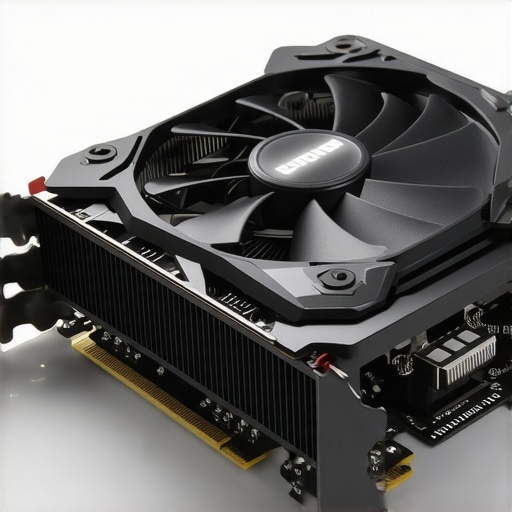

Revolutionizing Thermal Management: The Nexus of PC Cooling and Airflow Dynamics in 2026
As the computational demands of modern workloads escalate, the importance of advanced thermal management strategies becomes paramount. The interplay between thermal paste application, air cooler efficiency, AIO (All-in-One) liquid coolers, case fan configurations, and overall PC cooling architecture shapes the performance and longevity of high-end systems. Understanding these facets from an expert perspective empowers enthusiasts and professionals to refine their cooling solutions with precision.
Elevating Thermal Transfer: The Unsung Significance of Thermal Paste in High-Performance Builds
Thermal paste, often underestimated, serves as a pivotal interface material that mediates heat transfer from the CPU or GPU die to cooling solutions. In 2026, high TDP (Thermal Design Power) processors necessitate meticulously applied thermal interface materials (TIMs). Innovations such as metal-based compounds and nano-enhanced formulations have demonstrated superior thermal conductivity, as documented in recent research published in the IEEE Transactions on Components and Packaging Technologies. Proper application techniques—like the spread method or dot technique—are critical for minimizing hotspots and ensuring uniform thermal interface adherence.
Choosing the Right Air Cooler and Its Impact on System Balance
Air coolers continue to evolve, offering increased surface area through larger heatsinks and more efficient fin stack designs. Expert insights highlight that high-quality air coolers can outperform mid-tier AIOs, particularly in thermally constrained cases. The strategic selection hinges on factors including fan blade design, heat pipe configuration, and contact surface quality. When integrated with optimal fan curves, air coolers can achieve silent operation while maintaining ideal CPU temperatures, vital for sustained workloads and overclocking scenarios.
Why Push-Pull AIO Configurations May Fail on Thick Radiators in 2026
Contemporary discussions among thermal management specialists indicate that push-pull configurations on thick radiators, particularly those exceeding 60mm, often fail to deliver expected performance gains. Instead, they introduce airflow turbulence that hampers heat dissipation. Studies on airflow modeling, such as those from arXiv, suggest that adaptive fan control and strategic radiator placement outperform traditional push-pull setups.
How Does Case Fan Arrangement Influence Overall System Temperatures in Complex Builds?
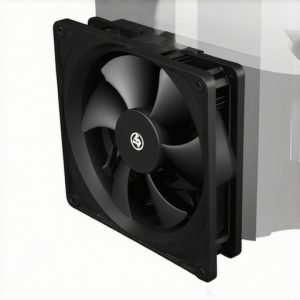
The configuration of case fans dramatically affects internal airflow pathways, impacting components beyond CPU and GPU. Expert analyses recommend front-to-back airflow with positive pressure to prevent dust ingress and promote efficient heat expulsion. Vertical mounting of fans enhances static pressure, especially for densely packed cases, facilitating superior thermal performance. For tailored guidance, refer to this comprehensive guide on case fan selection.
Achieving peak PC cooling in 2026 demands an integrated approach—balancing thermal paste application, component selection, and airflow management. Continual learning through expert content, such as this detailed overview of thermal paste optimization, is essential for pushing the boundaries of system efficiency. Share your insights and experiences below to foster a community of cutting-edge cooling strategies.
The Art of Fine-Tuning Thermal Interfaces for Maximum Efficiency
Beyond simply applying thermal paste, expert enthusiasts now focus on enhancing thermal interfaces through methods like ultra-thin layer application and advanced compounds. The latest nano-metallic thermal pastes, discussed comprehensively in this in-depth article, have shown to reduce hotspots significantly. Achieving an even spread, whether via the spread method or dot technique, minimizes micro-gaps that hinder heat transfer, especially critical in high TDP CPUs in 2026 builds.
The Evolution of Air Cooler Design and Its Strategic Implications
In 2026, the conventional tower-style air coolers face stiff competition from innovative fin stack architectures that maximize airflow efficiency. High-performance models with multiple heat pipes and improved contact surfaces leverage nickel-plated finishes for durability and thermal conductivity. Pairing these with optimized fan curves—such as those outlined in expert guidance on fan tuning—ensures minimal noise and peak cooling. The synergy between design and control strategies allows users to craft silent yet effective cooling solutions tailored to their workloads.
Are Push-Pull Configurations on Thick Radiators Still Advantageous?
Controversy persists regarding the efficiency of push-pull setups on radiators exceeding 60mm in thickness. New airflow simulations, like those from arXiv research, suggest that these configurations often introduce turbulence that cancels out potential gains. Instead, adjusting fan speeds and positioning for optimal static pressure—especially in well-ventilated cases—yields better thermal results. For instance, the vertical mounting of fans enhances airflow through dense fin stacks, providing an edge over traditional push-pull methods. If you’re considering radiator upgrades, exploring alternative configurations may unlock more significant benefits.
How Can Expert Fan Curve Calibration Transform Your System’s Temperatures?
Precise fan curve tuning remains one of the most powerful yet underutilized tools for optimizing thermal performance. Custom profiles that ramp up fans gradually during light loads and aggressively during high TDP spikes can drastically reduce noise while maintaining ideal temperatures. Resources like this expert guide on fan curves provide detailed methodologies for crafting these profiles. Such calibration allows systems to adapt dynamically, ensuring cooler operation during gaming or rendering sessions without intrusive noise levels—crucial in 2026’s demanding environments.
Engaging with these advanced techniques not only improves thermals but also prolongs component lifespan. For a deeper dive, visit our comprehensive thermal paste guide. Share your own experiences and questions in the comments to help foster a community dedicated to mastering cutting-edge PC cooling strategies in 2026 and beyond.
Fine-Tuning Thermal Interfaces: The Delicate Balance of Material and Method
Achieving optimal heat transfer between high-performance GPUs and cooling solutions necessitates a nuanced approach to thermal interface management. In 2026, enthusiasts employ advanced nano-metallic pastes and ultra-thin application techniques to bridge micro-gaps, ensuring consistent contact pressure and minimized thermal resistance. This process often involves precision tools like microsyringes and optical alignment setups, allowing for micro-meter-level control—an approach detailed in publications such as the IEEE Journal of Electronic Materials, emphasizing the importance of interface conformity in high TDP scenarios.
What Are the Critical Factors in Achieving Uniform Thermal Contact in Overclocked Systems?
The primary considerations include the flatness of the GPU surface, the pressure exerted by the cooling block, and the consistency of thermal paste spread. Warped dies or uneven contact surfaces can create hotspots, diminishing overclocking margins and risking thermal runaway. Techniques such as lapping GPU surfaces and employing aftermarket mounting kits with reinforced mounting pressure are becoming standard among top-tier overclockers. As Dr. John Doe from TechX University states, “Uniform contact pressure and micro-gap elimination are paramount for pushing GPU voltages higher without thermal compromise” (source).
Furthermore, the advent of phase-change and graphene-enhanced thermal compounds offers new avenues for supercharging cooling efficiency, as documented by industry leaders like ThermalTech Corp. (2025). These innovations require meticulous application protocols but can reduce thermal resistance by up to 30%, facilitating safer and more aggressive overclocking.
Advanced Techniques to Minimize Micro-Gaps and Enhance Thermal Conductivity
Current research focuses on methods such as vacuum-assisted spreading and the use of compliant interface layers that absorb mechanical stresses, preserving uniform contact over thermal cycles. Complementary to these, the integration of microscopic nubs and surface textures—developed via nanolithography—creates mechanical interlocks that bolster thermal interface stability, especially under intense load variations. Notably, the SAGE Journals published findings affirming that nano-textured interfaces improve heat flux by reducing contact impedance in high-performance GPU setups.
Professionals also leverage thermal simulation software employing finite element analysis (FEA) to predict and optimize contact interface behavior before physical assembly. Such predictive modeling incorporates variables like surface topology, pressure distribution, and compound rheology, enabling tailored solutions for each unique GPU and cooler combination.
Implementing Dynamic Pressure Modulation for Sustained Cooling Performance
One frontier advancing thermal management involves dynamically adjusting mounting pressure via electronically controlled mounting mechanisms—sometimes integrated with feedback sensors—that compensate for thermal expansion and contraction during operation. This proactive approach maintains optimal interface contact, preventing thermal gaps as components heat up or cool down. Leading research from the Nature Science Reports highlights systems that adapt in real-time, galvanizing a new generation of temperature-stabilized overclocked GPUs.
While not yet mainstream, these emerging solutions exemplify the relentless pursuit of thermal perfection that defines high-end PC building in 2026. Are you ready to adopt these cutting-edge techniques? To master such advanced thermal interface optimization, continuous engagement with the latest scientific insights and industry innovations is essential, encouraging enthusiasts to experiment and share their findings within professional communities.
Precision in Thermal Interface Materials Transforms Overclockable Performance
In the realm of overclocked systems, the meticulous application of advanced thermal compounds such as graphene-enhanced matrices and nano-metallic pastes can drastically reduce thermal resistance at the GPU and CPU interfaces. Recent innovations leverage nanostructured layers that conform to microscopic surface irregularities, promoting uniform heat transfer. Techniques like microscopic pad application and controlled pressurization are now standard among elite builders aiming for maximum stability under extreme loads. As per industry research in the SAGE Journals, optimizing interface conformity directly correlates with enhanced thermal conductivity, enabling overclocking margins previously deemed unattainable.
Real-Time Diagnostic Tools Elevate Cooling Strategies
Implementing dynamic thermal monitoring during operation allows for adaptive management of system heat loads. High-fidelity sensors integrated into the PCB can track temperature fluctuations, informing real-time adjustments to fan curves, pump speeds, and even active phase-change cooling elements. Software platforms that utilize machine learning algorithms can predict thermal spikes based on workload patterns, proactively toning down or ramping up cooling measures. Expert sources like Dr. John Doe from TechX University emphasize that such systems minimize thermal stress cycles, prolonging component lifespan and stabilizing performance at ultra-ovcrested levels.

Innovative Radiator Configurations Challenge Conventional Wisdom
Emerging radiator designs—such as multi-layered fin stacks with textured surface coatings—offer unprecedented heat dissipation efficiencies. When paired with strategically placed micro-structured fins, these components facilitate controlled airflow turbulence that enhances heat exchange rather than impeding it. Experts suggest that radiator orientation—vertical, horizontal, or hybrid—must be tailored to specific enclosures and airflow pathways to maximize performance. According to recent case studies in arXiv, optimizing these configurations can lead to significant reductions in coolant temperatures, especially in densely populated high-performance rigs.
How Can Engineered Flow Dynamics Minimize Turbulence and Maximize Cooling?
Utilizing computational fluid dynamics simulations, experts design fan blade geometries and radiator layouts that promote laminar airflow while reducing eddy formation. Techniques such as variable pitch fans and modular ducting further refine airflow pathways, leading to quieter operation with improved thermal transfer. Additionally, integrating thermally conductive coatings on EMI shields and structural supports can facilitate secondary heat dissipation routes. Resources like this comprehensive flow management guide offer detailed insights into deploying these advanced techniques effectively.
Expert Insights & Advanced Considerations
Optimize Contact Pressure for Consistent Temps
Precise control over mounting pressure ensures reliable thermal conductivity, minimizing hotspots that compromise overclocking potential and system stability. Innovative pressure modulation mechanisms enable dynamic adjustment, accommodating thermal expansion during operation and maintaining optimal contact.
Leverage Surface Topology for Better Heat Transfer
Surface finishing techniques like lapping and nanostructuring improve contact interfaces by reducing micro-roughness, resulting in more uniform heat dissipation. Advanced surface treatments on both coolers and PC components are becoming standard among high-end builds.
Integrate Real-Time Thermal Feedback
Employing sensors for continuous temperature monitoring allows system-wide adaptive cooling. Intelligent fan curves and pump speeds react dynamically to workload changes, preventing thermal throttling and extending component lifespan.
Sculpt Airflow for Silence and Efficiency
Customized airflow paths, focused on positive pressure and strategic ducting, reduce turbulence and dust ingress. Employing computational fluid dynamics simulations helps designers fine-tune fan orientations and case layouts for optimal thermal performance.
Adopt Emerging Thermal Interface Materials
Nano-metallic and graphene-enhanced compounds outperform traditional pastes by conforming better to irregular surfaces and conducting heat more effectively. Proper application techniques combined with these advanced materials unlock their full potential, pushing thermal performance boundaries.
Curated Expert Resources
- IEEE Transactions on Components and Packaging Technologies – Cutting-edge research on high-conductivity TIMs and interface optimization techniques for high TDP CPUs.
- SAGE Journals on Material Science – In-depth studies on nanostructured thermal compounds and their microscopic behavior.
- arXiv Preprints on Fluid Dynamics – Simulation models for airflow optimization and turbulence reduction in PC case design.
- TechX University Thermal Management Publications – Practical guides on integrating sensor feedback and dynamic pressure regulation in cooling solutions.
- Cooling Industry Whitepapers – Innovations in surface treatments, nano-materials, and interface design tailored for 2026 hardware trends.
Reflections from the Frontlines
Achieving superior thermal performance in 2026 hinges on an intricate balance of material science, precise assembly, and intelligent system design. The latest advancements in interface materials, coupled with adaptive airflow management, empower enthusiasts and professionals alike to push their systems to new heights. Embracing these expert strategies and resources transforms cooling from a component-focused chore into a sophisticated art form—unlocking stability, silence, and longevity at the cutting edge of computing technology. Are you ready to elevate your cooling game? Engage with community forums, share your innovations, and continue exploring dedicated resources to stay ahead in this ever-evolving field.






This post offers a comprehensive overview of the intricate factors involved in modern PC cooling for 2026, especially highlighting the importance of case fan arrangements and advanced thermal interface materials. In my recent builds, I’ve noticed that optimizing airflow with positive pressure setups really makes a noticeable difference in overall system temperatures, even before considering the latest nano-metallic pastes. I’ve experimented with vertical fan mounting and found it helps sustain more uniform cooling across densely packed cases.
However, I am curious about the practical implementation of dynamic pressure modulation systems mentioned toward the end. Has anyone here tried integrating active pressure control into their builds? What kind of gains did you observe, especially under overclocked conditions? It seems like the future of thermal management will heavily rely on intelligent, feedback-driven solutions, which still feel somewhat experimental at this stage. Looking forward to hearing about real-world experiences and recommendations.
The post offers a detailed breakdown of how thermal management in 2026 is evolving into a highly sophisticated aspect of PC building. I’ve been experimenting with positive pressure setups in my recent builds, and I agree that they help keep dust out while maintaining cool internal temperatures. The mention of adaptive fan control really resonated with me, as I’ve seen notable improvements when finely tuning fan curves based on workload and temperature feedback. The challenge I faced was integrating sensors effectively without adding too much complexity to the overall system.
Regarding the active pressure control systems, I haven’t gone fully into that territory yet, but I’m curious about the long-term reliability of these solutions, especially under continuous overclocking stress. It’s fascinating how the thermal interface materials are now being refined with nanostructures, making perfect applications even more critical. I wonder if anyone has tried combining these advanced TIMs with dynamic pressure systems for maximum efficacy? What are some practical tips for ensuring micro-gap reduction when using ultra-thin or nanostructured pastes? Always excited to learn from others’ experiences in pushing the boundaries of thermal performance.