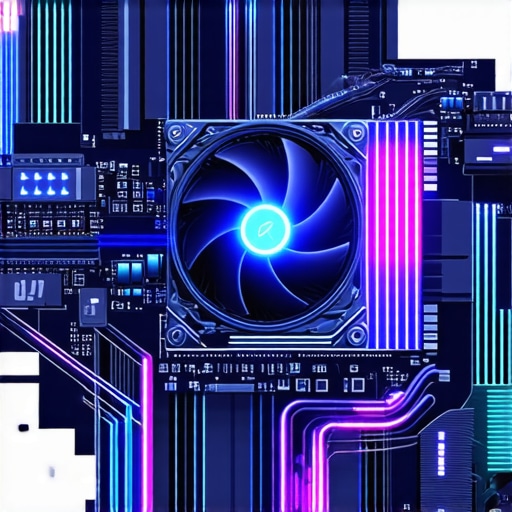

Unveiling the Complexity of PC Cooling: An Expert Perspective
In the realm of high-performance computing, effective thermal management transcends basic fan placement; it embodies a sophisticated interplay of technology, thermodynamics, and user-specific configurations. As seasoned professionals recognize, optimizing PC cooling involves an intricate balance between air circulation principles, liquid cooling innovations, and thermal interface material efficiency. This comprehensive guide delves into the nuanced aspects of these strategies, providing insights rooted in empirical research and industry best practices.
Theoretical Foundations of Airflow Dynamics and Their Practical Implications
Understanding airflow dynamics is fundamental to designing an effective air cooling system. Advanced models consider laminar versus turbulent flow regimes, pressure differentials, and turbulence management within case architectures. For instance, case fan optimization hinges on such principles. Properly configured front-to-back airflow ensures minimal turbulence and maximizes heat extraction, crucial for overclocked CPUs or high-density GPU setups.
Liquid Cooling: AIO Versus Custom Loops — Which Path to Mastery?
All-in-one (AIO) coolers have revolutionized thermal management, offering plug-and-play efficiency. However, their selection requires an understanding of pump flow rates, radiator efficiencies, and compatibility with system components. Expert users often evaluate top AIO liquid coolers for 2025 to ensure optimal performance. Conversely, custom loops, while complex, afford superior thermal transfer capabilities and customization, but demand meticulous planning and maintenance.
Fans and Their Role in Achieving Silent and Efficient Cooling
Fan selection and placement are critical for balancing noise levels with cooling efficiency. Modern case fans incorporate advanced blade designs and PWM control, allowing precise speed regulation. The integration of case fans tailored to specific airflow paths enhances thermal performance while maintaining acoustic comfort. Expert insights suggest that fan curve calibration significantly impacts long-term system stability.
Thermal Paste: Micro-Level Optimization for Macro-Level Performance
The application of thermal interface material (TIM), or thermal paste, remains a nuanced art. High-quality pastes with superior thermal conductivity, such as ceramic or metal-based compounds, can reduce CPU temperatures by several degrees Celsius. Thermal paste secrets reveal that proper application technique—spreading, amount, and surface preparation—can decisively influence cooling outcomes. For instance, a thin, even layer ensures optimal thermal contact without excess material causing insulation or pump strain.
What Are the Most Overlooked Aspects of Thermal Management in High-End PCs?
While component selection is crucial, many experts emphasize the significance of case layout, cable management, and ambient airflow. These factors collectively influence cooling efficacy and noise levels. For advanced users, conducting thermal imaging analyses can reveal hotspots and airflow bottlenecks often invisible to standard inspection.
To explore these concepts further, consider consulting industry-leading white papers, such as those published by Thermal Management Society. Your insights and experiences can contribute to evolving best practices—feel free to share your professional strategies or ask questions through our contact page.
Harnessing the Power of Thermal Modeling for Precision Cooling
One of the most underestimated aspects of high-end PC cooling is the application of thermal modeling software. These advanced tools enable experts to simulate airflow patterns, heat dissipation, and component temperatures before physically assembling the system. By integrating data from thermal simulations, enthusiasts and professionals can preemptively identify potential hotspots and airflow bottlenecks, streamlining the design process for optimal thermal performance. For those interested in exploring this approach, software like case airflow simulation tools can provide invaluable insights into airflow dynamics, ultimately leading to more efficient cooling configurations.
The Role of Advanced Heat Exchangers and Custom Cooling Loops
While conventional air and AIO cooling solutions are effective, emerging innovations in heat exchangers and custom liquid cooling loops offer unparalleled thermal management. Experts are now designing custom loops with optimized radiator placement, microchannel heat exchangers, and phase change materials to achieve ultra-low temperatures. These sophisticated systems require a deep understanding of fluid dynamics and thermal transfer principles, alongside meticulous planning. For example, integrating top AIO liquid coolers for 2025 can be a stepping stone toward mastering custom solutions, providing a foundation of high-performance components that can be tailored to specific thermal needs.
Can Smart Cooling Systems Revolutionize PC Thermal Management?
Emerging smart cooling systems, equipped with AI-driven sensors and adaptive controllers, are transforming traditional thermal management paradigms. These systems dynamically adjust fan speeds, pump flow rates, and radiator fans based on real-time temperature data, optimizing cooling efficiency and minimizing noise. For instance, integrating intelligent control algorithms can prevent thermal throttling during intensive workloads while maintaining silent operation during idle periods. Industry leaders are actively researching these innovations, with some advocating for the integration of IoT-enabled devices for remote thermal monitoring. This approach aligns with the broader trend of automation and data-driven insights in PC maintenance, pushing the boundaries of what is possible in thermal management.
To deepen your understanding of airflow optimization, consider reviewing comprehensive guides on case fan placement. If you’d like to discuss your custom cooling project or need tailored advice, don’t hesitate to reach out to our experts. Your feedback and questions are invaluable in advancing the collective knowledge of PC thermal management.
Harnessing the Power of Computational Fluid Dynamics (CFD) for Precision Cooling Optimization
One of the most sophisticated tools available to PC cooling experts is Computational Fluid Dynamics (CFD) software. These simulations enable precise modeling of airflow patterns, heat transfer, and thermal interactions within complex case architectures. By visualizing airflow streams and identifying turbulence or stagnation zones, professionals can make informed decisions on component placement and fan configuration, significantly improving thermal efficiency.
For example, CFD analysis can reveal subtle hotspots caused by cable clutter or improperly directed airflow, which are often overlooked during physical inspection. Industry-grade software like Autodesk CFD provides detailed insights, allowing for iterative design adjustments before hardware assembly. Integrating CFD into the design process reduces trial-and-error, shortens development cycles, and ultimately results in a more stable and silent high-performance system.
Innovative Heat Exchanger Technologies and Their Impact on Custom Cooling Loops
Emerging advancements in heat exchanger materials and geometries are revolutionizing custom liquid cooling solutions. Microchannel heat exchangers, with their increased surface area-to-volume ratio, enable superior thermal transfer while maintaining compact form factors. When combined with phase change materials, these systems can absorb transient heat loads more effectively, preventing thermal spikes that impair performance or longevity.
Experts are also exploring the use of graphene-enhanced heat spreaders, which boast exceptional thermal conductivity, for ultra-efficient heat dissipation. These innovations require a deep understanding of thermodynamics, fluid mechanics, and materials science. Designing a custom loop that incorporates such advanced components demands meticulous planning, including precise radiator placement, pump selection, and coolant flow rate optimization, to harness their full potential.
Can Adaptive AI-Driven Cooling Systems Surpass Traditional Manual Configurations?
The advent of intelligent cooling systems powered by artificial intelligence (AI) and machine learning algorithms marks a new frontier in thermal management. These systems utilize real-time sensor data—such as CPU/GPU temperatures, ambient conditions, and workload intensity—to dynamically adjust fan speeds, pump flow rates, and radiator fan curves.
By continuously optimizing these parameters, AI-powered cooling solutions can maintain thermal equilibrium more efficiently than static or manually tuned systems, reducing noise and energy consumption while preventing thermal throttling. Leading industry players are developing integrated solutions that learn from usage patterns, adapting over time to deliver tailored cooling performance and extending component lifespan.
To future-proof your high-performance PC, consider exploring the integration of smart sensors and AI controllers, which can be customized to your specific workload profiles. For detailed guidance, refer to resources like The Thermal Management Society white papers, and stay engaged with ongoing research in AI-driven thermal solutions.
Exploring the Intricacies of Heat Pipe Integration and Phase Change Technologies
In pursuit of ultra-efficient cooling solutions, experts are increasingly turning to innovative heat transfer mechanisms such as heat pipes with microgroove technology and phase change materials (PCMs). These components leverage capillary action and latent heat absorption to significantly enhance thermal conductivity, especially in constrained spaces. Integrating these elements into custom cooling loops requires a profound understanding of thermodynamics and fluid mechanics, often involving complex modeling to optimize placement and material selection.
The Role of Thermoelectric Coolers (TECs) in Niche High-Performance Applications
Thermoelectric coolers, also known as Peltier devices, offer localized cooling by creating a temperature differential through electrical voltage. While their application is generally limited due to power consumption and thermal management challenges, expert users utilize TECs in specialized scenarios such as overclocking extreme CPUs or cooling specific GPU components. Effective integration demands precise control circuits and robust heat dissipation strategies to prevent the heat generated on the hot side from compromising overall system stability.
How Can Material Science Innovations Drive Next-Generation PC Cooling?
Recent breakthroughs in material science, including graphene-based heat spreaders and nano-engineered thermal interface materials, promise to revolutionize thermal management. These materials exhibit exceptional thermal conductivity, enabling rapid heat dissipation across critical interfaces. Their deployment necessitates sophisticated fabrication techniques and surface treatments to ensure optimal contact and minimal thermal resistance. Industry leaders are actively researching these avenues to develop ultra-thin, lightweight, and highly effective cooling solutions suitable for compact high-performance systems.
What are the critical considerations when selecting advanced materials for bespoke cooling systems?
Choosing appropriate materials requires evaluating thermal conductivity, compatibility with existing components, and long-term stability under thermal cycling. Consulting peer-reviewed studies and industry standards, such as those from the Thermal Management Society, can provide authoritative guidance. Incorporating these innovations into your cooling architecture can dramatically reduce temperatures and noise, pushing the boundaries of system performance.
If you’re committed to elevating your thermal management expertise, consider engaging with specialized training programs and workshops offered by leading industry organizations. Continuous learning and experimentation are vital to mastering these sophisticated techniques.
The Future of AI-Enhanced Cooling: Precision and Adaptability in Real-Time
The integration of artificial intelligence with thermal management systems is poised to redefine the landscape of high-end PC cooling. AI algorithms analyze real-time sensor data, including temperature fluctuations, workload patterns, and ambient conditions, to dynamically adjust fan curves, pump speeds, and radiator flow rates. This adaptive approach not only improves cooling efficiency but also extends component lifespan by preventing thermal stress.
Implementing such systems involves deploying smart sensors, developing machine learning models, and fine-tuning control algorithms. Industry pioneers are exploring IoT-enabled solutions that facilitate remote monitoring and predictive maintenance, ensuring optimal performance and energy efficiency. This paradigm shift towards intelligent thermal management aligns with the broader trend of automation in PC building and maintenance.
Leveraging Computational Fluid Dynamics for Thermal Optimization
Advanced CFD software allows professionals to simulate airflow patterns, identify turbulence zones, and predict temperature distributions within complex case architectures. By iteratively refining component placement and airflow paths based on simulation data, designers can achieve superior thermal performance without extensive trial-and-error testing. Tools like Autodesk CFD or ANSYS Fluent provide detailed visualizations that expose subtle hotspots, enabling targeted interventions for thermal bottleneck mitigation.
Incorporating CFD into your design process demands expertise in fluid dynamics and access to high-performance computational resources. Nevertheless, the investment yields measurable benefits in system stability, noise reduction, and overall cooling efficacy, especially in custom or extreme cooling setups.
Emerging Innovations in Heat Exchanger Design for Modular and Compact Systems
Next-generation heat exchangers utilize nanostructured surfaces, microchannel geometries, and phase change materials to maximize thermal transfer within minimal footprints. These designs facilitate efficient heat rejection in space-constrained environments, broadening the scope of high-performance PC cooling. For enthusiasts and professionals, understanding the principles behind these innovations enables informed decision-making when selecting or designing custom cooling solutions.
Deep knowledge of thermal dynamics, combined with practical experience, is essential for integrating such advanced components effectively. Collaborating with materials scientists and thermal engineers can unlock new possibilities in creating modular, scalable, and highly efficient cooling architectures.
Are Smart, AI-Driven Cooling Systems the Future of High-Performance Computing?
The evolution of intelligent cooling systems, powered by AI and machine learning, promises unparalleled precision in thermal regulation. These systems adapt in real-time, learning from usage patterns and environmental changes to optimize cooling parameters continuously. The potential benefits include reduced acoustic footprint, energy savings, and enhanced system longevity.
Developing and deploying these solutions involves a multidisciplinary approach, combining hardware integration, software development, and data analytics. Industry leaders are actively exploring IoT connectivity and predictive analytics to create self-optimizing thermal management ecosystems. Embracing this technology can provide a significant competitive edge for enthusiasts, researchers, and enterprise users alike.
To stay at the forefront of these innovations, regularly consult authoritative sources such as the Thermal Management Society and participate in specialized forums and workshops dedicated to cutting-edge cooling technologies.
Expert Insights & Advanced Considerations
1. The Integration of AI for Dynamic Thermal Management
Emerging AI-driven cooling systems analyze real-time sensor data to optimize fan speeds, pump flow, and radiator operation, leading to enhanced efficiency, reduced noise, and prolonged component lifespan. This intelligent adaptation represents a significant leap from static configurations, offering a tailored cooling experience for high-performance systems.
2. The Significance of Computational Fluid Dynamics (CFD)
CFD software enables precise airflow modeling, revealing turbulence zones and hotspots before physical assembly. By relying on such detailed simulations, experts can design optimized airflow paths, minimizing trial-and-error and ensuring maximum thermal performance in complex case architectures.
3. The Role of Advanced Materials in Thermal Interface Technologies
Materials like graphene-enhanced TIMs and nano-engineered phase change materials are revolutionizing heat transfer efficiency. Their integration into bespoke cooling solutions demands thorough understanding of materials science and thermodynamics, paving the way for ultra-low temperature operations.
4. Custom Loop Innovations and Microchannel Heat Exchangers
Next-generation heat exchangers with microchannel geometries and phase change capabilities enable superior thermal dissipation in confined spaces. Experts must master fluid dynamics and precise component placement to harness their full potential, pushing the boundaries of personal computing cooling.
5. Smart, IoT-Enabled Cooling Ecosystems
IoT-connected smart cooling systems offer remote monitoring and predictive adjustments, ensuring optimal thermal regulation in real-time. These systems exemplify the future of high-end PC cooling, blending automation with data analytics for unparalleled system stability.
Curated Expert Resources
- Thermal Management Society: Offers authoritative white papers and research on cutting-edge thermal solutions, essential for deep technical understanding.
- Thermal paste application techniques: Provides expert guidance on maximizing thermal interface performance.
- AIO cooler selection guides: Invaluable for choosing high-efficiency, silent liquid cooling options.
- Case fan optimization: Details airflow dynamics and placement strategies for optimal cooling.
Final Expert Perspective
In the realm of high-performance PC cooling, integrating advanced insights such as AI-driven management, CFD modeling, and innovative materials is transforming traditional paradigms into sophisticated, adaptive systems. Staying informed through authoritative sources and continuously experimenting with emerging technologies will ensure your systems remain at the forefront of thermal efficiency. Your engagement and professional insights are vital—consider contributing to ongoing discussions or exploring specialized training to master these cutting-edge techniques. For more guidance or to share your experiences, contact our experts. Together, we can push the boundaries of what is possible in PC thermal management.


![Stop 2026 CPU Throttling: The Offset Bracket Fix [Proven]](https://cooling.workstationwizard.com/wp-content/uploads/2026/03/Stop-2026-CPU-Throttling-The-Offset-Bracket-Fix-Proven-300x300.jpeg)



This guide offers a compelling overview of the multifaceted world of PC cooling, emphasizing the importance of combining theoretical knowledge with practical application. I particularly agree with the section on thermal modeling software; in my experience, using CFD simulations beforehand has drastically reduced trial-and-error when designing custom cooling loops. I’ve seen how such tools help identify hotspots caused by cable clutter or suboptimal airflow paths that might not be apparent through visual inspection alone.
One challenge I’ve encountered is balancing the enhancement of airflow with noise reduction, especially when implementing aggressive fan curves or complex radiator setups. Have others found successful strategies for maintaining quiet operation while maximizing cooling performance? For example, some have suggested using hybrid fan solutions with active noise cancellation, but I wonder if there are more refined approaches that integrate well with AI-driven or CFD-optimized designs.
This article really highlights how nuanced and advanced PC cooling has become beyond basic fans and heatsinks. I’ve personally experimented with CFD software for my custom builds, and the detailed airflow analysis helps identify hotspots that are often hard to notice without thermal imaging. One aspect I found particularly interesting is the potential of AI-driven cooling systems. In my experience, integrating smart sensors and adaptive controls doesn’t just improve thermal management but also helps in noise reduction by fine-tuning fan curves dynamically. However, maintaining silence during high loads remains challenging, especially with aggressive fan profiles. I’ve seen some success by combining passive cooling techniques with PWM control and even using hybrid solutions that switch between high-efficiency and low-noise modes based on workload. Have others here tried pairing AI and CFD tools for optimizing both thermal performance and acoustics? It seems like the future of PC cooling lies in hybrid systems that intelligently balance these factors.
This comprehensive guide really highlights how advanced PC cooling has become, especially with the integration of AI and CFD simulations. I’ve experimented with CFD tools to design custom airflow paths and found that visualizing turbulence zones before hardware assembly can significantly streamline the troubleshooting process. One challenge I’ve faced is balancing high airflow for maximum thermal efficiency with maintaining a quiet system; aggressive fan curves tend to introduce too much noise. Lately, I’ve been exploring hybrid approaches—using PWM-controlled fans combined with passive heatsinks and thermal buffers—to optimize both performance and acoustics. Has anyone here tried deploying machine learning algorithms that adapt fan speeds in real-time based on workload? I’m curious whether these adaptive systems truly deliver noticeable improvements over static or manual profiles, especially under fluctuating load conditions. The future of PC cooling seems to be moving towards smart, self-optimizing systems that can adjust dynamically without user intervention, truly pushing personal computing to new levels of efficiency and silence.
This deep dive into thermal modeling software really resonates with my experience. I’ve found that pre-assembling airflow simulations using CFD really helps in pinpointing hot zones and airflow obstructions, especially in complex case layouts. It’s impressive how these tools can prevent many trial-and-error issues that occur during physical setup. One aspect I’d love to explore further is dynamic airflow management—how do you think future CFD or thermal modeling might incorporate real-time adjustments to airflow based on sensor data? Also, in terms of noise management, I’ve been experimenting with combining passive radiators and variable PWM fans to strike a good balance. Have others tried integrating AI-based controls that adapt fan speeds during operation? I believe such innovations could push the boundaries of silent, efficient systems even further, especially under fluctuating workloads. Would love to hear your thoughts on how we can take these tools beyond static design into reactive, intelligent cooling systems.
This article really emphasizes the multifaceted nature of high-performance PC cooling and how crucial it is to combine theoretical knowledge with practical application. I’ve used CFD software extensively for my custom builds, and I agree wholeheartedly that early airflow simulation can significantly reduce the guesswork. Especially in complex setups with cable clutter or unconventional case layouts, visualizing airflow patterns upfront helps me optimize component placement more effectively. I’m particularly curious about the integration of AI-driven cooling systems with CFD modeling—has anyone experimented with real-time adaptive controls that respond to thermal data? I believe this could take thermal management to a whole new level of efficiency and silence. Do others see a future where these systems work together seamlessly for optimal performance?