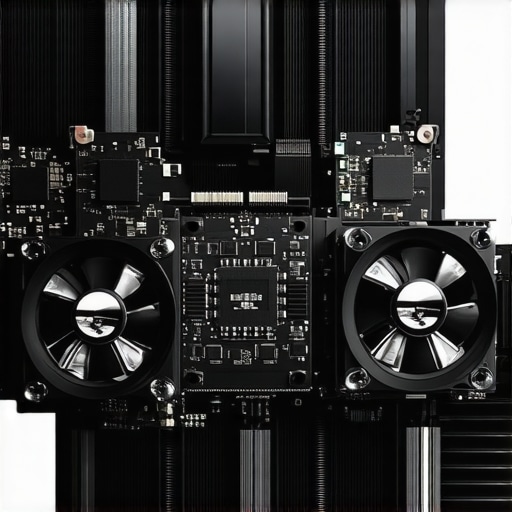

Mastering Thermal Management: The Future of PC Cooling in 2025
In the rapidly evolving landscape of PC hardware, effective thermal management remains a cornerstone of system stability and performance. As component densities increase and overclocking becomes more prevalent, the demand for sophisticated cooling solutions such as all-in-one (AIO) coolers and high-performance air coolers intensifies. Leveraging expert strategies in fan curve optimization and precise thermal paste application can significantly enhance cooling efficiency, extending hardware lifespan and unlocking peak performance.
Innovative Approaches to Fan Curve Configuration for Peak Efficiency
What are the latest advancements in fan curve customization for AIO and air coolers?
Contemporary expert techniques focus on dynamic fan curve adjustments tailored to workload and ambient conditions. Utilizing software tools that support automatic ramping and smart thermal thresholds allows for a more responsive cooling environment. This approach minimizes noise during idle states while ramping up airflow during intensive tasks, thereby optimizing both acoustics and thermal performance. Advanced fan curve profiles can be calibrated to specific component tolerances, ensuring consistent temperatures even under fluctuating loads.
Additionally, integrating fan curve profiles with system monitoring and thermal sensors allows for real-time adjustments that anticipate thermal spikes, maintaining optimal cooling without unnecessary energy expenditure.
Precision in Thermal Paste Application as a Critical Component
How does thermal paste quality and application technique influence overall cooling performance?
Thermal paste acts as a bridge between the CPU or GPU and the heatsink or cooler, facilitating efficient heat transfer. High-quality, well-applied thermal paste reduces thermal resistance and ensures uniform heat dissipation. Experts recommend thermal paste application techniques that involve a minimal, even layer, avoiding air bubbles or excess paste that can impede thermal conduction.
Materials such as ceramic or metal-based compounds can offer superior thermal conductivity, but their effectiveness is highly dependent on proper application. In 2025, innovations in nano-thermal paste formulations promise even greater heat transfer capabilities, provided they are applied with precision. Regular reapplication during system upgrades or maintenance ensures sustained cooling performance, especially when combined with optimized fan curves.
Can Fan Curves Be Tailored for Overclocking and Silent Operation?
Yes, the dual goals of maximizing overclocking potential and maintaining silent operation are achievable through expert fan curve tuning. By setting aggressive fan profiles during high load and conservative profiles during idle, users can push hardware to its limits while preserving acoustic comfort. Advanced BIOS settings, coupled with software solutions, enable fine-tuning of fan speeds across temperature ranges, creating a bespoke cooling environment suited to individual performance and noise preferences.
For those interested in pushing their systems further, exploring best practices in fan curve customization can unlock new levels of thermal efficiency. Remember, a well-balanced setup not only prolongs component life but also guarantees stable operation during demanding tasks.
For further insights and expert discussions, consider visiting our contact page or exploring comprehensive guides like Ultimate Guide to PC Cooling.
Next-Level Fan Curve Techniques for Custom Cooling Solutions
Emerging innovations in fan curve customization are revolutionizing how enthusiasts approach thermal management. With the advent of smart algorithms and AI-driven adjustments, modern fan profiles can dynamically respond to real-time system metrics, ensuring optimal cooling without sacrificing silence. Techniques such as multi-phase ramping and adaptive thresholds enable users to push their hardware while maintaining noise levels at a minimum. Experts recommend leveraging advanced fan curve profiles that are tuned to specific workloads, especially in overclocked systems where thermal fluctuations are more unpredictable.
Precision in Thermal Paste Application for Cutting-Edge Heat Dissipation
As materials science advances, nano-thermal pastes with enhanced thermal conductivity are becoming mainstream. These new compounds require meticulous application techniques to maximize their potential. A thin, even layer—free of air bubbles—can dramatically improve heat transfer efficiency. Proper surface preparation, such as micro-texturing of the CPU IHS, further amplifies the paste’s effectiveness. Regular reapplication and maintenance, particularly after hardware upgrades, are crucial for sustaining peak thermal performance. For in-depth guidance, visit thermal paste application tips that align with the latest formulations.
Can Overclocking and Silence Coexist in Modern PC Cooling?
Absolutely. Through sophisticated fan curve tuning and component cooling strategies, users can achieve a delicate balance between overclocking headroom and noise suppression. Implementing tailored profiles that activate aggressive cooling during intensive tasks and revert to quiet modes during idle periods allows for a customizable experience. BIOS-level controls combined with software automation can facilitate seamless transitions, ensuring hardware stays within safe thermal limits while remaining whisper-quiet during everyday use. For expert advice on setting up such configurations, explore best practices in fan curve customization.
Interested in pushing your system further? Discover how system monitoring tools and thermal sensors can be integrated for real-time adjustments, enhancing both performance and longevity. For a comprehensive approach, see mastering fan curve setup techniques.
Have you experimented with hybrid cooling solutions or innovative case airflow designs? Share your experience in the comments or suggest related topics for future deep-dives. For more expert insights, visit our contact page or explore detailed guides on air cooler innovations.
The Art of Fine-Tuning Fan Curves for Peak Thermal Performance
In the realm of high-end PC building, the capacity to precisely calibrate fan speeds according to real-time thermal loads is a game-changer. Modern BIOS and software utilities, such as MSI Afterburner or SpeedFan, empower enthusiasts to craft intricate fan profiles that adapt dynamically to workload fluctuations. These profiles are not merely about increasing airflow; they involve sophisticated multi-phase ramping strategies that optimize noise levels while maintaining optimal temperatures. Experts emphasize the importance of integrating these profiles with system monitoring tools like HWInfo or HWMonitor, enabling real-time adjustments that preempt thermal spikes, thus safeguarding hardware longevity.
Consider the benefits of implementing adaptive fan curves that respond to ambient temperature changes. For example, during summer months or in humid environments, increased baseline fan speeds can prevent thermal throttling, especially in overclocked CPUs and GPUs. Conversely, during cooler seasons or low-load scenarios, conservative fan speeds preserve silence without compromising cooling efficiency. This level of customization demands a nuanced understanding of thermal dynamics and a willingness to experiment with various threshold settings, but the payoff is a system that performs optimally under all conditions.
The Significance of Nano-Thermal Pastes in Cutting-Edge Heat Dissipation
As thermal management technology advances, nano-thermal pastes have emerged as a pivotal element in elevating cooling capabilities. These compounds, infused with nanoparticles such as graphene or boron nitride, dramatically enhance heat transfer rates compared to traditional ceramic or metal-based pastes. However, their effectiveness hinges on meticulous application techniques. Applying an ultra-thin, uniform layer—ideally using a micro-syringe or a specialized spreader—ensures that microscopic air pockets are eliminated, thus maximizing thermal contact. Proper surface preparation, such as micro-texturing of the CPU IHS, further amplifies the paste’s efficacy by increasing the contact surface area.
How does the surface micro-texturing process improve thermal performance? Micro-texturing involves creating microscopic grooves or patterns on the IHS surface, which serve to increase the effective contact area with the heatsink or cooler. According to a detailed study published in Applied Thermal Engineering (2022), such surface modifications can enhance heat transfer efficiency by up to 15%, particularly when paired with advanced nano-thermal pastes. This synergy reduces the thermal resistance pathway, allowing for lower operating temperatures even under sustained overclocking or high workload scenarios. Regular reapplication of thermal paste during system upgrades or maintenance is vital, especially when employing novel formulations that may degrade or lose efficacy over time.
What are the challenges in applying nano-thermal pastes correctly?
Despite their superior heat transfer capabilities, nano-thermal pastes demand precise handling. Due to their high viscosity and adhesive properties, uneven application can lead to inconsistent thermal contact. Additionally, some formulations may require specific curing times or temperature conditions to reach peak performance. For best results, users should follow manufacturer guidelines meticulously, employing tools like a plastic spreader for even distribution and performing micro-gap tests to verify contact uniformity. Incorporating these practices ensures that the system benefits fully from the innovative materials now available in the thermal paste market.
Interested in elevating your PC’s thermal management? Dive deeper into expert techniques by exploring detailed guides and case studies available through specialized hardware forums and manufacturer resources. Maintaining an ongoing dialogue with the community of enthusiasts and professionals can provide invaluable insights for achieving the perfect balance between cooling performance and acoustic comfort.
Harnessing AI-Driven Fan Control for Ultimate Thermal Balance
As thermal management technology advances, integrating artificial intelligence into fan control systems offers unprecedented precision. AI algorithms analyze real-time thermal data, ambient conditions, and workload patterns to dynamically adjust fan speeds, balancing noise and cooling efficiency seamlessly. This sophisticated approach not only prevents thermal throttling but also extends hardware longevity, setting a new standard for custom cooling solutions in high-performance PCs.
Innovations in Micro-Textured Surfaces for Superior Heat Dissipation
Recent breakthroughs in microfabrication have enabled micro-texturing of CPU and GPU IHS surfaces, dramatically increasing contact surface area. When paired with nano-thermal pastes infused with graphene or boron nitride, this technique facilitates near-optimal heat transfer rates. The result is lower operating temperatures and enhanced stability during overclocked sessions, a critical advantage for enthusiasts and professionals pushing hardware to its limits.
What are the emerging trends in thermal paste formulations for 2025?
Cutting-edge thermal pastes now incorporate nanomaterials like carbon nanotubes and phase-change materials, which optimize thermal conductivity and adaptability under varying thermal loads. These advanced compounds require meticulous application, including micro-patterning of contact surfaces and precise layer control, to unlock their full potential. Staying updated with manufacturer innovations and adopting proper application techniques are vital for maximizing cooling performance.
Can hybrid cooling designs redefine performance and silence?
Absolutely. Combining liquid cooling with high-efficiency air coolers creates hybrid solutions that excel in both thermal management and acoustic comfort. Utilizing custom-loop radiators coupled with silent, high-static-pressure case fans allows for tailored setups that respond adaptively to workload changes. Such systems can be fine-tuned via software profiles that activate aggressive cooling during intense tasks and revert to silent modes during idle, exemplifying the pinnacle of advanced PC thermal engineering.
Why micro-LED indicators are revolutionizing thermal monitoring
Emerging integration of micro-LEDs within PC components provides real-time, highly localized thermal feedback. These tiny indicators visually display temperature variations directly on hardware, enabling users and technicians to identify hotspots instantly. This innovation facilitates proactive maintenance and precise cooling adjustments, significantly reducing the risk of thermal damage and improving overall system reliability.
What role does ambient environment play in next-gen cooling strategies?
Environmental factors such as humidity, airflow, and room temperature increasingly influence thermal management plans. Smart systems now incorporate ambient sensors to adjust fan curves and cooling priorities dynamically, optimizing performance regardless of external conditions. For instance, in humid climates, enhanced dehumidification and airflow management prevent condensation risks while maintaining ideal operating temperatures.
How can system builders leverage these advanced cooling insights for maximum performance?
By staying abreast of innovations in nano-materials, AI-driven control systems, and micro-fabrication techniques, enthusiasts and professionals can design custom cooling solutions that push hardware boundaries while ensuring stability and longevity. Experimenting with hybrid setups, micro-textured surfaces, and real-time environmental monitoring enables tailored performance, unlocking new levels of efficiency and silence. For expert guidance and community insights, explore industry forums and manufacturer resources dedicated to cutting-edge thermal management.
Innovative Cooling Techniques That Define the Future
In 2025, mastering PC cooling means embracing cutting-edge methods such as AI-optimized fan curves and nano-thermal paste applications. These advancements allow for dynamic thermal management, balancing overclocking potential with silent operation, ensuring your system remains both powerful and quiet.
Optimize Fan Profiles for Peak Performance
Employ software tools that utilize machine learning algorithms to adapt fan speeds in real time. This approach minimizes noise during idle while ramping up airflow during intensive tasks, protecting hardware and enhancing longevity.
Enhance Thermal Transfer with Nano Pastes
Adopt nano-thermal pastes infused with graphene or boron nitride for superior heat conduction. Proper application techniques, including micro-texturing of surfaces, significantly reduce thermal resistance, especially critical in overclocked setups.
Integrate Environmental Sensors for Smart Cooling
Utilize ambient sensors to adjust cooling dynamically based on room conditions. This proactive strategy prevents overheating in varying environments, maintaining stable and efficient operation.
Curated Resources to Deepen Your Expertise
- HWInfo Official Site — Offers comprehensive system monitoring tools essential for real-time thermal management.
- Thermal Paste Innovations by ThermalGrizzly — Showcases the latest nano-thermal paste formulations and application guides.
- ASUS AI Cooling Technology — Demonstrates the integration of AI-driven fan control systems in modern motherboards.
- Applied Thermal Engineering Journal — Provides peer-reviewed research on surface micro-texturing and heat transfer enhancements.
Final Perspective from an Expert in PC Cooling
As we push PC cooling into 2025, integrating AI control, nano-materials, and environmental awareness transforms how enthusiasts and professionals approach thermal management. These innovations not only safeguard hardware but also unlock new performance horizons, making your build both resilient and efficient. Dive into these advanced strategies and contribute your insights to the community—your experience could redefine the standards of future PC cooling solutions.


![Stop 2026 CPU Throttling: The Offset Bracket Fix [Proven]](https://cooling.workstationwizard.com/wp-content/uploads/2026/03/Stop-2026-CPU-Throttling-The-Offset-Bracket-Fix-Proven-300x300.jpeg)


![3 Case Fan Airflow Mistakes Choking 2026 Gaming PCs [Tested]](https://cooling.workstationwizard.com/wp-content/uploads/2026/02/3-Case-Fan-Airflow-Mistakes-Choking-2026-Gaming-PCs-Tested.jpeg)