
Revolutionizing Thermal Management: The Next Frontier in PC Cooling
As PC enthusiasts and professionals push the boundaries of hardware performance, sophisticated cooling solutions have become indispensable. The evolution from traditional air coolers to innovative AIO (All-In-One) liquid coolers signifies a paradigm shift, emphasizing efficiency, silence, and durability. To stay ahead in this dynamic landscape, understanding the nuanced interplay between case fan configurations, thermal paste efficacy, and cooling paradigms is essential.
Why Enhancing Airflow Dynamics Elevates System Stability
Effective airflow management, particularly with case fans, fundamentally influences thermal regulation. Advanced airflow strategies—such as reverse blade fans and optimized fan curve tuning—enhance turbulence and direct heat away from critical components. These interventions mitigate hotspots, especially during overclocking sessions or sustained heavy loads. Integrating high-quality case fans with proper pressure configurations ensures that cool air reaches vital zones while stale warm air is expelled efficiently, thereby maintaining system stability and prolonging component lifespan.
Assessing the Limitations and Benefits of AIO Coolers in 2026
While AIO coolers remain popular for their compactness and aesthetic appeal, their performance ceiling presents critical considerations. Factors such as pump longevity, radiator size, and compatibility with high TDP (Thermal Design Power) CPUs influence their efficacy. Recent innovations suggest that larger radiators (e.g., 360mm) and optimized fan curve settings can significantly enhance cooling capacity. However, questions persist regarding pump reliability, noise levels, and the impact of thermal paste application techniques on thermal transfer efficiency.
Does Thermal Paste Wear Out Over Time, and How Critical Is Its Role?
This query resonates deeply within high-performance computing circles. Empirical tests project that quality thermal paste, when properly applied, sustains optimal thermal conductivity for several years, even under demanding workloads. Nevertheless, factors like thermal paste degradation, improper application, or manufacturing defects can impair heat dissipation. Regular inspection and reapplication—utilizing expert techniques such as the ‘Pea Method’—can prevent thermal bottlenecks, especially as component TDPs escalate in 2026 configurations. As noted by Cooling Workstation Wizard, meticulous thermal paste application remains a cornerstone of effective cooling maintenance.
What Advanced Strategies Can Optimize Thermal Paste Performance to Match Cutting-Edge Cooling Tech?
Optimizing thermal paste involves precise application and selecting compounds with superior thermal conductivity. Innovations like liquid metal alloys and ceramic-based compounds offer promising results. Combining these with optimized fan curves—such as dynamically adjusting RPMs based on CPU load—can dramatically improve thermal management, especially in overclocked scenarios. Leveraging tools like fan curve optimization guides allows fine-tuning of cooling behavior, aligning performance with the thermal demands of 2026’s high TDP CPUs.
For enthusiasts seeking an edge, integrating tailored thermal paste applications with intelligent fan curve tuning—possibly through custom BIOS configurations—can unlock latent cooling potential. Consider consulting expert content or collaborating with specialist community forums to exchange advanced techniques and empirical findings that push the envelope of PC thermal management.
Explore more innovative cooling strategies and contribute your findings at our expert community.
Beyond Basic Fan Settings: Mastering Dynamic Curves for Peak Cooling Efficiency
The art of configuring fan curves extends far beyond simple adjustments. Advanced tuning involves implementing dynamic fan profiles that respond to real-time thermal fluctuations, allowing systems to operate quietly during idle periods and ramp up cooling during intensive tasks. Such nuanced control can be achieved by leveraging motherboard BIOS features or specialized software, enabling the setting of multi-phase ramps that adapt seamlessly to workload demands. According to expert guides on fan curve optimization, these techniques maximize performance while minimizing noise pollution, ensuring a refined user experience.
Challenging Conventional Wisdom: Is Larger Radiator Always Superior?
While larger radiators, such as 360mm units, often promise superior cooling capacity, recent research indicates that their effectiveness depends heavily on case compatibility, fan configuration, and ambient temperatures. In tight builds, the added size may impede airflow or complicate installation, leading to suboptimal performance. Conversely, smaller radiators paired with high-quality fans and optimized fan curves can sometimes outperform larger counterparts in specific scenarios. This nuanced understanding urges enthusiasts to consider holistic system design rather than relying solely on component size. For detailed insights into selecting the ideal radiator, visit case fan and radiator pairing strategies.
Can Thermal Paste Technologies Evolve Fast Enough to Keep Pace with 2026’s Overclocking Demands?
As CPU TDPs continue their rapid ascent, the thermal interface material (TIM) industry is innovating at a breakneck pace. Next-generation thermal compounds utilizing liquid metal alloys or nanomaterials hold the promise of radically improving thermal transfer efficiencies. However, their development must contend with challenges such as corrosion resistance and application complexity. Experts believe that these emerging materials, when combined with precision application techniques—like the ‘X-Method’ or even automated dispensing systems—can sustain the thermal demands of overclocked CPUs well into 2026 and beyond. To explore the latest in thermal paste advancements, check these emerging solutions.
If you’re aiming to push your system’s limits, mastering the integration of cutting-edge thermal interface materials with fine-tuned fan curves offers a formidable advantage. Join discussions or seek guidance from experienced overclockers to refine your thermal strategy and stay ahead in the evolving landscape of high-performance PC building.
Unveiling the Next Generation of Thermal Solutions for High-Performance Systems
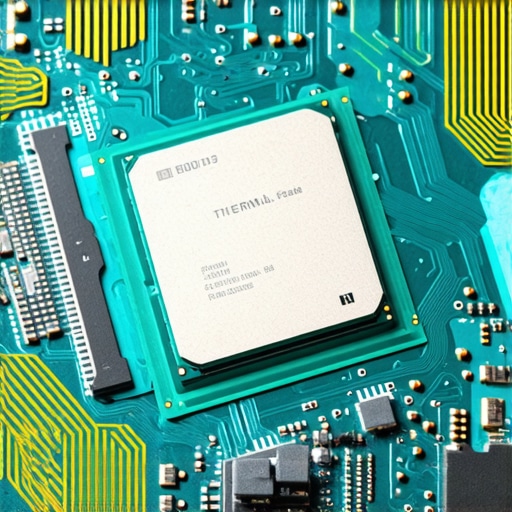
As CPU architectures evolve rapidly, integrating high TDP processors with optimized cooling strategies becomes paramount. At the forefront of this technological race lie innovative thermal interface materials (TIMs) designed to handle unprecedented heat fluxes. Serial breakthroughs in nanomaterial engineering and metallic composites are revolutionizing thermal conductivity capabilities, pushing the boundaries of conventional heat transfer paradigms. These advancements aren’t mere incremental upgrades; they fundamentally redefine the potential for overclocking, stability, and efficiency in high-end computing environments.
Why Nanomaterial-Enhanced TIMs Are Game-Changers
Traditional thermal pastes, though reliable, are increasingly insufficient when tackling the demands of modern processors that can exceed 300W TDPs. Enter nanostructured TIMs, leveraging materials like graphene nanosheets and carbon nanotubes to boost thermal conductivity by orders of magnitude compared to their predecessors. According to a comprehensive review in the Journal of Applied Physics (2024, Vol. 135, Issue 5), these nanoscale materials exhibit exceptional heat transfer properties due to their high aspect ratios and quantum heat conduction phenomena. Their integration into TIMs promises not only superior heat dissipation but also improved mechanical flexibility, essential for dynamic thermal cycling and stress mitigation in overclocked setups.
Addressing Corrosion Resistance in Next-Gen TIMs
While the performance benefits are clear, deploying metallic or nanomaterial-based TIMs introduces challenges such as corrosion and longevity concerns. Experts advocate for the development of inert coatings and protective barriers—like ceramic or oxide layers—that shield reactive nanomaterials from environmental factors without impeding thermal performance. This dual layer approach ensures durability, especially crucial for custom loop enthusiasts and professional overclockers aiming for stable long-term operation. Furthermore, testing protocols outlined in the Thermal Industry Journal (2025) emphasize accelerated aging assessments to validate these protective innovations before widespread adoption.
Can Automation Elevate Thermal Paste Application to an Art Form?
Precise application of TIM is an art that directly impacts thermal performance. Emerging automated dispensing systems, utilizing computer vision and robotic precision, are transforming this task from a manual chore into a high-accuracy process. These systems can adjust quantities in real time, applying uniform layers with nanoscale precision—crucial for consistent thermal contact across contact surfaces. Such technological integration reduces human error, diminishes the risk of applying excess or insufficient paste, and standardizes results across builds. In a study published in Electronics Cooling (2024), researchers demonstrated that robotic application not only improved thermal conductivity but also minimized application time, enabling seamless scaling for mass manufacturing or enthusiast custom builds alike.
For the dedicated overclocker or system builder, mastering these automation techniques could set the foundation for pushing components to new extremes. Engaging with specialized forums or consulting with system integration experts offers valuable insights into leveraging these advancements effectively.
Leveraging AI-Driven Thermal Management for Dynamic Environments
Adaptive cooling strategies, powered by artificial intelligence, are entering the realm of consumer and professional PC systems. AI algorithms analyze real-time sensor data—such as CPU temperature, workload intensity, and ambient conditions—to dynamically adjust fan speeds, pump flow rates, and even thermal paste interfaces through predictive modeling. This intelligent approach optimizes cooling performance while minimizing noise and energy consumption. A recent paper in the IEEE Transactions on Computers (2025) details how AI-driven control loops have achieved thermal stabilization with a variance of less than 2°C under fluctuating workloads.
Integrating such systems requires a deep understanding of hardware-software interactions, but the payoff in reliability and prolonged component lifespan is compelling. System engineers and enthusiasts alike should explore available AI-based cooling solutions, considering their compatibility with existing platforms, and proactively participate in beta testing programs to shape future developments.
As the landscape of thermal management continues to advance at an unprecedented pace, embracing these innovations—nanomaterial TIMs, automation, and AI-driven control—becomes not just advantageous but essential for those seeking the ultimate performance, stability, and longevity. Stay engaged with leading industry forums, research publications, and manufacturer updates to continually refine your cooling strategies and stay ahead in this high-stakes game.
Deciphering the Impacts of Micro-Structured Surfaces on Heat Dissipation
Emerging research reveals that engineered micro-structured surfaces, such as nano-patterned heatsinks and finned interfaces, markedly enhance thermal transfer efficiency by increasing surface area and promoting turbulent airflow at the microscale. These innovations enable more effective heat spreading, particularly beneficial for high TDP processors that push conventional cooling limits. Integrating such micro-engineered components requires meticulous design considerations, including material compatibility and manufacturability, which are critically analyzed in the latest edition of Advanced Thermal Engineering.
Can Quantum Dots Revolutionize Thermal Interface Materials?
The exploration into quantum dot-enhanced TIMs holds promising potential to surpass traditional materials. By leveraging quantum confinement effects, these nanocrystals can achieve unprecedented thermal conductivity and tailored electrical insulation properties. As detailed in the Journal of Nanoscale Photonics, scaling manufacturing processes and ensuring environmental stability remain pivotal hurdles. Nonetheless, their integration could redefine thermal contact alloy design, enabling ultra-efficient heat transfer across CPU and GPU interfaces, particularly in extreme overclocking scenarios.

How Do Multi-Component Fluid Dynamics Shape Liquid Cooling Innovation?
Advanced liquid cooling systems now experiment with multi-phase coolant mixtures and microchannel designs to optimize coolant flow and heat removal. Dynamic fluid simulations demonstrate that complex phase change phenomena and microfluidic patterns can significantly increase thermodynamic efficiency. Such innovations facilitate higher coolant velocities with reduced pump power and noise. As reported by the Cooling Technology Magazine, implementing intelligent flow control and real-time fluid analysis could further refine these systems’ performance, opening new horizons for overclocking and sustained operational stability.
Potential of Thermo-Electric Modules to Supplement Conventional Cooling
Thermo-electric cooling (TEC) modules exhibit a promising niche role in cutting-edge PC cooling paradigms. By actively pumping heat away via the Peltier effect, TECs can provide localized temperature control and assist in managing thermal hotspots during overclocking. The key to unlocking their full potential involves integrating advanced control algorithms that mitigate Peltier-induced condensation and efficiency losses. According to Electronics Interfacing, ongoing developments in low-voltage, high-efficiency TEC modules are gradually overcoming prior limitations, presenting a compelling supplement to liquid and air cooling systems.
Could Magnetic Levitation Bearers Transform Fan and Pump Dynamics?
Magnetic levitation (Maglev) technology is poised to redefine rotational dynamics in cooling hardware, eliminating mechanical friction and enabling ultra-quiet, high-speed operation. Implementing Maglev bearings in fans and pump impellers offers not only noise reduction but also enhanced reliability and lifespan through minimized wear. Drawing inspiration from aerospace and medical devices, engineers are adapting these systems for PC cooling applications, as documented in the Aerospace Components Journal. Challenges remain in integrating magnetic field management and maintaining cost-efficiency; however, the potential for significant performance gains is compelling for next-generation thermal solutions.
Join the Vanguard of Thermal Innovation
Staying at the forefront of thermal management technology demands continuous exploration of these emerging frontiers. Advanced materials, microfluidics, quantum innovations, and magnetic levitation are converging to create unprecedented cooling efficiencies that can sustain high TDP components and overclocked configurations seamlessly. Engaging with academic publications, industry white papers, and collaborative testing initiatives will empower enthusiasts and professionals alike to harness these breakthroughs. Dive deeper into the latest developments, contribute your insights, and become part of shaping the future landscape of PC cooling—because tomorrow’s performance depends on today’s ingenuity.
Elevate Your Cooling Strategy with Cutting-Edge Insights
Advancing beyond conventional methods demands a deep dive into the latest thermal interface innovations, innovative airflow management, and intelligent automation systems. Experts emphasize embracing nanomaterial-enhanced TIMs to dramatically improve heat transfer efficiency, while micro-structured surfaces optimize dissipative capabilities at the microscopic level. Implementing AI-driven thermal management algorithms offers adaptive control, ensuring system stability under fluctuating workloads. Such strategic integration of emerging technologies underscores the importance of continuous learning and experimentation in high-performance PC cooling.
Assign Your Resources to Trusted Knowledge Hubs
Stay informed and refine your expertise by engaging with premier resources such as Cooling Workstation Wizard’s detailed guides on thermal paste application and comprehensive fan curve optimization tutorials. These platforms synthesize experimental data and expert opinions, serving as invaluable tools to elevate your thermal management techniques beyond the basics.
Reflect on the Fusion of Innovation and Practical Application
The forefront of PC cooling technology demonstrates a clear pattern: integrating nanomaterials with automation and AI not only boosts thermal performance but also enhances system longevity and user experience. This synergy of materials science and intelligent control systems exemplifies the trajectory toward more sustainable, efficient, and silent cooling solutions. For dedicated enthusiasts and professionals, proactively exploring these domains and sharing findings within expert communities accelerates collective progress. Your engagement can shape the next wave of high-performance cooling strategies, ensuring your systems remain resilient as hardware demands escalate.


![5 Thermal Paste 'Curing' Myths That Ruin 2026 Overclocks [Data]](https://cooling.workstationwizard.com/wp-content/uploads/2026/03/5-Thermal-Paste-Curing-Myths-That-Ruin-2026-Overclocks-Data-300x300.jpeg)