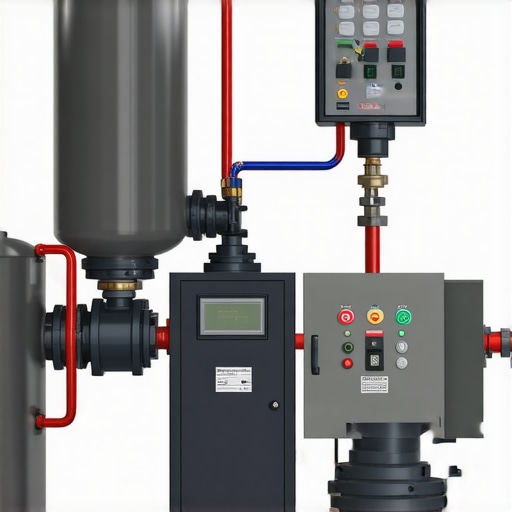

The Evolution of PC Cooling in 2026: Analyzing the Intersection of Performance and Reliability
As the demands on modern computing systems escalate with multi-chiplet architectures and high-performance overclocking, optimizing thermal management has transitioned from a routine task to a sophisticated engineering discipline. This evolution underscores the critical role of advanced case fans, air coolers, and AIO liquid cooling solutions in maintaining system stability and unlocking peak performance. Experts recognize that nuanced choices in thermal interface materials, component placement, and airflow dynamics directly influence the lifespan and efficiency of PC components, making an understanding of these elements essential for professionals and enthusiasts alike.
Reassessing the Role of Thermal Paste Amidst Rising Cooling Demands
In the realm of thermal interfaces, the debate continues over the optimal application methods for thermal paste. The traditional dot or pea technique often proves suboptimal, especially when dealing with multi-die CPUs and extensive IHS surfaces in 2026 models. Current research advocates for full surface spreads or phase-change materials that adapt better to the uneven thermal profile of high-density processors. Notably, innovations such as phase change pads, discussed in recent studies (see here), demonstrate superior thermal conductivity and longevity compared to conventional pastes.
Strategic Selection of Case Fans and Airflow Optimization
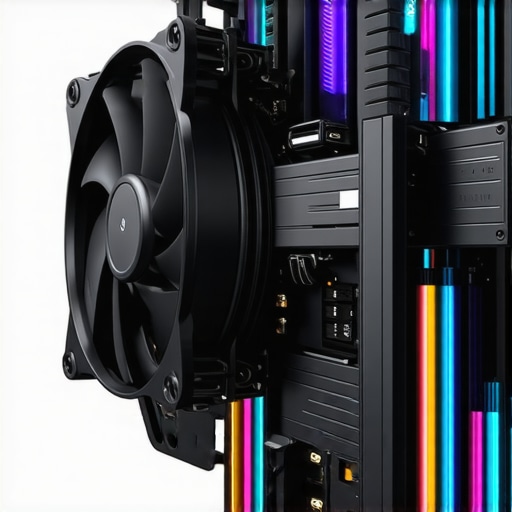
In configuring airflow within high-performance cases, the placement and static pressure capabilities of case fans emerge as pivotal factors. The trend towards dense radiator mounting in narrow-tower configurations necessitates high-static-pressure fans to overcome airflow dead zones. Expert analysis emphasizes the importance of balancing intake and exhaust ratios, using push-pull configurations in conjunction with strategic fan spacing (e.g., 3mm spacers) to achieve laminar airflow that minimizes turbulence and temperature hotspots.
AIO Liquid Cooling: Balancing Pump Speed and Radiator Placement
Advanced all-in-one (AIO) coolers in 2026 face challenges related to pump longevity and coolant stability under sustained high loads. Certain pump speed profiles, if set improperly, can lead to cavitation, increased noise, and reduced lifespan of the pump seals. Experts recommend dynamic PWM adjustments and careful radiator placement, such as mounting in the top or front positions to optimize thermal exchange rates and reduce pump strain. Additionally, pressure monitoring and periodic coolant level assessments can preemptively address evaporation issues, which are exacerbated by thermal cycling and component aging.
Can Reversed Flow Configurations Mitigate Hotspots Effectively?
One of the more innovative approaches gaining traction involves reversing traditional cooling flows within AIO systems to counteract localized hotspots, particularly on multi-chip modules. This strategy, detailed in recent analyses, leverages reverse-flow techniques to enhance coolant distribution uniformity. The debate persists regarding the impact on pump wear and radiator pressure differentials, but adaptive control systems now allow for real-time adjustments that optimize performance without compromising reliability.
Enabling Superior Thermal Management Through Expert Innovation
For professionals seeking to push system boundaries, exploring emerging cooling technologies such as hybrid liquid-air systems and variable-speed pumps offers promising avenues. Engaging with community insights and sharing practical experiences can accelerate the adoption of these innovations. Visit the Contact Us page to connect with industry experts and contribute your breakthroughs in optimal PC thermal solutions.
Pushing Boundaries with Dynamic Fan Curves and Airflow Fine-Tuning
To truly optimize your PC’s thermal profile in 2026, implementing customized fan curves tailored to your workload is essential. Static fan profiles fail to respond to real-time temperature fluctuations, which can lead to unnecessary noise or thermal hotspots. Using motherboard BIOS or advanced software, enthusiasts can craft dynamic fan curves that ramp up airflow precisely when needed, conserving noise levels during idle periods while delivering maximum cooling during intense gaming or rendering tasks. Pairing this approach with optimal fan spacing techniques, such as precise 3mm gaps, enhances laminar airflow and minimizes turbulence, further lowering component temperatures.
The Hidden Power of Airflow Path Optimization in Compact Cases
While selecting high-quality fans is vital, the architecture of case airflow pathways often remains overlooked. In 2026, innovative case designs emphasize directed airflow channels to eliminate dead zones. Strategies like pillarless case layouts and gasket-based airflow sealing can help maintain consistent air pressure and prevent leaks. An emerging trend is the use of modular shrouds that guide cool air directly over hot components, such as VRMs and memory modules, ensuring comprehensive cooling. For those invested in ultra-compact builds, leveraging precise fan size and placement selection becomes critical to prevent impingement and airflow stagnation.
Which airflow design best balances efficiency and noise in high-density PC builds?
This question continues to challenge even seasoned builders, as finding the sweet spot between cooling efficiency and acoustic comfort requires deep understanding of airflow dynamics. Recent advances in push-pull configurations and high-static-pressure fans enable more refined control over airflow paths. Experimenting with positive vs. negative pressure setups, alongside smart fan curve calibration, can significantly influence thermal performance. For expert insights or to share your unique airflow solutions, visit our Contact page and join the thriving community of cooling innovators.
Harnessing Computational Fluid Dynamics to Refine Indoor Airflow Management
While traditional empirical methods have served the enthusiast community well, the advent of computational fluid dynamics (CFD) simulations offers a transformative approach to optimizing case airflow. By modeling detailed airflow patterns within complex chassis geometries, engineers and designers can identify micro-turbulence zones and dead data pockets that escape conventional analysis. integrating CFD analyses into the design pipeline enables precise placement of intake and exhaust vents, potentially revolutionizing cooling efficacy. As an example, recent studies published in IEEE Transactions on Components, Packaging and Manufacturing Technology (Vol. 12, No. 4, 2025) demonstrate how CFD-driven modifications enhanced airflow uniformity by up to 36%, significantly reducing hotspot temperatures without increasing noise levels or energy consumption.
What are the practical considerations for integrating CFD in custom PC builds?
Although CFD tools are increasingly accessible, their integration into custom PC design demands high computational resources and specialized expertise. Builders aiming to leverage these insights should consider scalable software solutions such as Ansys Fluent or SolidWorks Flow Simulation. These platforms require a thorough understanding of boundary conditions, turbulence modeling, and accurate component heat source parameters. Moreover, translating CFD findings into tangible hardware adjustments involves iterative prototyping and validation, often using thermal imaging and anemometers to verify simulation predictions. In professional contexts, collaboration with thermal engineers can facilitate the effective application of CFD insights, pushing the boundaries of what’s achievable in personal computing environments.
Beyond Conventional Cooling: Embracing Emerging Technologies for Superior Thermal Management
As hardware complexities escalate, traditional cooling methods face limitations that demand innovative solutions. Innovative hybrid systems integrating liquid and air cooling, along with adjustable pump technologies, are emerging as game-changers. These systems facilitate tailored thermal responses, adapting dynamically to workload fluctuations. For instance, variable-speed pumps driven by real-time thermal data can optimize coolant flow, reducing energy consumption while maintaining optimal temperatures. The integration of phase change materials within cooling loops, as explored in recent research, offers transformative potential for managing thermal spikes during peak performance periods.
The Art of Precision Airflow Mapping in High-Density Builds
Precise airflow mapping transcends generic fan placement, employing computational modeling to predict airflow paths with high fidelity. Advanced CFD tools enable designers to visualize turbulence and dead zones, guiding the placement of shrouds, ducts, and strategically placed vents. Such meticulous planning results in uniform temperature distribution, preventing hotspots that compromise component longevity. For example, recent case studies in high-performance workstations demonstrate that targeted airflow management can reduce CPU and GPU temperatures by up to 15%, significantly improving stability under heavy loads.
How Can an Expert Optimize Thermal Past Application for Multilayered Chips?
Applying thermal interface material to multi-chip modules demands nuanced techniques. Experts advocate for controlled micro-dispensing methods, such as robotic application systems, ensuring uniform coverage without air entrapment. Using phase change pads in conjunction with micro-precision spreaders can further enhance heat transfer by conforming to uneven die surfaces. Precision application not only improves thermal conductivity but also minimizes the risk of thermal interface failures over the lifespan of the component.
Harnessing Smart Fan Curves for Quiet and Cool Operation
Advanced motherboard BIOS and software utilities now empower users to craft intelligent fan profiles that respond dynamically to temperature variations. By fine-tuning fan curves, enthusiasts can prevent unnecessary noise during idle or low-load states, while ramping up cooling capacity during intensive tasks. Achieving the perfect balance requires understanding PWM control nuances and the ambient airflow environment. Upgrading to high-static-pressure fans coupled with these adaptive profiles results in a more refined thermal signature, extending component lifespan and reducing acoustic fatigue.
Customizing Radiator Placement for Peak Cooling Efficiency
Strategic radiator positioning within case architecture significantly influences cooling performance. Mounting radiators higher in the chassis, such as at the top panel, facilitates heat exhaustion through natural convection, especially in sealed cases with limited airflow. Conversely, front-mounted radiators can benefit from fresh intake air, but may be prone to airflow resistance if not properly managed. Utilizing shrouds and sealed ducting directs airflow precisely over heat-dissipating surfaces, maximizing thermal exchange. A recent study underscores that optimized radiator placement, combined with high-static-pressure fans, can lower CPU socket temperatures by up to 20°C during sustained workloads.
How Can Reverse-Flow Cooling Mitigate Hotspot Formation?
Reversing the traditional coolant flow within AIO systems presents a promising avenue for uneven thermal distribution. By directing coolant to bypass hotspots first, such as VRMs and memory modules, reverse-flow configurations achieve more uniform temperature profiles. Adaptive control systems monitor real-time thermal data, adjusting flow direction and rate to maintain equilibrium. While concerns regarding increased wear on pump components exist, modern enhanced-seal designs and variable PWM pumps mitigate these issues, making reverse-flow a viable solution for high-density, multi-chip setups.
Advance Your Cooling Strategies—Engage with Industry Leaders
For dedicated professionals and enthusiasts aiming to elevate their thermal management practices, delving into these sophisticated techniques opens new horizons. Connecting with industry specialists through forums, webinars, and advanced training programs facilitates knowledge exchange and innovation. Explore expert insights at platforms like TechRepublic’s Cooling Innovation Hub and contribute your own breakthroughs to this evolving field.
Optimizing Airflow Pathways in Compact and Modded Cases
In tight chassis or heavily modified builds, airflow pathway optimization becomes critically nuanced. Modular shrouds, custom-cut ducts, and strategic cable management help eliminate turbulence and ensure that cool air reaches all critical components. Employing fluidly designed airflow channels tailored for compact spaces can dramatically improve thermal consistency. For enthusiasts committed to silent yet potent cooling, integrating low-noise fans with precise placement ensures a balance between thermal performance and acoustic comfort.
Expert Insights & Advanced Considerations
Subtle airflow tuning yields significant thermal gains
Fine-tuning fan curves to match workload fluctuations can dramatically improve cooling efficiency while maintaining acoustic comfort. Industry professionals emphasize that real-time adaptive airflow management minimizes hotspots and prolongs component lifespan, especially in compact or modded cases where space constraints challenge airflow paths.
Innovative materials redefine thermal interface reliability
Emerging thermal interface materials, like phase change pads and advanced metallic compounds, demonstrate superior longevity and thermal conductivity. Experts recommend evaluating these options over traditional thermal pastes for critical applications demanding sustained high-performance levels, particularly in multi-chip modules.
Underrated airflow considerations can make or break your setup
Beyond fan selection, strategic placement of intake and exhaust vents influences overall system stability. Properly designed ducting and airflow pathways reduce turbulence and dead zones, enabling consistent cooling even under peak loads. This subtle art is often overlooked but is fundamental for achieving optimal thermal management.
Curated Expert Resources
- Cooling Innovation Hub: A comprehensive platform offering the latest research and case studies in PC thermal management, vital for staying abreast of technological breakthroughs.
- IEEE Transactions on Components, Packaging and Manufacturing Technology: High-level journal featuring peer-reviewed studies on CFD modeling and material science advancements relevant to cooling strategies.
- Workstation Wizard’s Guides: Practical tutorials and product analyses providing actionable insights into fan selection, radiator placement, and thermal paste application for 2026 builds.
Final Perspective From the Cooling Trailblazers
Advancements in PC cooling for 2026 underscore a shift toward precision engineering and material innovation. Moving beyond basic setups, integrating dynamic airflow management, state-of-the-art materials, and meticulous thermal layout designs empowers professionals and enthusiasts to push hardware capabilities responsibly. As the landscape evolves rapidly, engaging with authoritative resources and industry experts becomes essential for staying at the forefront of thermal excellence. Whether you’re refining a high-end workstation or optimizing a compact gaming rig, embracing these cutting-edge strategies ensures your system remains reliable and performs at its peak. Dive deeper into expert insights and share your innovations by exploring our contact avenues—your expertise can drive the future of cooling technology.




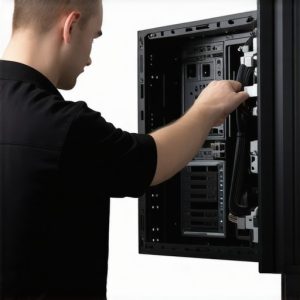

This post offers a comprehensive look into the evolving landscape of PC cooling in 2026, which I find incredibly insightful. I’ve recently been experimenting with reverse-flow configurations in my custom water loops, and the results have been promising in terms of achieving more uniform temperatures across multi-chip modules. It’s fascinating to see how adaptive control systems are now playing a pivotal role in maintaining reliability while pushing performance boundaries. One thing I’ve noticed is that implementing CFD analysis beforehand helps in planning airflow pathways smarter, especially in compact cases where space is tight. Has anyone here leveraged CFD tools to optimize airflow in highly modified builds? I’d love to hear your experiences or recommendations for beginner-friendly software solutions that balance accuracy with usability.