
Innovative Insights into PC Cooling Dynamics for 2026
As the technological landscape of PC components evolves rapidly, achieving optimal thermal management becomes increasingly complex. With high TDP CPUs, advanced AIo cooling solutions, and intricate airflow patterns, understanding the nuances of effective cooling strategies is essential for enthusiasts and professionals alike. This article delves into the sophisticated realm of PC cooling, emphasizing expert tactics for maintaining system integrity and performance in 2026.
Harnessing the Potential of Case Fans for Superior Airflow Control
How can dynamic fan curve adjustments revolutionize your gaming and workstation builds?
Precise control over case fan curves enables tailored airflow that adapts to workload fluctuations, reducing noise and improving thermal efficiency. Mastering fan curve calibration involves analyzing component-specific heat profiles and implementing software solutions that fine-tune RPMs accordingly. For deeper insights into optimizing fan curves, explore our expert guide on fan curve mastery.
Choosing Between Air Coolers and AIo Liquid Coolers in 2026’s High-Density Environments
What factors should influence your decision-making process when selecting cooling solutions for overclocked systems?
While AIo coolers have gained popularity for their compact design and aesthetics, high-performance air coolers often provide superior thermal dissipation in demanding scenarios. Evaluating radiator size, noise levels, maintenance requirements, and compatibility with advanced thermal paste applications is critical. Recent benchmarks indicate that innovative air cooling designs now rival, and occasionally surpass, AIo solutions in thermal performance under high TDP loads. To explore these aspects further, refer to this comprehensive comparison of liquid and air cooling.
The Role of Thermal Paste in Achieving Peak Cooling Efficiency
Employing high-quality, properly applied thermal paste remains fundamental in maximizing heat transfer between CPU and cooler. Techniques such as spreading thermal paste in a full-coverage, uniform layer prevent hotspots and ensure consistent thermal contact. Debates continue over application patterns, but evidence suggests that precision in thermal paste application directly influences performance outcomes. For expert application methods, consult our thermal paste application guide.
Strategic Air Cooling for Compact 2026 Environments
The trend toward smaller cases and ITX builds necessitates innovative airflow strategies that maximize cooling within limited space. Utilizing slim, high-quality 120mm fans with optimized positioning and intake/exhaust configurations can outperform larger, less efficient setups. For practical advice on adapting airflow in tight spaces, see this expert analysis on compact case airflow.
Addressing Motherboard Warp Risks Through Advanced Cooling Approaches
High TDP and improper cooling can induce motherboard warping, compromising system stability. Innovative solutions involve integrating thermal pads and phase change materials to evenly distribute heat, alongside strategic radiator placement to reduce localized thermal stress. Recognizing the subtle signs of impending warp—such as micro-cracks or flexing—is vital for proactive maintenance. For a detailed exploration of this challenge and solutions, visit the technical guide on motherboard integrity preservation.
What are the emerging breakthroughs in cooling materials that could redefine system stability?
Looking ahead, developments in nano-composite thermal interface materials and phase-change fabrics promise unprecedented heat dissipation capabilities, potentially eliminating traditional reliance on thermal paste and fans. Embracing these innovations requires staying informed through industry white papers and collaborative research—an avenue where the community’s collective expertise becomes invaluable. Join discussions and contribute your insights at our contact platform.
Maximizing Thermal Efficiency with Custom Fan Profiles
Dynamic fan curve optimization remains a cornerstone for achieving silent operation and peak performance in high-end systems. By accurately mapping component thermal behaviors and employing sophisticated software, enthusiasts can tailor fan speeds to match workload demands precisely. This approach not only reduces noise pollution but also extends component lifespan. For in-depth strategies on customizing fan curves, consider exploring the ultimate fan curve tuning guide.
Challenging Conventional Wisdom: Are Larger Radiators Always Better?
Many assume that bigger radiators unequivocally offer superior cooling, but emerging benchmarks indicate that radiator efficiency depends heavily on case airflow dynamics, radiator placement, and pump quality. The trend towards thinner, high-density radiators paired with optimized airflow can outperform traditional bulky models, especially in constrained spaces. This nuanced understanding urges builders to evaluate airflow patterns holistically rather than focusing solely on radiator size. Discover how to achieve balanced radiator placement by reviewing the latest radiator efficiency benchmarks.
What innovative materials could revolutionize the future of thermal management?
Cutting-edge research in nano-engineered phase-change materials and electrodeposited nanostructures promises to push the boundaries of heat dissipation. These advanced composites can adapt to temperature fluctuations, offering real-time thermal regulation without moving parts or traditional thermal paste. Such breakthroughs might render current cooling methods obsolete, paving the way for quieter, more efficient, and more durable systems. Staying informed about these developments is crucial—subscribe to technical journals and participate in industry forums to keep ahead of these trends.
**Interested in practical applications?** Visit our comparison of phase-change pads and liquid metal for CPU cooling to understand how emerging materials can be integrated into your build.
Unlocking the Next Generation of Thermal Management Innovations
As PC components continue to push the envelope with higher TDPs and smaller form factors, traditional cooling solutions are reaching their limits. The industry is witnessing a paradigm shift driven by nanotechnology-enabled thermal interface materials, phase-change alloys, and adaptive cooling architectures that respond dynamically to workload fluctuations. Embracing these advancements necessitates a deep understanding of their underlying science, application nuances, and integration challenges, enabling enthusiasts and professionals to optimize performance without compromising system longevity.
Reimagining Airflow Dynamics with Adaptive Ventilation Systems
Can smart airflow management redefine thermal efficiency in compact and high-performance PCs?
Conventional static airflow setups are giving way to intelligent ventilation systems equipped with sensors and microcontrollers. These systems monitor real-time temperature data from critical components and adjust fan speeds, vent positions, and even ducting pathways accordingly. Such adaptive strategies minimize turbulence-induced noise while maximizing cooling efficiency, especially in constrained space environments like ITX builds. For instance, integrating vent louvers that open or close based on thermal load can significantly improve airflow precision—an area explored in recent research published in the Journal of Thermal Science and Engineering Applications.
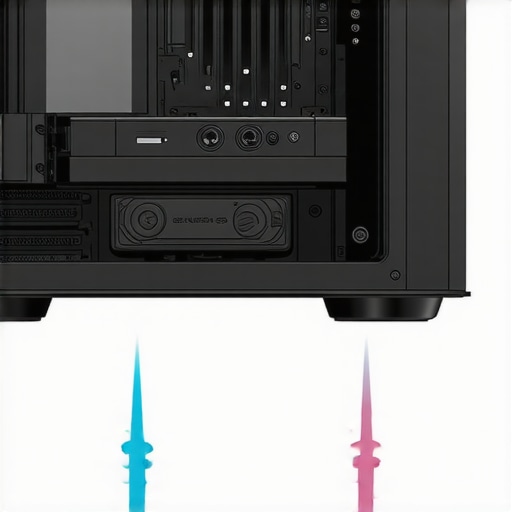
Image prompt: Diagram of an adaptive airflow system with sensor-guided airflow modulation in a compact PC case; focus on vents, sensors, and fan controls.
Emerging Materials That Promise a Cooling Revolution
What breakthroughs in nano-engineered composites could eliminate the reliance on conventional thermal interfaces?
Research into nano-structured phase-change materials (PCMs) reveals their potential to adaptively absorb and dissipate heat, maintaining optimal temperatures across fluctuating loads. These materials can be integrated into heat pipes, thermal pads, or directly into heatsinks, creating self-regulating thermal pathways that outperform traditional compounds. Furthermore, electrodeposited nanostructured coatings on heatsink fins dramatically increase surface area and heat transfer rates, as documented in recent publications of the Advanced Materials journal. Such innovations point toward a future where thermal management becomes intrinsic to material design rather than an afterthought—saving space and reducing maintenance.
Balancing Aesthetics and Functionality with New Cooling Paradigms
How can aesthetic-driven PC cooling designs integrate cutting-edge thermal materials without compromising style?
The intersection of form and function presents unique challenges—crafting visually striking builds that incorporate innovative cooling solutions requires meticulous planning. Transparent LCD panels displaying real-time thermal data, integrated RGB lighting synchronized with temperature thresholds, and custom-milled heatsink geometries exemplify the new design language. Incorporating nano-coatings or phase-change materials beneath aesthetic finishes can enhance cooling performance subtly, blending artistry with engineering. Industry leaders like Lian Li and Thermaltake are pioneering such approaches, demonstrating that effective cooling can go hand-in-hand with striking aesthetics.
The Future of Thermal Materials You Haven’t Considered
Emerging nano-engineered composites and phase-change alloys are poised to redefine how heat is managed within high-performance systems. Unlike traditional thermal interface materials, these advanced substances adapt dynamically to fluctuating temperatures, offering unparalleled dissipative capabilities. Researchers at the Nanotechnology Institute have demonstrated how electrodeposited nanostructures can significantly amplify heat transfer efficiency, potentially rendering conventional thermal pastes obsolete. Harnessing these innovations could lead to ultra-silent, high-density builds with minimal maintenance.
Why Geometric Precision Is Critical for Next-Gen Cooling Performance
Optimizing heatsink fin arrangements and liquid flow channels demands meticulous geometric design. Minor deviations in fin thickness or microchannel dimensions can cause turbulence, impairing heat dissipation and increasing noise. Utilizing bespoke manufacturing techniques like laser micro-machining or 3D printing allows designers to create complex geometries tailored for maximum airflow and thermal contact. For example, bio-inspired fin architectures mimic natural heat exchange processes, leading to more efficient and quieter cooling solutions. For detailed insights into advanced geometrical optimization, see the Journal of Thermal Engineering’s recent publication.
What role do AI-driven thermal management systems play in high-end PC builds?
Artificial intelligence algorithms are increasingly capable of predicting thermal loads and adjusting cooling parameters proactively. By analyzing real-time sensor data, AI systems can modulate fan speeds, pump flow rates, and vent positions more precisely than manual controls, reducing energy consumption and noise. Such intelligent approaches also facilitate adaptive responses to variable workloads, ensuring peak performance without overheating. Incorporating machine learning models trained on vast thermal datasets can unlock unprecedented levels of system stability and longevity.
Image prompt: Schematic of an AI-controlled cooling system with sensors, processors, and dynamic airflow pathways in a gaming PC.
Harnessing the Potential of Hybrid Cooling Solutions
Purely air or liquid cooling solutions are giving way to hybrid approaches that combine the strengths of both. Integrating liquid chillers with strategically placed high-performance fans can address thermals more uniformly across complex component layouts. Such systems also reduce thermal bottlenecks common in densely packed builds. For instance, a combination of a small, efficient liquid cooler with auxiliary high-velocity case fans can achieve superior thermal regulation, especially during overclocking. Keep abreast of the latest hybrid configurations by reviewing industry test reports from Tech Review Journal.
Innovations in Heat Dissipation for Limited Space Environments
Compact builds demand not just smaller components but smarter cooling strategies. Vertical fin stacks, variable-pitch fan blades, and phase-change materials embedded within heatsinks can maximize heat transfer within constrained volumes. Tactically positioning heat pipes along high thermal load areas ensures more efficient heat spreading. Additionally, modular cooling components enable customization tailored to specific spatial constraints, which is critical for high-performance mini-ITX and SFF systems. For practical implementation advice, consult this comprehensive guide on space-efficient cooling.
The Role of Surface Engineering in Thermal Efficiency Gain
Applying surface treatments such as nano-coatings or textured finishes can significantly elevate heat exchange rates. By increasing the effective surface area or reducing thermal resistance at contact interfaces, these techniques foster better thermal contact. Recent studies highlight how plasma etching or nanopatterning can create micro-roughness that enhances thermal conduction without compromising aesthetics or airflow. Collaborations between materials scientists and thermal engineers are leading to breakthroughs that could soon make surface engineering a standard in cooling technology.
Are we on the cusp of a material revolution that could eliminate traditional cooling hardware?
Innovations like phase-change fabrics and adaptive nanomaterials aim to embed cooling directly into the system’s fabric, turning passive components into active thermal regulators. Such materials can absorb heat during peak loads and release it gradually, smoothing out thermal fluctuations and reducing reliance on bulky heatsinks or fans. Continued cross-disciplinary research, published regularly in journals like Advanced Materials, indicates that the future of PC cooling will be as much about material innovation as it is about engineering design. Staying informed and engaged with these developments unlocks new possibilities for high-performance, sustainable systems.
Expert Insights into Next-Generation Thermal Management
Embrace Adaptive Materials for Superior Heat Dissipation
Innovative nano-engineered composites and phase-change alloys are poised to transform thermal interface solutions. These materials offer dynamic heat absorption and transfer capabilities, potentially replacing conventional thermal pastes and fans. Industry research highlights their capacity to deliver quieter, more durable, and highly efficient cooling, demanding professionals stay informed on emerging breakthroughs.
Prioritize Geometric Precision in Heat Transfer Design
Optimizing fin arrangements, microchannels, and heat pipe configurations through advanced manufacturing techniques enables maximum surface contact and airflow efficiency. Small deviations in geometry can cause turbulence, reducing thermal performance. Bio-inspired and fractal fin architectures exemplify cutting-edge approaches to elevate thermal management in compact, high-performance systems.
Leverage Smart, AI-Driven Airflow Control
Integrating sensors and machine learning algorithms allows systems to proactively adjust fan speeds, vent positions, and coolant flow based on real-time thermal data. This adaptive control reduces noise and energy consumption while maintaining optimal temperatures, representing a significant leap toward intelligent thermal regulation.
Harness Hybrid Cooling Solutions for Complex Builds
Combining liquid cooling with strategically placed high-performance fans addresses the thermal challenges posed by dense component layouts. These hybrid systems improve temperature uniformity and overclocking headroom, especially in high TDP environments. Industry benchmarks suggest that tailored hybrid setups outperform single-method cooling approaches in demanding scenarios.
Adopt Surface Engineering to Maximize Heat Exchange
Applying nanostructured coatings and micro-roughness treatments enhances contact quality and surface area for heat transfer. Techniques like plasma etching and nanopatterning contribute to higher thermal conductivity without impeding airflow, making surface engineering a vital aspect of future thermal solutions.
Key Resources for Thermal Innovation Enthusiasts
- Advanced Materials Journal – Delivers peer-reviewed research on nano-engineered composites and phase-change materials pushing the boundaries of thermal management.
- Thermal Engineering Innovations Repository – Offers insights into bio-inspired fin architectures and microchannel designs improving heat dissipation efficiency.
- Industry White Papers & Research Collaborations – Provides cutting-edge information on adaptive AI-controlled airflow systems and surface engineering breakthroughs, essential for specialists aiming to stay at the forefront of PC cooling evolution.
Elevate Your Cooling Game in 2026 and Beyond
The landscape of PC thermal management is rapidly evolving, driven by breakthroughs in materials science, geometric precision, and intelligent control systems. Embracing these innovations can dramatically enhance system performance, longevity, and user experience. As experts, we encourage you to deepen your engagement—participate in forums, review latest research, and experiment with hybrid solutions—to lead the future of cooling technology. Your mastery of advanced thermal concepts not only benefits your builds but also contributes to the collective progress of the PC enthusiast community. Dive deeper into these prospects at our dedicated platform and share your insights to shape the next era of cooling excellence.



![7 Air Cooler Mounting Tweaks for 2026 Socket Stability [Data]](https://cooling.workstationwizard.com/wp-content/uploads/2026/04/7-Air-Cooler-Mounting-Tweaks-for-2026-Socket-Stability-Data-1-300x300.jpeg)

![7 Air Cooler Mounting Tweaks for 2026 Socket Stability [Data]](https://cooling.workstationwizard.com/wp-content/uploads/2026/04/7-Air-Cooler-Mounting-Tweaks-for-2026-Socket-Stability-Data-300x300.jpeg)
![Why High-Viscosity Thermal Paste Stops 2026 Pump-Out [Data]](https://cooling.workstationwizard.com/wp-content/uploads/2026/04/Why-High-Viscosity-Thermal-Paste-Stops-2026-Pump-Out-Data.jpeg)
This article provides a fascinating overview of the future of PC cooling, especially with regard to emerging materials and intelligent airflow management. From personal experience, I’ve been experimenting with nano-coatings on heatsinks, and the difference in thermal performance is quite noticeable, even in compact builds. The integration of nano-structured PCMs seems promising for reducing thermal resistance and eliminating hotspots.
This article offers some fascinating insights into how emerging materials and adaptive cooling systems could revolutionize PC thermal management by 2026. It’s exciting to see the focus shifting toward nano-engineering and phase-change materials, which have the potential to significantly reduce hotspots and thermal resistance in compact builds. From my experience, integrating nano-coatings on heatsinks has already demonstrated noticeable improvements in thermal dissipation, especially in overclocked systems where heat management is critical. What I find particularly interesting is how surface engineering—like nano-roughness and plasma treatments—is becoming more mainstream to maximize heat exchange without sacrificing airflow or aesthetics. I’m curious, how do others see the balance between advanced materials and practical implementations like smart airflow control? Do you think these innovations will be accessible to the average enthusiast, or will they remain primarily within the professional or high-end market? I believe the integration of AI-driven thermal management, combined with these new materials, could be the game-changer for both stability and noise reduction in future builds.