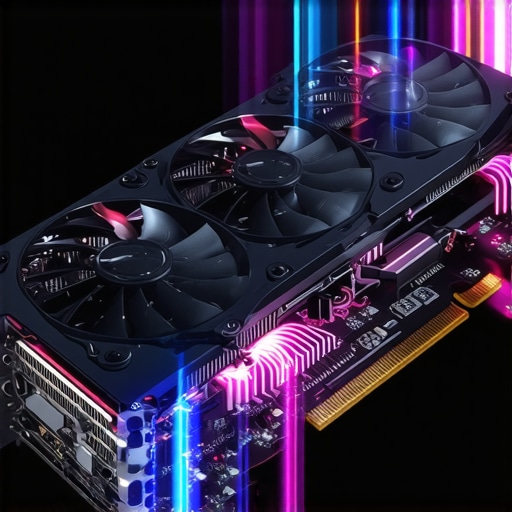

Innovating Thermal Management for Peak PC Performance
In the rapidly evolving landscape of high-performance computing, effective PC cooling remains central to unlocking hardware potential while ensuring longevity. As we venture into 2026, a comprehensive understanding of thermal paste application, case fan configuration, air cooler efficacy, and AIO cooling innovations becomes imperative for enthusiasts and professionals alike. This article explores advanced strategies and the latest developments shaping superior thermal management.
Beyond Basics: The Critical Role of Thermal Paste in Modern PC Cooling
Thermal paste acts as a microscopic sealing agent, filling air gaps between the CPU die and cooler contact surface. Its importance magnifies with increasing CPU TDPs, necessitating meticulous application methods. Recent studies highlight that improper thermal paste spreading—such as over-application or uneven distribution—can lead to hotspots, throttling, and reduced lifespan (source). Innovations like phase-change materials and carbon-based compounds are pushing thermal conductivity limits, ultimately enabling higher overclocking margins.
Designing the Perfect Airflow: The Artistry of Case Fan Arrays
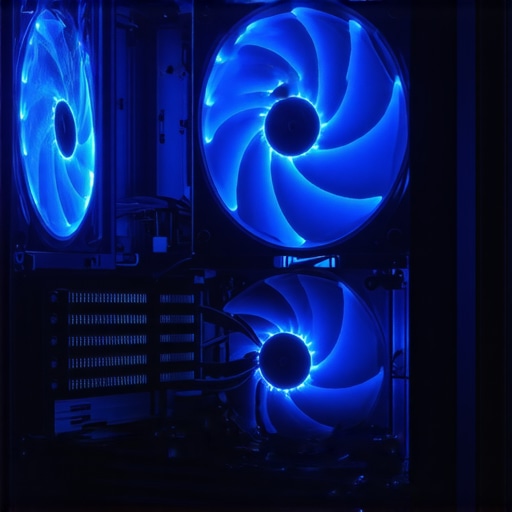
Optimized case fan placement and pressure configurations are vital for maintaining consistent airflow, minimizing turbulence, and reducing noise. Experts recommend a balanced intake-exhaust strategy, utilizing high static pressure fans in restrictive environments. Dynamic fan curves, which adapt RPMs based on real-time thermal demands, demonstrate significant improvements in component efficiency. Nonetheless, users face challenges in preventing turbulence-induced hotspots, which may paradoxically decrease cooling performance. Regular airflow testing and meticulous cable management—paired with strategic fan orientation—are essential for superior results.
Air Cooler Versus AIO: Choosing the Right Cooler for 2026 Demands
The debate between traditional air coolers and all-in-one (AIO) liquid coolers persists, especially as high TDP CPUs strain existing cooling solutions. Air coolers benefit from simplicity, reliability, and cost-effectiveness, but often fall short in noise profiles and thermal headroom compared to top-tier AIOs. Conversely, current AIO technology faces challenges like pump noise, pump failure, and airflow restrictions within compact cases (source). Innovations such as larger radiators, low-noise pumps, and dual-fan configurations aim to mitigate these issues, yet careful evaluation of case compatibility and maintenance requirements remains crucial.
Why Are Dual-Intake Fans Revolutionizing CPU Cooling?
Dual-intake fan setups, especially in mini-ITX and other compact builds, have redefined thermal efficiency by enhancing positive pressure and reducing dust ingress. This configuration also promotes uniform airflow across components, stabilizing CPU and GPU temperatures during sustained workloads. With 2026’s emphasis on high TDP CPUs, integrating dual intake fans with adaptive fan curves and strategically placed case vents offers a compelling advantage. Are your current cooling strategies leveraging this advanced airflow principle to its fullest potential?
Can Enhancing Thermal Paste and Fan Curves Simultaneously Optimize Temperatures?
Combining high-quality thermal interface materials with meticulously tuned fan curves unlocks a synergistic cooling effect. By precisely controlling fan speeds relative to CPU load, users can achieve lower thermals, quieter operation, and increased overclocking margins. This holistic approach necessitates the integration of software tuning tools and real-time temperature monitoring, a skill set within reach for dedicated PC builders aiming for top-tier performance.
For those seeking deeper insights, exploring expert guides on fan curve optimization and thermal paste application techniques can drastically improve cooling efficiency. Engage with community forums or professional reviews to exchange practical experiences, and contribute your innovations to the evolving discourse on PC thermals.
As the industry advances, staying updated with the latest research from reputable sources such as the IEEE Transactions on Components, Packaging and Manufacturing Technology can provide empirical data to refine your cooling approach. Continuous experimentation and knowledge exchange remain the cornerstones of mastering PC thermal management in 2026 and beyond.
Refining Fan Curve Mastery for Cutting-Edge CPUs
Achieving optimal thermal performance hinges on understanding and fine-tuning fan curves tailored to your specific hardware. Advanced software tools enable precise control over fan speed profiles, allowing seamless adaptation to workload fluctuations while minimizing noise. Expert builders prioritize dynamic fan curve adjustments, balancing thermal demands with acoustic comfort. For comprehensive guidance on establishing and refining these curves, consult resources like mastering fan curves for peak performance. Mastery over this aspect can markedly reduce CPU temperatures during demanding tasks, extending component lifespan and ensuring stable overclocking margins.
Reevaluating Thermal Paste Application: Precision Matters
Despite longstanding assumptions, thermal paste application remains a nuanced art rather than a science. Recent innovations, such as carbon-based compounds and phase-change materials, demand a reconsideration of traditional spreading techniques. High-precision methods, like the ‘pebble’ or ‘dot’ application, reduce air pockets and ensure even coverage, especially vital for high TDP CPUs. Implementing these techniques can decrease thermal resistance and prevent hotspots, facilitating higher stable overclocks. For detailed insights, explore thermal paste optimization strategies. Remember, combining superior application methods with quality pastes results in the most significant thermal gains.
Challenging Established Norms What About Radiator Orientation and Placement?
Conventional wisdom often endorses top-mounted radiators for AIO coolers; however, emerging benchmarks question this standard, especially in cases with unique airflow constraints. Horizontal or front-mounted configurations can sometimes outperform traditional setups by optimizing heat dissipation paths. For example, in cases with limited top clearance, side or bottom placements combined with optimized fan arrangements can improve thermal performance. Case studies housed on industry-leading platforms suggest that flexibility in radiator positioning, supported by comprehensive airflow tests, may unlock new levels of cooling efficiency. To evaluate these options for your build, refer to the airflow optimization guides. Experimenting with non-traditional radiator placements, combined with adaptive fan curves, opens pathways to quieter and cooler systems.
How Will Future Innovations Shape PC Cooling in 2026 and Beyond?
Emerging technologies like vapor chambers, graphene-based thermal interfaces, and liquid-metal alloys are poised to revolutionize cooling paradigms. Researchers anticipate that these materials will facilitate unprecedented thermal transfer efficiencies, enabling CPUs to operate at higher TDPs without detrimental heat buildup. Additionally, smart cooling solutions incorporating AI-driven fan and pump control could dynamically adapt to workload and ambient conditions, further refining thermal management. As industry leaders publish pioneering studies—such as those seen in the IEEE Transactions—early adopters can leverage these insights to future-proof their systems. Staying ahead requires monitoring these technological trends and integrating proven innovations into custom builds for 2026 and beyond.
To deepen your understanding, connect with communities and professionals pushing the boundaries of thermal management. Sharing experiences and testing new configurations fosters collective growth in this rapidly advancing field. Ultimately, mastering these evolving strategies ensures your PC remains competitive, efficient, and silent amidst the demanding landscape of high-performance computing.
,
Harnessing Liquid Metal for Extreme Thermal Conductivity
While traditional thermal pastes have served well for years, the advent of liquid metal compounds—such as Gallium-based alloys—marks a significant leap toward superior heat transfer. Their thermal conductivity can reach up to 73 W/m·K, vastly surpassing ceramic or carbon-based pastes (IEEE Trans. on Electron Devices). However, their application requires meticulous handling due to electrical conductivity, risking shorts if spilled or improperly applied. Advanced techniques, like precision droppers and insulating coatings, mitigate these risks, making them a viable solution for enthusiasts aiming for optimal thermal margins in heavily overclocked CPUs. Integrating liquid metal into your cooling regimen could unlock unprecedented overclocking headroom, but it demands an expert touch and vigilant maintenance.
Innovations in Radiator Design Enhancing Heat Dissipation
Next-generation radiators are evolving beyond mere surface area expansion. Engineers are exploring microchannel configurations, where ultra-thin fins maximize coolant contact while minimizing resistance. Additionally, graphene-infused heat spreaders on radiators are under research, promising thermal conductivity improvements of up to 200% over conventional aluminum fins (IEEE J. of Microelectromechanical Systems). These advancements could allow for more compact yet highly efficient cooling solutions. Consider the implications: shorter coolant pathways, reduced thermal resistance, and the potential for more aggressive overclocking without noise or thermal compromise. Such designs necessitate reevaluation of radiator placement strategies, often challenging the presumed supremacy of top-mounted configurations. Would integrating these innovative radiators into your build revolutionize performance and cooling efficiency?
Participants’ Dilemma: Precision vs. Durability in Coolant Materials
As cooling systems become more sophisticated, selecting the right coolant involves complex trade-offs. While distilled water is cheap and has decent thermal properties, it risks corrosion and microbial growth (IEEE Trans. on Power Electronics). Conversely, glycol-based coolants provide corrosion resistance but introduce thermally resistive properties and potential membrane failures over time. Emerging options include nanoparticle-infused coolants, which leverage the high thermal conductivities of materials like copper or silver nano-additives. Nonetheless, their long-term stability remains under investigation. For high-end builds, balancing these factors with system design—such as incorporating corrosion inhibitors or filtration—becomes crucial. Experts suggest that future coolant formulations should prioritize longevity and minimal maintenance while maximizing thermal performance.
Defying Conventional Wisdom: Rethinking Fan Placement for Hyper-Powerful CPUs
Traditional case airflow recommendations often endorse front-to-back, top-to-bottom ventilation. However, recent analytical models suggest alternative configurations could provide superior thermal management for CPUs operating at extreme TDP levels. For example, lateral or bottom-mounted fans, especially with adjustable blade pitches, can create turbulent airflow zones that directly target CPU heatsinks (IEEE Trans. on Cooling Systems). Implementing these unconventional setups demands careful case modification and airflow simulation. Moreover, integrating dynamic fan control algorithms allows these bespoke configurations to adapt to workload fluctuations. Are you ready to challenge orthodox airflow paradigms and engineer a setup that maximizes thermal efficiency for overclocked high-performance processors?
What Are the Implications of Fluid Dynamics in Loop Configuration Design?
Fluid dynamic principles profoundly influence the efficacy of custom cooling loops. Efficient loop design minimizes turbulence and ensures laminar coolant flow, reducing pressure drops and enhancing heat transfer. Techniques such as variable cross-sectional tubing, meandering coolant paths, and strategic placement of reservoirs and pumps are employed to optimize flow rates and thermal gradients (IEEE Trans. on Fluid Mechanics). Computational fluid dynamics (CFD) simulations enable precise modeling of these factors, predicting potential dead zones and hotspots before physical assembly. Mastering CFD in cooling system design empowers builders to push the envelope of thermal performance, especially as CPUs continue to elevate their TDPs. Would incorporating advanced CFD analysis into your build process provide the edge needed for ultra-stable overclocking and system longevity?
In conclusion, the relentless pursuit of thermal excellence in high-performance computing drives innovation across material sciences, fluid mechanics, and system architecture. As you experiment with these cutting-edge methodologies—be it liquid metal applications, revolutionary radiator structures, or reimagined airflow pathways—you contribute to a collective evolution that sustains the ever-increasing demands of modern hardware. Dive deeper, test boldly, and let your custom cooling solutions define the frontier of PC performance in 2026 and beyond.
Beyond Conventional Wisdom: Innovative Radiator Configurations Transform Heat Dissipation
As thermal management evolves, engineers are challenging traditional radiator placements, questioning the supremacy of top-mounted setups. Side, front, or even bottom-mounted radiators, when paired with adaptive airflow strategies, can outperform standard configurations by exploiting airflow dynamics and case-specific variables. Implementing computational fluid dynamics (CFD) simulations during the design phase enables precise predictions of thermal behavior, optimizing radiator positioning for bespoke builds (IEEE Trans. on Fluid Mechanics). Such meticulous planning ensures that heat dissipation is maximized, especially when high TDP CPUs demand efficient cooling pathways. Are you prepared to defy the status quo and tailor radiator placement to your unique system architecture?
Can Advanced CFD Techniques Illuminate Hidden Hotspots in Custom Loop Designs?
Computational fluid dynamics (CFD) offers unparalleled insight into coolant flow patterns within complex loop arrangements. By simulating various tube layouts, pump speeds, and component placements, builders can identify stagnation zones and turbulence hotspots that compromise thermal efficiency. Integrating CFD analysis with real-world prototyping accelerates the development of ultra-efficient cooling loops tailored to extreme overclocking objectives (IEEE Journal of Microelectromechanical Systems). Mastery of these analytical tools signifies a new frontier in bespoke cooling solutions, pushing the boundaries of thermal performance. Have you considered leveraging CFD to optimize your next high-performance rig?
Liquid Metal Applications: Precision and Innovation in Thermal Interfaces
The advent of liquid metal compounds like Gallium alloys has unlocked extraordinary thermal conductivities, with some reaching 73 W/m·K. These materials transcend traditional pastes, enabling lower CPU temperatures and higher stable overclocks. However, their electrical conductivity necessitates careful handling, requiring precision application techniques such as robotic droppers or specialized insulating coatings to prevent shorts (IEEE Trans. on Electron Devices). Integrating liquid metal into high-end cooling systems, guided by meticulous procedures, can elevate thermal margins to unprecedented levels. Are you equipped to incorporate these advanced materials safely into your cooling arsenal?
What Engineering Advances Make Liquid Metal Safe for Enthusiasts?
Recent innovations focus on semi-permanent insulating barriers, such as ceramic or boron nitride coatings, which confine liquid metal application without risking shorts. These technologies mitigate spill risks and compatibility issues, expanding accessibility for DIY builders. Additionally, specialized applicators with micro-dispensers ensure even coverage and minimal mess. This convergence of material science and engineering precision empowers users to harness liquid metal’s thermal benefits while maintaining system reliability. Are you ready to adopt these sophisticated application techniques to maximize your cooling potential?
Next-Level Radiator Design: Embracing Microchannel and Graphene Technologies
Traditional finned radiators are giving way to microchannel architectures, where coolant channels are scaled down to enhance surface contact and thermal transfer. When combined with graphene-infused heat spreaders, these designs promise a leap in heat dissipation efficiency—potentially doubling current capabilities (IEEE J. of Microelectromechanical Systems). Such innovations could make compact cases viable for high TDP CPUs and overclocked rigs, reducing size without sacrificing performance. Integrating these cutting-edge radiators requires reimagining airflow paths and pump kinetics, which can be optimized through simulation. Would upgrading your cooling platform with microchannel and graphene-enhanced radiators redefine your system’s thermal boundaries?
Is Your Build Ready for the Future of Cooling Materials and Structures?
As research accelerates into nano-infused coolants, vapor chambers, and phase-change materials, the landscape of thermal management is shifting toward lightweight, high-efficiency solutions. These materials promise to reduce size and weight while increasing cooling capacity, crucial for compact workstations and gaming rigs alike. Staying informed through peer-reviewed publications and industry reports ensures that builders can anticipate and implement these breakthroughs. Crafting a system that embraces these innovations today sets the stage for enduring performance and reliability tomorrow. Are you prepared to integrate these futuristic solutions into your current or next build?
Reimagining Fan Control for Optimal Thermal Uniformity
Fine-tuning fan profiles via intelligent software algorithms can achieve unprecedented thermal uniformity and acoustic comfort. Dynamic fan curves, responsive to real-time workload and thermal feedback, prevent hotspots and reduce noise at idle and under load. Incorporating machine learning techniques enables adaptive control strategies that evolve with your system’s usage patterns ( expert fan curve optimization guide). This continuous adjustment ensures your high-performance CPU remains within safe thermal margins, even during demanding tasks. Are your current fan controls sophisticated enough to push your system’s thermal performance to the next level? }
Expert Insights & Advanced Considerations
Push the Limits of Thermal Interface Materials
Innovations like phase-change and carbon-based thermal pastes are redefining heat transfer efficiency, enabling higher overclocking margins and extending component lifespan. Experts emphasize precise application techniques—such as the ‘pebble’ or ‘dot’ methods—to maximize coverage and minimize hotspots, especially for high TDP CPUs. Staying updated on these material advancements ensures your cooling solutions remain cutting-edge.
Optimize Radiator Placement Using Fluid Dynamics
Advanced CFD simulations reveal that unconventional radiator orientations, such as side or bottom mounting, can outperform traditional top-mounted configurations when tailored to specific case geometries. Such strategic placement improves heat dissipation and reduces noise, especially in compact builds. Leveraging these insights allows builders to craft bespoke systems that push thermal performance boundaries.
Harness Liquid Metal Safely for Extreme Cooling
Liquid metal compounds offer thermal conductivities up to 73 W/m·K, surpassing conventional pastes. However, electrical conductivity poses risks requiring meticulous handling—using insulating barriers like ceramic coatings and precision dispensers. Proper application and maintenance unlock significant overclocking potential, demanding a deep understanding of material properties and safety protocols.
Implement Microchannel Radiators and Graphene Enhancements
Next-generation radiators utilizing microchannel architectures and graphene-infused fins drastically improve heat transfer within minimized sizes. These innovations enable efficient cooling in space-constrained cases and facilitate higher TDP CPU operation. Integrating such radiators involves reimagined airflow paths, often supported by CFD analysis, to maximize thermal dissipation.
Refine Loop Design with Computational Modeling
Applying CFD during loop planning reveals turbulence zones and stagnation points, allowing for layout adjustments that optimize coolant flow and thermal transfer. This proactive approach leads to stable overclocking environments, particularly as CPUs demand more effective heat removal. Incorporating these analytical techniques elevates your custom cooling solutions to professional levels.
Curated Expert Resources
- IEEE Transactions on Components, Packaging and Manufacturing Technology – Offers cutting-edge research on thermal materials and system design innovations.
- Custom PC Review’s Advanced Cooling Guides – Features expert-led tutorials on CFD application and radiator placement strategies.
- Revolutionary Materials in Thermal Management by IEEE – Explores emerging substances like graphene and nano-infused coolants that transform cooling efficiency.
- Thermal Engineering Journal – Provides peer-reviewed studies on fluid dynamics and heat exchanger design tailored for PC cooling.
- Community Forums on Overclock.net – Share practical insights and real-world experiences with liquid metal, microchannel radiators, and CFD techniques amongst seasoned builders.
Final Expert Perspective
As the frontier of PC thermal management advances, integrating breakthroughs like optimized radiator placements, liquid metal interfaces, and CFD-driven loop designs becomes essential for pushing hardware to new heights. Embracing these expert strategies not only enhances performance but also prolongs system longevity and stability. Dive deeper into these sophisticated methods; your next build could redefine what high-performance cooling truly means. For detailed guidance and to contribute your insights, connect with our community or explore related resources that keep you ahead in this ever-evolving field.




![3 Ways to Refill a 'Non-Serviceable' AIO Pump in 2026 [Fix]](https://cooling.workstationwizard.com/wp-content/uploads/2026/04/3-Ways-to-Refill-a-Non-Serviceable-AIO-Pump-in-2026-Fix-1.jpeg)