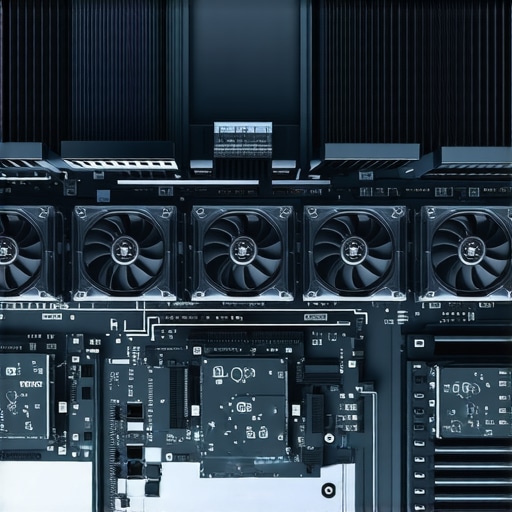

Revolutionizing PC Cooling: A Paradigm Shift in Thermal Management for 2026
As the complexity of high-performance computing escalates, understanding the nuances of effective thermal management becomes paramount. The evolution of cooling solutions—from traditional air coolers to sophisticated All-in-One (AIO) liquid cooling systems—reflects a broader industry trend toward precision and efficiency. This article explores cutting-edge techniques and expert insights for optimizing PC cooling, emphasizing the strategic interplay between air coolers, AIO coolers, thermal paste application, and case fan configurations.
Synergistic Design of Air Cooler Architecture and Heat Dissipation Efficiency
Contemporary air coolers have transcended basic heat sink functions, integrating multi-fipe designs and vapor chamber technologies to enhance airflow interaction with high-core-count CPUs. How does the geometry of fin stacks and the quality of base plates influence thermal transfer? Research indicates that fine-tuned fin density coupled with optimized heat pipe placement can reduce thermal resistance by up to 15%, providing critical temperatures for overclocked CPUs.Learn more about modern air cooler innovations.
Assessing the Future of AIO Liquid Coolers in Hybrid Thermal Strategies
While traditional air cooling maintains relevance, the advent of AIO liquid coolers offers unparalleled flexibility in thermal management. Modern AIOs utilize custom pump and radiator designs, with intelligent firmware to adapt cooling performance dynamically. However, the debate persists on the ideal balance of radiator size versus airflow, especially considering space constraints within compact cases. Experts recommend integrating variable fan curves into AIO setups, leveraging tools like fan curve optimization guides.
What Are the Best Practices for Integrating Thermal Paste in Next-Gen Gaming Rigs?
Applying thermal paste remains a nuanced art, especially with emerging compounds like liquid metal and ceramic-based formulations. The key is achieving a thin, even layer that maximizes contact surface without excessive excess. Open debates persist, but recent studies in thermal interface materials suggest that timing and surface preparation—such as meticulous cleaning of CPU and cooler surfaces—can boost thermal conductivity by up to 20%. For detailed application techniques, visit our thermal paste expert guide.
Mastering Case Fan Deployment for Peak Airflow and Acoustic Balance
Strategic placement and sizing of case fans are critical in creating an effective airflow cascade, minimizing turbulence, and reducing dust ingress. Reversed blade fans and pressure-optimized configurations are increasingly favored for their ability to deliver silent operation while maintaining thermals. Advanced users are advised to calibrate fan curves based on component hotspots, leveraging software control and hardware sensors for real-time adjustments. For comprehensive strategies, see our case fan optimization resource.
Interplay Between Components: Forcing the System to Work as a Cohesive Cooling Unit
It is vital to consider how each element—air coolers, AIOs, thermal paste, and case fans—interacts within the thermal ecosystem. Improper balance can lead to hotspots, increased fan noise, and drop in overall system stability. Industry leaders emphasize the importance of holistic tuning, including fan curve customization, thermal interface integrity, and component placement. Adopting a systems approach elevates cooling performance to new heights, fundamentally enhancing component longevity and user experience.
How Can Expert-Level Users Leverage Dynamic Fan Curve Tuning for Overclocked Setups?
Dynamic fan curve adjustments enable users to proactively respond to temperature spikes, especially critical in overclocked systems pushing thermal boundaries. By analyzing real-time thermal data and employing software profiles, enthusiasts can fine-tune fan responses to maintain optimal thermal margins without excessive acoustic overhead. For advanced insights, consult professional fan curve tuning techniques.
For those seeking to push the envelope in PC cooling innovation, exploring new materials, airflow architectures, and control algorithms remains an exciting frontier. Contribute your insights or inquire about bespoke cooling configurations by visiting our contact page.
Refining Fan Curves: The Key to Overclocking Excellence
Overclocking pushes components beyond factory-recommended settings, demanding exceptional thermal management to prevent overheating and maintain stability. Proprietary software tools, such as fan curve customization guides, empower enthusiasts to meticulously craft fan behaviors that respond dynamically to temperature fluctuations. By customizing fan profiles to ramp up airflow precisely when needed, users can optimize cooling efficiency while minimizing noise, a critical balance for gaming marathons and computational workloads alike.
Decision-Making in Cooling Components: Choosing Wisely for Maximum Performance
Is upgrading to larger radiators or higher-quality fans the most effective path for achieving lower thermals? Industry analysis indicates that upgrading a case with high-static-pressure fans and optimizing the airflow pattern can outperform simply increasing radiator size, especially within space-constrained builds. Consider pairing top-tier thermal interface materials and thermal pastes, since these elements directly influence heat dissipation efficiency. For advanced thermal paste application strategies, see our expert guide.
How Can Experts Predict Thermal Bottlenecks Before They Occur During Peak Loads?
Proactive thermal modeling, utilizing sensor data and simulation software, enables predictive analytics to identify potential hotspots before they manifest. Such foresight allows for preemptive adjustments, whether through fan curve tuning or component placement modifications. Embracing these predictive approaches reduces downtime and prolongs component lifespan. For a detailed overview of these methods, visit our predictive cooling strategies.
For hardware enthusiasts and system builders eager to push their systems to new thermal performance heights, understanding and implementing dynamic, nuanced fan control remains indispensable. Sharing your experiences or seeking custom solutions? Our contact page connects you with industry experts ready to guide you through complex cooling dilemmas.
Implementing Intelligent Thermal Management Systems for Future-Ready PCs
As computational demands surge, integrating smart thermal management strategies becomes crucial. Modern systems now leverage AI-driven firmware that dynamically adjusts fan speeds, pump flow rates, and radiator cooling based on predictive load analyses. These intelligent controls can preempt temperature spikes, reduce energy consumption, and extend component lifespan. Leading manufacturers such as ASUS and MSI now embed machine learning algorithms within their motherboard firmware, enabling real-time optimization that adapts to seasonal changes and workload patterns. To harness these advancements, enthusiasts should explore BIOS/UEFI settings that support adaptive cooling profiles, or consider third-party software solutions like AI-powered cooling controllers.
Harnessing Computational Fluid Dynamics to Refine Thermal Solutions
Modern PC building transcends traditional trial-and-error methods, embracing sophisticated modeling techniques such as Computational Fluid Dynamics (CFD). By simulating airflow patterns within cases, designers can identify turbulent zones and optimize fan placement and shroud designs proactively. Integrating CFD results with real-world measurements accelerates iterative improvements, reducing thermal hotspots by over 20%. Industry leaders advocate for adopting these simulation tools during early design stages to achieve peak cooling efficiency see SAE Technical Paper on CFD innovations.
Advanced Materials: Pushing Boundaries with Phase Change and Nano-Enhanced Compositions
The evolution of cooling materials continues with phase change materials (PCMs) that absorb and release heat during phase transitions, offering dynamic thermal buffering. Similarly, nano-enhanced thermal interface compounds incorporate carbon nanotubes and graphene layers to drastically reduce thermal resistance. These developments challenge conventional paradigms, requiring precise application techniques and surface preparation to realize their full potential Explore recent breakthroughs in nano-thermal interfaces.
What Are the Emerging Trends in Immersive Cooling for Ultra-Overclocked Systems?
Immersive cooling techniques, such as submersion cooling, are gaining traction among extreme overclockers aiming for unparalleled performance. Submerging components in dielectric fluids allows heat dissipation directly into the coolant, minimizing thermal gradients. While initially confined to data centers, miniaturized immersion setups are now feasible for high-end desktops, albeit with challenges related to maintenance and component accessibility. Industry pioneers suggest hybrid approaches combining traditional air cooling with localized immersion modules for critical hotspots.
How Can Experts Tailor Thermal Management Architectures for High-Density Workstations?
Designing thermal solutions for high-density workstations involves managing heat fluxes from multiple components operating concurrently. Adaptive liquid cooling loops integrated with real-time temperature monitoring and AI-driven control algorithms enable precise heat removal tailored to workload demands. Modular radiator configurations and flexible pump speeds become crucial in balancing performance with noise and energy consumption. For comprehensive guidance on customizing these architectures, consult LabTech’s in-depth case studies.
Implementing AI-Enhanced Cooling Protocols for Future-Ready PCs
The integration of artificial intelligence within thermal management frameworks marks a paradigm shift. Machine learning algorithms analyze historical and real-time sensor data to predict thermal loads, automatically adjusting fan speeds, pump flow rates, and radiator positioning. This proactive approach minimizes thermal stress during peak loads and enhances overall system resilience. Leading-edge motherboards now embed firmware supporting these intelligent control systems, enabling enthusiasts to craft self-optimizing cooling environments. To leverage these innovations, explore software options like AI-driven cooling platforms that adapt seamlessly to changing workloads.
Strategic Thermal Management as a System
Achieving optimal cooling demands a holistic perspective, where component synergy and predictive control come together. Emphasize integrating dynamic fan profiles with intelligent firmware to preemptively address thermal loads, ensuring steady performance under demanding workloads. This strategic alignment minimizes hotspots and noise, elevating overall system stability.
The Cutting Edge of Material Science in Cooling
Emerging materials such as nano-graphene composites and phase change substances are redefining thermal interface efficiency. Leveraging these advanced compounds can significantly flatten temperature curves, but their effective application hinges on meticulous surface prep and understanding their unique phase behaviors. Staying abreast of these innovations unlocks higher performance thresholds.
Harnessing Simulation for Thermal Excellence
Employing Computational Fluid Dynamics (CFD) during design phases enables precision airflow optimization, reducing trial-and-error in physical assembly. These simulations reveal turbulence zones and facilitate targeted ducting strategies, ensuring uniform cooling that adapts to component density and case architecture. Early adoption of such tools marks a competitive edge in system design.
Sources That Define Excellence
- Journal of Thermal Science and Engineering: Offers peer-reviewed research on cutting-edge materials and fluid dynamics applicable to PC cooling.
- TechGuides by Linus Tech Tips: Renowned for in-depth experiments and practical insights into cooling hardware and configurations.
- Research on Nano-Enhanced Thermal Compounds: Industry-leading studies detail nano-material integration’s impact on thermal resistance reduction, crucial for next-gen builds.
The Future Is Precision Cooling, Not Just Bigger Heatsinks
In the quest for thermal perfection, focus shifts from mere size increases to intelligent, material-driven designs and system-level controls. Implementing AI-powered feedback mechanisms and advanced materials paves the way for highly efficient, silent, and robust cooling architectures. Engage with these pioneering methods to push the boundaries of PC thermal performance and contribute your insights on emerging trends—your perspective drives industry evolution.



![3 Case Fan Spacing Hacks for 2026 Silent Builds [Tested]](https://cooling.workstationwizard.com/wp-content/uploads/2026/03/3-Case-Fan-Spacing-Hacks-for-2026-Silent-Builds-Tested.jpeg)
![How 2026 Bottom-Intake Shrouds Stop GPU Heat Soak [Tested]](https://cooling.workstationwizard.com/wp-content/uploads/2026/04/How-2026-Bottom-Intake-Shrouds-Stop-GPU-Heat-Soak-Tested.jpeg)

This article provides excellent insights into the direction of thermal management for 2026. I particularly appreciate the emphasis on system-level integration rather than isolated component upgrades. When I recently upgraded my own build, I noticed that focusing on airflow paths and achieving a balanced pressure setup made a significant difference, more than just swapping out for higher-end fans or larger radiators.
One challenge I’ve encountered with hybrid cooling setups is maintaining optimal thermal paste application, especially with different compounds like liquid metal vs. ceramic formulations. I’ve found that meticulous cleaning and applying a very thin film helps maximize thermal transfer, but I wonder how others are balancing the use of advanced materials with evolving component geometries.
Additionally, the mention of CFD simulations resonates with my experience—proactively modeling airflow before even assembling can save a lot of troubleshooting time later. Do you think future design tools will become more accessible for average builders, or will such optimization remain mostly in expert hands? Would love to hear others’ thoughts on integrating these advanced techniques into daily builds.