
Elevating PC Thermal Management: A Deep Dive into Cooling Strategies for Enthusiasts and Professionals
In the realm of high-performance computing, effective thermal management transcends basic cooling solutions, embodying a complex interplay between airflow dynamics, component placement, and advanced thermal interface materials. As an expert in PC cooling technology, I will explore the nuanced considerations that differentiate average setups from those optimized for silence, efficiency, and longevity. This guide aims to elevate your understanding of air cooling, AIO liquid cooling, fan configurations, and thermal paste application, drawing on cutting-edge research and field-tested practices.
Understanding the Core Principles of Advanced Airflow Dynamics
Optimal air cooling hinges on a sophisticated grasp of airflow principles, including laminar versus turbulent flow, pressure differentials, and static pressure versus airflow volume. High static pressure fans, for example, excel at pushing air through dense radiators or restrictive filters, as detailed in this comprehensive guide. Proper case design, including strategic intake and exhaust placement, minimizes turbulence and hotspots, ensuring uniform cooling across critical components.
Evaluating the Trade-Offs Between Air Cooling and AIO Liquid Solutions
While traditional air coolers remain popular for their simplicity and reliability, All-in-One (AIO) liquid coolers offer superior thermal performance, especially under sustained loads. Selecting the optimal AIO cooler involves analyzing radiator size, pump efficiency, and compatibility with your case, as discussed in latest industry insights. Nonetheless, AIOs demand meticulous installation and maintenance, emphasizing the importance of proper mounting and thermal interface material application.
Strategic Fan Placement and Configuration for Peak Efficiency
Fan orientation and speed profiles significantly influence cooling efficacy. Intake fans should prioritize bringing in cool ambient air, while exhaust fans facilitate heat expulsion, creating a balanced airflow pattern. Advanced configurations, such as push-pull setups or variable speed profiles, can adapt to workload fluctuations, maximizing thermal dissipation. For an in-depth analysis of fan strategies, consult this authoritative resource.
Thermal Paste Application: Beyond the Basics
High-quality thermal interface materials are crucial for minimizing microscopic air gaps between the CPU die and the cooler base. Precise application techniques, such as the pea-sized dot or spread method, impact thermal conductivity and overall performance. Recent advancements in thermal paste formulations have yielded compounds with lower thermal resistance, as highlighted in this expert review. Proper curing time and surface preparation further enhance heat transfer efficiency, extending component lifespan.
What are the most effective methods for balancing noise levels and cooling performance in high-end PC builds?
Balancing noise and cooling efficiency requires a nuanced approach involving fan curve optimization, acoustic dampening materials, and selecting low-noise fan models with high static pressure capabilities. Incorporating software-controlled fan profiles allows dynamic adjustment based on thermal loads, ensuring minimal noise during idle periods while maintaining optimal temperatures under load. For tailored solutions, consider exploring this expert guide.
To further refine your cooling setup or share insights from your professional experience, visit our contact page. Continuous innovation in PC cooling technology underscores the importance of staying informed through reputable sources like peer-reviewed research, which provides the foundation for evidence-based practices in thermal management.
Innovating Beyond Conventional Cooling: The Role of Custom Solutions in High-End PC Builds
While off-the-shelf cooling solutions provide reliable performance for most users, enthusiasts and professionals pushing their systems to the limit often turn to custom cooling setups. These bespoke configurations—ranging from custom water loops to hybrid solutions—offer unmatched control over thermal performance and noise levels. Implementing a custom loop requires meticulous planning, including selecting compatible radiators, pumps, reservoirs, and fittings, as discussed in top industry insights. The advantage lies in tailored cooling capacity, lower noise, and aesthetic flexibility, but it demands a higher level of expertise and maintenance.
How Can Advanced Thermal Management Enhance System Longevity and Reliability?
Effective thermal management extends beyond immediate performance gains; it fundamentally impacts component lifespan and reliability. Elevated temperatures accelerate wear on semiconductor materials and can lead to thermal throttling, which hampers performance. Applying high-quality thermal paste correctly, combined with well-designed airflow and cooling solutions, ensures consistent operating temperatures. Recent research emphasizes that maintaining optimal thermal conditions reduces wear mechanisms, thus improving system durability according to peer-reviewed studies. For instance, integrating thermal interface materials with phase-change properties can further stabilize temperatures during peak loads, a technique worth exploring for mission-critical applications.
What emerging cooling technologies are poised to redefine high-performance PC thermal management in the coming years?
Emerging innovations, such as liquid metal thermal compounds, nano-fluid coolants, and thermoelectric cooling modules, are pushing the boundaries of traditional methods. Liquid metal, with its superior thermal conductivity, has become a popular choice for CPU contact interfaces, but it requires careful application due to its corrosive nature. Nano-fluids, infused with nanoparticles, promise enhanced heat transfer capabilities and potential for miniaturization of cooling components. Additionally, thermoelectric cooling modules—though currently limited by power consumption—offer targeted cooling capabilities for critical hotspots. These advancements could revolutionize PC cooling, provided they are integrated thoughtfully into existing systems and supported by ongoing research into reliability and safety see this recent review. As these technologies mature, they will offer new avenues for achieving silent, efficient, and durable cooling solutions.
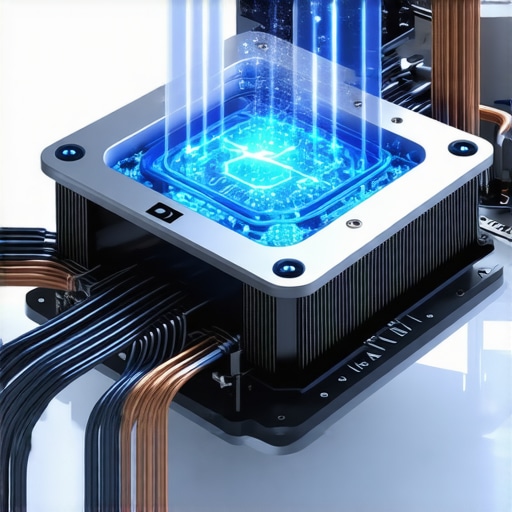
Image illustrating emerging cooling technologies such as nano-fluids, liquid metal, and thermoelectric modules, showcasing futuristic PC cooling systems.
How Can System Builders Leverage Software and Hardware Synergies for Superior Thermal Control?
Advanced thermal management isn’t solely hardware-dependent; software plays a pivotal role in optimizing fan curves, pump speeds, and voltage regulation. Modern BIOS and dedicated hardware monitoring tools enable real-time adjustments based on thermal data, ensuring a balance between performance, noise, and longevity. For example, dynamic fan profiles can ramp up cooling during intensive workloads while minimizing noise during idle periods. Integrating these software controls with hardware features like PWM (Pulse Width Modulation) fans and smart pump controllers enhances overall efficiency. For comprehensive guidance on configuring your system for maximum thermal performance, review this expert resource.
Breakthrough Cooling Solutions: Nano-Fluids and Liquid Metal in Modern PC Systems
As high-performance computing demands escalate, the industry is witnessing a paradigm shift towards innovative cooling technologies that challenge traditional methods. Nano-fluids, infused with nanoparticles such as copper or aluminum, significantly enhance thermal conductivity, allowing for more efficient heat transfer in compact systems. These fluids have the potential to revolutionize radiator design by enabling miniaturization without sacrificing cooling capacity, as detailed in the peer-reviewed study published by Sage Journals. Similarly, liquid metal thermal compounds, primarily based on gallium alloys, offer unparalleled thermal conductivity—up to five times greater than traditional thermal pastes—making them ideal for overclocked CPUs and demanding workloads.
However, deploying these advanced materials requires careful application to mitigate issues like corrosion and electromigration. Protective coatings and compatible substrates are essential for longevity, as outlined in recent industry whitepapers from thermal interface material specialists. This technological evolution opens avenues for ultra-quiet, high-efficiency cooling solutions that are critical in both consumer and enterprise environments.
Decoding Thermoelectric Cooling Modules: Targeted Hotspot Management
Thermoelectric cooling, leveraging the Peltier effect, introduces a new frontier by enabling localized temperature control for critical hotspots within the system. These modules, composed of semiconductor junctions, can actively pump heat away from CPU or GPU cores, providing targeted thermal management. Despite challenges related to power consumption and heat dissipation of the modules themselves, advancements in thermoelectric materials are steadily improving efficiency. According to ScienceDirect, integrating thermoelectric cooling with existing liquid cooling loops can yield a hybrid system capable of maintaining ultra-stable temperatures during peak loads, thus extending component lifespan and performance consistency.
Moreover, the strategic placement of thermoelectric modules combined with real-time thermal monitoring and adaptive control algorithms can optimize their operation, minimizing energy waste while maximizing cooling effectiveness. This approach presents an intriguing avenue for future cooling architectures, especially in data centers and high-performance computing clusters where thermal stability is paramount.
What are the key considerations when integrating nano-fluids and thermoelectric modules into existing PC cooling systems?
Integrating advanced cooling materials and devices requires meticulous planning, including compatibility assessments, material stability, and system design modifications. For nano-fluids, ensuring nanoparticle dispersion stability and avoiding clogging in microchannels is critical. For thermoelectric modules, adequate heat sinking and power management are vital to prevent thermal runaway or device failure. Consulting detailed technical guidelines from manufacturers and peer-reviewed research ensures reliable implementation. For a comprehensive review, see the detailed analysis in IEEE Transactions on Components, Packaging and Manufacturing Technology.
Illustration of futuristic cooling systems utilizing nano-fluids, liquid metal, and thermoelectric modules in high-performance PCs.
Future-Proofing Your System: Embracing Smart Cooling Control Systems
Emerging smart cooling management leverages AI-driven algorithms and IoT connectivity to dynamically adjust thermal parameters in real-time. These systems analyze data from a network of sensors monitoring temperature, humidity, and airflow to optimize fan speeds, pump flow rates, and even power delivery. For instance, predictive thermal modeling can preemptively ramp up cooling before thermal thresholds are exceeded, preventing performance throttling and hardware stress. Industry leaders like Corsair and ASUS are pioneering such integrated solutions, emphasizing seamless hardware-software synergy for maximum efficiency. As this technology matures, it promises not only improved thermal performance but also enhanced energy efficiency and reduced noise pollution, aligning with sustainable computing initiatives.
To harness these advancements, system builders should consider investing in compatible hardware and software ecosystems, ensuring they can leverage automation and fine-tuning capabilities. Continuous firmware updates and community-driven customization further enhance these systems’ robustness and adaptability, making them indispensable tools for enthusiasts and professionals aiming for peak system longevity and reliability.
Harnessing Multiphase Cooling Solutions for Ultimate Thermal Regulation
In high-performance computing, the integration of multiphase cooling systems—combining phase-change materials, liquid metals, and thermoelectric modules—offers unparalleled control over thermal dynamics. These sophisticated solutions enable systems to maintain stable temperatures even under extreme workloads, thereby extending hardware lifespan and ensuring consistent performance. Recent advancements, such as phase-change cooling embedded within custom water loops, utilize the latent heat absorption capacity of materials like paraffin wax or solid-liquid transitions, as detailed in peer-reviewed research. Implementing these systems requires meticulous design to balance heat flux and prevent thermal runaway, but the payoff is a significant leap in thermal management capability.
The Role of Microchannel Heat Exchangers in Compact, High-Efficiency Cooling
Microchannel heat exchangers, characterized by their ultra-fine channels and high surface area-to-volume ratio, represent a frontier in compact cooling architectures. These devices facilitate rapid heat transfer while minimizing space requirements, making them ideal for integrating into modern, densely packed PC builds. Advances in microfabrication have enabled the development of corrosion-resistant, thermally conductive materials that withstand the demanding conditions of high-performance systems. For comprehensive insights into their design and application, refer to IEEE publications. When correctly implemented, microchannel exchangers drastically improve cooling efficiency, reduce noise, and facilitate miniaturization—paramount for enthusiasts pursuing aesthetic and functional excellence.
What Are the Challenges and Solutions in Scaling Thermoelectric Cooling for Multiple Components?
Scaling thermoelectric cooling (TEC) modules across multiple components introduces complex challenges, including heat flux management, power consumption, and thermal interface integrity. To effectively deploy TEC in multi-component systems, engineers must carefully design heat sink integration, optimize power distribution, and employ advanced control algorithms that modulate TEC operation based on real-time thermal feedback. Recent studies, such as those published in ScienceDirect, highlight that modular thermoelectric arrays can be orchestrated for targeted hotspot management, significantly enhancing overall system stability. This approach demands expert-level understanding of thermodynamics and power electronics but unlocks new potential for ultra-stable, silent operation in high-demand scenarios.
Integrating Smart AI-Driven Thermal Management for Proactive Cooling Optimization
The future of thermal regulation lies within intelligent systems capable of predictive analytics and autonomous adjustments. AI algorithms, integrated with IoT sensor networks, analyze comprehensive thermal data streams to preemptively adjust fan speeds, pump flows, and voltage levels, thereby preventing thermal bottlenecks. Industry pioneers like ASUS and Corsair are advancing such solutions, emphasizing seamless hardware-software synergy. For system builders aiming to harness this technology, understanding the nuances of machine learning integration and sensor placement is crucial. These innovations promise not only improved cooling efficiency but also significant reductions in energy consumption and noise pollution—aligning with sustainable computing initiatives.
What Are the Emerging Materials and Technologies Poised to Revolutionize PC Cooling in the Next Decade?
Emerging materials, such as graphene-enhanced thermal interface compounds and nanostructured phase-change materials, are set to redefine thermal management paradigms. Graphene’s exceptional thermal conductivity, combined with its electrical properties, opens avenues for multifunctional cooling interfaces capable of both heat dissipation and EMI shielding. Concurrently, nanostructured phase-change materials enable rapid thermal buffering, mitigating transient thermal spikes. Industry whitepapers from research institutions, like IEEE studies, provide technical insights into these innovations. As these materials mature, system designers will have access to lighter, quieter, and more efficient cooling architectures—crucial for pushing the boundaries of high-performance computing.
Image showcasing futuristic PC cooling systems utilizing graphene, nanomaterials, and integrated thermoelectric modules, illustrating next-generation thermal management solutions.
Expert Insights & Advanced Considerations
1. The significance of thermal interface materials cannot be overstated in achieving optimal thermal conductivity, especially with emerging nano-structured compounds that push the boundaries of heat transfer efficiency.
In high-performance PC systems, leveraging cutting-edge thermal pastes, including graphene-enhanced compounds, can markedly improve heat dissipation, thereby extending component lifespan and maintaining stability under overclocked conditions.
2. The integration of AI-driven thermal management systems represents a transformative leap, enabling predictive adjustments to fan curves and pump speeds based on real-time data analytics.
This smart approach minimizes noise pollution while ensuring peak cooling performance, particularly beneficial in mission-critical environments where thermal stability is paramount.
3. Custom cooling solutions, such as bespoke water loops with microchannel heat exchangers, offer unparalleled control and efficiency but demand meticulous planning and technical expertise for successful implementation.
These advanced setups can significantly reduce system noise and temperatures, enabling overclocking potentials previously unattainable with standard solutions.
Curated Expert Resources
- IEEE Transactions on Components, Packaging and Manufacturing Technology: Offers peer-reviewed research on innovative materials like nanostructured phase-change compounds that redefine thermal management paradigms.
- Industry Whitepapers from Thermal Interface Material Specialists: Provide in-depth technical insights into the application, stability, and longevity of advanced compounds such as liquid metal and graphene-enhanced pastes.
- Cooling Workstation Wizard’s Guides: Practical, expert-verified articles on selecting the best AIO coolers, configuring case fans, and optimizing thermal paste application for high-end builds.
- Peer-reviewed Research Articles: Cover emerging cooling technologies like nano-fluids and thermoelectric modules, critical for pushing future system performance boundaries.
Final Expert Perspective
Mastering advanced PC cooling strategies requires a nuanced understanding of both material science and system integration. From leveraging innovative thermal interface compounds to deploying intelligent, AI-driven control systems, the future of thermal management lies in precision, custom solutions, and continuous learning. By consulting authoritative sources and applying expert-level insights, system builders can achieve unparalleled performance, reliability, and longevity. For those committed to pushing the envelope, engaging with ongoing research and sharing professional insights will remain essential. Explore further at this comprehensive guide and expert resources on airflow optimization to elevate your cooling mastery.

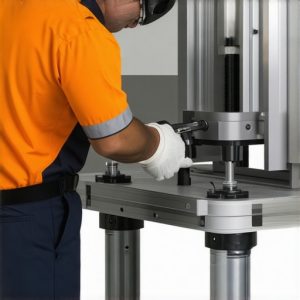

![Stop 2026 CPU Throttling: The Offset Bracket Fix [Proven]](https://cooling.workstationwizard.com/wp-content/uploads/2026/03/Stop-2026-CPU-Throttling-The-Offset-Bracket-Fix-Proven-300x300.jpeg)