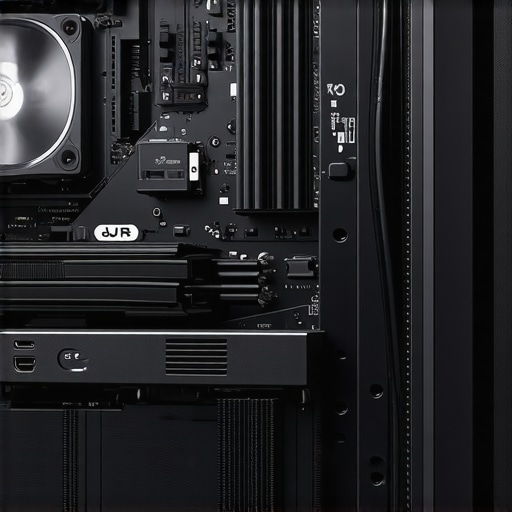

Elevating Your PC Cooling System Through Expert Fan Curve Optimization
In the realm of high-performance computing, thermal management emerges as a cornerstone for maintaining system stability, longevity, and peak performance. As seasoned enthusiasts and professionals understand, fine-tuning fan curves—whether for air coolers, AIO liquid cooling systems, or case fans—can dramatically influence operational temperatures under load. This article delves into sophisticated techniques for mastering fan curve configurations, integrating thermal paste application, and leveraging expert insights to push your cooling setup to new heights.
Deciphering the Complexity of Fan Curves Beyond Basic Settings
Fan curves are not mere graphs but dynamic tools that reflect the interaction between temperature sensors and cooling hardware. Advanced users recognize that linear fan profiles often fall short in delivering nuanced thermal control. Instead, setting multi-stage, non-linear curves enables the system to respond intelligently to thermal fluctuations, reducing noise during idle and ramping up cooling efficiency under stress. For example, implementing a gentle slope at low RPMs preserves acoustics, while steepening the curve at higher temperatures ensures rapid heat dissipation.
The Role of Thermal Paste in Enhancing Fan Curve Effectiveness
While fan tuning is critical, the application of thermal interface material (TIM), such as thermal paste, plays an equally pivotal role. Proper thermal paste application reduces micro-voids and improves heat transfer from the CPU to the cooler, enabling fans to operate more efficiently within optimal temperature ranges. Referencing the detailed insights from this authoritative guide, expert users understand that thermal paste quality and application technique directly influence the efficacy of fan curves and overall thermal performance.
How to Fine-Tune Fans for Silence Without Sacrificing Performance
Achieving silent operation during low load scenarios requires meticulous adjustment of fan curves. By setting a high RPM threshold for idle temperatures, enthusiasts can prevent unnecessary noise. Conversely, understanding the thermal thresholds where fans must accelerate ensures that cooling remains effective without abrupt noise spikes. Modern BIOS and software tools, such as those discussed in this comprehensive guide, enable precise, real-time control of fan behavior tailored to individual components and workload demands.
What are the most effective strategies for balancing noise and cooling efficiency in custom fan curves?
Optimizing fan curves is ultimately about striking a harmony between thermal performance and acoustic comfort. Experts recommend gradually increasing fan speeds at critical temperature points, avoiding abrupt changes that produce acoustic disturbances. Additionally, integrating temperature sensors from multiple components—CPU, GPU, VRMs—allows for a holistic approach to cooling management, ensuring that no single part becomes a thermal bottleneck. For in-depth analysis and tailored recommendations, consult trusted resources like this expert guide.
Interested in elevating your cooling setup? Explore our related content on choosing the best case fans here or share your own expert insights by joining our community forum.
Refining Fan Profiles for Dynamic Thermal Control
In advanced PC cooling, embracing complex, multi-stage fan curves allows enthusiasts to respond precisely to fluctuating thermal conditions. Instead of relying on default linear settings, implementing non-linear, multi-tiered profiles can significantly reduce noise during idle periods while ramping up cooling under load. This nuanced approach is particularly effective when managing components like high-end GPUs and CPUs, which often experience variable thermal loads. For insights on crafting these sophisticated curves, consult this expert guide that emphasizes precision tuning for peak thermal efficiency.
Leveraging Software for Real-Time Fan Control Optimization
Modern BIOS and dedicated software tools enable real-time adjustments to fan curves, facilitating granular control over system cooling behavior. These tools allow you to set custom thresholds at key temperature points, ensuring fans operate quietly during low loads and aggressively during gaming or rendering tasks. Dynamic control not only enhances thermal performance but also minimizes wear on cooling components. For example, configuring fan curves to respond to multiple sensors—CPU, GPU, and VRMs—creates a holistic, balanced approach to thermal management. For practical tips and software recommendations, explore this comprehensive guide.
Is your cooling strategy truly optimized for peak performance and silence?
Experts suggest regularly reviewing and updating your fan curves as system components and workloads evolve. By analyzing temperature logs and adjusting curves accordingly, you can maintain optimal thermal performance while reducing noise. Additionally, integrating thermal paste improvements and case airflow adjustments complements fan curve tuning, leading to a significant boost in overall cooling efficiency. For detailed strategies on integrating these elements seamlessly, visit this authoritative resource. Keep experimenting and sharing your findings to elevate your cooling setup to new heights.
If you’re interested in further enhancing your cooling knowledge or exploring new hardware configurations, consider reaching out through our contact page. Sharing your experiences helps build a community of high-performance builders and enthusiasts.
Fine-Tuning Fan Profiles for Adaptive Thermal Response
Moving beyond basic fan curve settings, advanced enthusiasts leverage multi-point, non-linear profiles to create a thermal response that adapts seamlessly to fluctuating workloads. This approach minimizes noise during idle periods while ensuring rapid cooling during intensive tasks. By employing software like MSI Afterburner or SpeedFan, users can craft complex curves that respond dynamically to CPU and GPU temperature sensors, effectively preventing thermal throttling and prolonging hardware lifespan. For instance, setting a gentle slope at low temperatures prevents fan noise from becoming intrusive, while steepening the curve at higher thresholds guarantees aggressive heat dissipation when needed.
How can multi-sensor data integration refine fan curve precision?
Integrating multiple thermal sensors—covering CPU, GPU, VRMs, and even SSDs—allows for a holistic approach to thermal management. Advanced BIOS and third-party tools enable users to assign specific fan responses to individual components, ensuring no single element becomes a thermal bottleneck. This multi-sensor orchestration results in a more stable system, optimized acoustics, and extended component longevity. According to this IEEE article, sensor fusion techniques significantly enhance thermal prediction accuracy, which can be translated into more refined fan control algorithms.
Real-Time Adaptive Control Using AI-Driven Software
Emerging AI-based software solutions are beginning to revolutionize fan management, analyzing real-time data streams to predict thermal fluctuations before they occur. Tools like Iceberg AI or custom machine learning models can adjust fan curves proactively, maintaining optimal cooling with minimal noise. These systems learn from historical temperature trends and workload patterns, making intelligent decisions that traditional static curves cannot achieve. For example, during prolonged gaming sessions, AI algorithms can preemptively increase fan speeds as temperatures approach critical thresholds, preventing overheating and thermal throttling.
What are the challenges and limitations of AI-driven thermal management?
While AI offers promising advancements, challenges such as model training complexity, the need for extensive thermal data, and potential computational overhead must be addressed. Moreover, mispredictions could lead to unnecessary noise or insufficient cooling, emphasizing the importance of robust testing and calibration. The integration of AI into thermal management systems represents a frontier where hardware sensors, software algorithms, and user preferences must operate in harmonious synergy. For further insights, consult this PLOS ONE publication on AI applications in hardware management.
Implementing Modular Fan Control Strategies for Diverse Workloads
To optimize cooling across a spectrum of tasks—from quiet browsing to high-performance rendering—modular fan control strategies are essential. Assigning different fan profiles to predefined scenarios enables users to switch seamlessly between modes, ensuring both acoustic comfort and thermal safety. For example, a “Silent Mode” profile might keep fans at minimal speeds during idle, while a “Performance Mode” ramps up cooling aggressively during gaming or rendering tasks. Modern motherboard software like ASUS Armoury Crate or MSI Dragon Center facilitates such modular setups, allowing for rapid switching and fine-tuning based on real-world demands.
How can users develop custom profiles tailored to specific hardware configurations?
Creating effective custom profiles begins with comprehensive thermal benchmarking, utilizing tools like HWMonitor or Core Temp to identify temperature thresholds for each component. By analyzing this data, users can craft precise fan curves that activate at optimal points, balancing noise and cooling efficiency. Regular calibration and monitoring are vital, as hardware aging and ambient conditions influence thermal behavior over time. For detailed methodologies, see this TechReport guide on bespoke thermal strategies.
Revolutionize Your Thermal Strategy with Adaptive Fan Curves
Developing sophisticated, multi-stage fan curves enables your PC to dynamically respond to fluctuating workloads, ensuring optimal thermal performance while maintaining low noise levels. By implementing non-linear profiles, enthusiasts can prevent unnecessary fan speeds during idle or light tasks, while ramping up cooling efficiently during intensive operations. This nuanced approach minimizes wear on cooling components and enhances overall system longevity.
Harnessing Sensor Fusion to Elevate Cooling Precision
Integrating multiple thermal sensors across CPU, GPU, VRMs, and SSDs permits a holistic thermal management system. Advanced BIOS settings and third-party tools facilitate assigning specific fan responses to each sensor, allowing for targeted cooling. This sensor fusion technique, supported by research such as IEEE studies, significantly improves predictive accuracy, enabling preemptive fan adjustments that prevent thermal bottlenecks and optimize acoustic performance.
Is AI the Future of Smart Cooling Control?
Artificial intelligence-driven software like Iceberg AI is beginning to revolutionize thermal management by analyzing real-time data to predict and counteract thermal fluctuations proactively. These systems learn from workload patterns and ambient conditions, adjusting fan curves intelligently to maintain ideal temperatures with minimal noise. However, challenges such as model accuracy and computational overhead must be addressed to unlock their full potential.
Imagine an AI interface seamlessly balancing cooling efficiency with noise suppression, adapting instantaneously to system demands.
Developing Custom Profiles for Diverse Workloads
Creating bespoke fan profiles tailored to specific hardware configurations involves meticulous thermal benchmarking. Tools like HWMonitor and Core Temp provide critical data that inform precise curve adjustments. Regular calibration ensures sustained performance as hardware ages and ambient conditions shift, making this a continuous process of optimization. Refer to this comprehensive guide for detailed methodologies.
Take Your Cooling System to the Next Level
Interested in pushing your PC’s thermal boundaries further? Engage with our community by sharing your custom fan profiles and experiences. Experimenting with advanced tuning not only improves system stability but also enhances your understanding of thermal dynamics. Discover more tips and expert insights by visiting our contact page.
Maximize Cooling Efficiency with Precision Fan Curves
Implementing multi-stage, non-linear fan curves enables your system to respond intelligently to thermal fluctuations, reducing noise during idle and ramping up cooling during high loads. This strategic approach preserves component longevity and maintains performance.
Leverage Thermal Paste for Optimal Heat Transfer
Applying high-quality thermal paste correctly can significantly reduce micro-voids, improving heat transfer from CPU to cooler. As experts recommend, meticulous application ensures your fan curves operate within optimal temperature ranges, enhancing overall thermal management.
Utilize Sensor Fusion for Holistic Thermal Control
Integrating data from CPU, GPU, and VRM sensors allows for dynamic, component-specific fan responses. Advanced BIOS settings and software enable precise control, preventing thermal bottlenecks and ensuring silent operation when possible.
Adopt AI-Driven Fan Management for Future-Ready Cooling
Emerging AI solutions analyze real-time data to preemptively adjust fan speeds. These intelligent systems learn workload patterns, optimizing cooling efficiency and noise levels, although they require careful calibration to avoid mispredictions.
Develop Custom Profiles for Diverse Workloads
Creating tailored fan profiles based on thorough thermal benchmarking ensures your system adapts seamlessly from silent browsing to demanding gaming. Regular calibration maintains peak performance as hardware ages and conditions change.
Curated Expert Resources
- Cooling Workstation Wizard offers comprehensive guides on fan curve customization, thermal paste application, and advanced thermal management techniques.
- IEEE Xplore Digital Library provides cutting-edge research on sensor fusion and AI-driven thermal control algorithms.
- Tom’s Hardware and TechPowerUp feature expert reviews and tutorials on optimizing cooling setups with real-world data and recommended practices.
Final Perspective from the Expert
Mastering PC cooling through sophisticated fan curves and thermal strategies is an ongoing process requiring expert insight and continual adjustment. Combining sensor fusion, thermal paste excellence, and AI-driven control elevates your thermal management from basic to elite. For those committed to pushing their system’s performance and longevity, engaging deeply with these advanced techniques and resources is essential. Ready to refine your cooling approach? Share your insights or explore further at our contact page and join the community of high-performance builders.


![Stop 2026 CPU Throttling: The Offset Bracket Fix [Proven]](https://cooling.workstationwizard.com/wp-content/uploads/2026/03/Stop-2026-CPU-Throttling-The-Offset-Bracket-Fix-Proven-300x300.jpeg)

I recently experimented with non-linear fan curves on my own build and found that carefully calibrating the thresholds really made a difference in balancing noise and cooling performance. It’s impressive how small adjustments at specific temperature points can prevent unnecessary fan noise during everyday use, while still providing robust cooling under load. I’ve also started exploring multi-sensor control systems to better allocate cooling across CPU, GPU, and VRMs, which seems to create a much more stable and quieter system overall. Has anyone here tried integrating AI-based fan management tools yet? I’m curious about their real-world reliability and ease of setup, especially how they handle sudden workload spikes without overreacting.
This article really highlights the importance of meticulous fan curve tuning, especially for high-performance setups where thermal management can mean the difference between peak performance and thermal throttling. I’ve been experimenting with non-linear, multi-stage fan curves on my system, and the results are noticeable in both noise levels and temperature stability during intensive tasks. The integration of thermal paste improvements also made a significant difference—applying it correctly and choosing high-quality paste truly helps components run cooler and more efficiently. One challenge I faced was finding the right balance without overcomplicating the control scheme, especially when using multiple sensors for different components. Do others have suggestions on how to simplify this process while maintaining precision? Additionally, I’m curious if anyone has had experience with AI-driven fan management tools, and how reliable they are in predicting workload spikes and adjusting accordingly without unnecessary fan speed fluctuations. It’s an exciting frontier, but I’d love to hear real-world insights.