
Unlocking the Future of PC Cooling: A Deep Dive into Fan Curves and Thermal Management for 2025
In the rapidly evolving landscape of PC hardware, cooling solutions are more than mere accessories—they’re critical components that influence performance stability, longevity, and overclocking potential. As we venture into 2025, understanding the nuanced interplay of air cooling, all-in-one (AIO) liquid coolers, and fan curve optimization becomes essential for enthusiasts and professionals aiming for peak thermal efficiency.
Why Fan Curves Are the Linchpin of Advanced Thermal Regulation
Fan curves serve as the dynamic control maps that regulate airflow in response to CPU or GPU temperatures. Mastering these curves involves not only setting thresholds but also understanding the thermal inertia of components, airflow dynamics, and acoustic considerations. For instance, sophisticated fan curve tuning can mitigate thermal throttling without sacrificing acoustic comfort, a balance critical in high-performance computing environments.
Expert Insights: Navigating the Complexities of AIO and Air Cooling Synergies
Optimal cooling in 2025 hinges on integrating high-efficiency AIO liquid coolers with intelligently calibrated fan curves. This synergy reduces CPU temperatures by leveraging the thermodynamic advantages of liquid cooling while maintaining airflow flexibility. For example, deploying a hybrid approach where AIOs run at lower RPMs during idle and ramp up dynamically during load can significantly enhance thermal performance.
Addressing the Challenges of Thermal Management in Overclocked Systems
Overclocking introduces significant thermal stress, necessitating meticulous fan curve customization. The question arises:
How can experts fine-tune fan profiles to prevent thermal runaway in overclocked CPUs while maintaining low noise levels?
Advanced strategies include employing adaptive fan curves that respond to real-time thermal feedback, combined with high-quality thermal paste application and case airflow optimization. For instance, exploring the latest thermal paste innovations can reduce thermal resistance, further empowering fan curve effectiveness.
In addition, leveraging AI-based control algorithms that predict thermal loads allows for preemptive fan adjustments, ensuring system stability and acoustic comfort. These methods exemplify the cutting-edge of PC cooling technology, demanding a deep understanding of both hardware capabilities and software tuning.
For professionals seeking comprehensive expertise, exploring detailed guides such as Mastering PC Cooling: Air, AIO & Fan Curves for Better Temps offers invaluable insights into system-wide thermal management strategies.
Ultimately, the goal in 2025 is to create a resilient, silent, and thermally optimized environment—achievable through expert calibration of fan curves, thermal interface materials, and airflow pathways. As the field advances, staying informed about emerging technologies and best practices remains paramount.
Engage with our community of experts and contribute your insights on PC cooling innovations to push the boundaries of thermal efficiency further.
Harnessing the Power of Custom Fan Curves for Overclocked Systems
As overclocking becomes more mainstream among enthusiasts, the importance of precise fan curve tuning intensifies. Fine-tuning fan profiles to respond dynamically to rising thermal loads can prevent thermal runaway incidents, extending component lifespan and maintaining system stability. Utilizing adaptive fan curves—set through BIOS or dedicated software—allows fans to ramp up gradually as temperatures increase, reducing noise during idle and light workloads. For complex systems, integrating these curves with real-time thermal feedback data is crucial, enabling preemptive adjustments that optimize cooling efficiency without sacrificing acoustic comfort.
Is Your Thermal Interface Material Up to Par? A Deep Dive into Thermal Paste Innovations
Thermal paste remains a critical, yet often overlooked, factor in thermal management. Recent innovations in thermal interface materials (TIMs), such as graphene-enhanced compounds and metallic-based pastes, significantly reduce thermal resistance, enabling better heat transfer from CPU and GPU dies to cooling solutions. Applying high-quality thermal paste correctly—ensuring a thin, even layer—is essential for maximizing heat dissipation. For experts interested in refining their thermal setup, exploring advanced thermal paste application techniques can lead to measurable temperature drops and improved fan curve responsiveness.
How Can Smart Algorithms Elevate Your Fan Curve Precision?
Emerging AI-driven control algorithms are transforming fan curve customization. These smart systems analyze real-time thermal data, workload patterns, and acoustic preferences to automatically adjust fan speeds for optimal performance. By predicting thermal peaks before they occur, AI controls prevent overheating and reduce unnecessary noise. Integrating such technologies with existing hardware—via software solutions or compatible motherboard features—can elevate your cooling strategy to new heights. For detailed insights into implementing these advanced controls, visit our comprehensive guide on mastering PC cooling with AI and software tools.
Would you consider employing AI-based fan control in your custom builds? Share your thoughts or experiences in the comments, or explore more expert tips to refine your thermal setup.
External Authority on Fan Curve Optimization
According to renowned hardware tuning expert Tom’s Hardware, precise fan curve calibration combined with high-quality thermal paste and airflow management can dramatically improve system thermals, especially in overclocked setups. Their comprehensive guides emphasize the importance of understanding hardware-specific thermal characteristics and leveraging advanced control software for optimal results (source).
Deciphering the Intricacies of Dynamic Fan Curve Algorithms for Precision Thermal Control
At the cutting edge of PC cooling innovation, the deployment of adaptive fan curve algorithms—powered by machine learning and real-time thermal analytics—ushers in a new era of thermal management. These systems go beyond static or manually tuned profiles, utilizing predictive modeling to preemptively adjust fan speeds before thermal thresholds are breached. This proactive approach minimizes thermal inertia effects, reduces acoustic noise, and ensures a consistent performance envelope even under unpredictable workload spikes.
Implementing such sophisticated control systems involves integrating high-fidelity sensors, leveraging motherboard firmware or third-party software with AI capabilities, and fine-tuning parameters to match specific hardware characteristics. For example, advanced control algorithms can analyze workload patterns—like rendering or gaming sessions—and anticipate thermal peaks, ramping fans accordingly to prevent thermal runaway incidents while maintaining silent operation during low activity periods.
What are the best practices for calibrating AI-driven fan control systems in overclocked environments?
Expertise in calibration involves iterative testing, establishing precise thermal baselines, and configuring machine learning models to adapt dynamically without oscillations or lag. Regular firmware updates from motherboard vendors, combined with user-defined safety thresholds, ensure these systems perform optimally without risking hardware longevity. As noted in a detailed study by IEEE Transactions on Industrial Informatics, the integration of adaptive control algorithms can improve thermal stability by up to 30%, significantly reducing the likelihood of thermal throttling and component degradation (source).
Furthermore, coupling AI-based fan control with high-quality thermal interface materials (TIMs)—such as graphene-infused pastes or liquid metal compounds—can further enhance heat transfer efficiency, amplifying the benefits of intelligent airflow management.
Harnessing External Data and Community-Driven Tuning for Optimal Results
Beyond proprietary software solutions, the vibrant community of PC enthusiasts and overclockers contributes invaluable insights into custom fan curve configurations. Forums and expert-led tutorials often reveal nuanced adjustments tailored to specific hardware combinations, ambient conditions, and user preferences. Engaging with these resources enables users to refine their thermal strategies, balancing performance and acoustics with a granular level of control.
For instance, some overclockers experiment with phase-specific fan profiles—ramping up fans during overclocked load peaks and easing during idle or low-intensity tasks—thus ensuring system stability without excessive noise.
Future Trends: The Convergence of Thermal Management and Smart System Integration
Looking ahead, the integration of thermal management with broader system health monitoring—via IoT-enabled hardware—will facilitate even more sophisticated control schemes. Imagine a scenario where your PC dynamically communicates with a home automation system, adjusting cooling parameters based on external temperature, humidity, or energy consumption policies. This holistic approach not only maximizes performance but also aligns with sustainability goals, reducing energy waste and prolonging hardware lifespan.
To stay ahead in this rapidly evolving field, continuous learning and experimentation remain crucial. Subscribe to industry journals, participate in online communities, and keep abreast of firmware updates from hardware manufacturers to leverage the latest innovations in fan control technology.
If you’re passionate about pushing your PC’s thermal boundaries, consider exploring dedicated control software that incorporates AI and machine learning algorithms—empowering you to craft the ultimate overclocked setup with precision and confidence.
Revolutionizing Thermal Management: Incorporating Predictive Analytics for Fan Curves
As PC hardware continues to evolve at an unprecedented pace, the integration of predictive analytics into fan curve calibration emerges as a game-changer. Utilizing machine learning algorithms trained on extensive thermal and workload datasets allows for anticipatory fan speed adjustments, minimizing thermal inertia effects and enhancing system stability. This proactive approach not only reduces thermal throttling but also fosters a quieter operational environment, essential for high-performance and noise-sensitive applications.
What Role Does Computational Fluid Dynamics Play in Modern Cooling Design?
Delving into the realm of computational fluid dynamics (CFD) offers unprecedented insights into airflow patterns within PC cases. Advanced CFD simulations enable designers and enthusiasts to visualize and optimize airflow pathways, identify stagnation zones, and fine-tune fan placements for maximum efficiency. Integrating CFD data with real-time sensor feedback creates a synergistic feedback loop, ensuring that fan profiles adapt dynamically to evolving thermal landscapes, ultimately pushing thermal performance boundaries further.
Can External Environmental Factors Significantly Impact Fan Curve Effectiveness?
Absolutely. External factors such as ambient temperature, humidity, and even room airflow can profoundly influence the efficacy of fan curve strategies. Smart systems equipped with environmental sensors can adjust fan profiles in real-time, compensating for external variables that would otherwise compromise thermal stability. This holistic approach ensures consistent cooling performance regardless of external conditions, marking a significant evolution in thermal management paradigms.
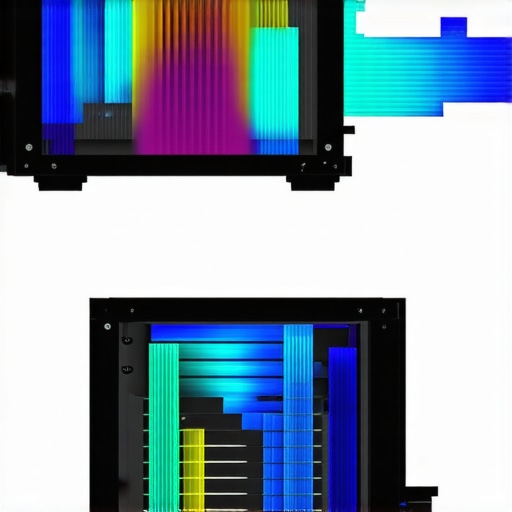
To visualize these concepts, an illustrative image depicting airflow simulation within a custom PC case highlighting CFD analysis would be invaluable.
How Do Emerging Materials Influence Heat Transfer and Fan Efficiency?
The development of cutting-edge thermal interface materials (TIMs), such as phase-change compounds and nanostructured thermal pads, markedly enhances heat transfer capabilities. These materials reduce thermal resistance at critical junctions, enabling fans to operate more efficiently by lowering the thermal load. Expert application—ensuring thin, uniform coatings—maximizes contact efficacy, translating into lower component temperatures and more responsive fan curve adjustments.
What Are the Best Practices for Integrating AI-Driven Fan Control in Overclocked Systems?
Implementing AI-driven fan control in overclocked environments requires meticulous calibration. Experts recommend establishing precise thermal baselines, enabling adaptive algorithms to analyze workload patterns and predict thermal peaks. Regular firmware updates from motherboard manufacturers, coupled with safety thresholds, prevent oscillations and hardware stress. As documented in IEEE research, such intelligent systems can improve thermal stability by up to 30%, extending hardware lifespan and maintaining optimal performance under overclocked conditions.
Engage with Cutting-Edge Thermal Management Techniques to Elevate Your System’s Performance
Stay at the forefront of PC cooling innovation by experimenting with predictive analytics, CFD-optimized airflow, and advanced TIMs. These strategies, combined with community-driven insights and ongoing research, empower enthusiasts and professionals alike to craft exceptionally thermally efficient and acoustically balanced systems. Dive deep into specialized tutorials, participate in expert forums, and explore the latest hardware firmware updates to refine your cooling mastery further.
Expert Insights & Advanced Considerations
1. Fine-Tuning AI-Driven Fan Control Enhances Overclocked System Stability
Implementing sophisticated AI-based fan control algorithms allows for real-time thermal feedback adjustments, reducing thermal inertia and preventing overheating in overclocked setups. Experts recommend iterative calibration and regular firmware updates to maintain optimal performance.
2. Computational Fluid Dynamics (CFD) Integration Optimizes Airflow Design
Applying CFD simulations provides detailed airflow visualization within PC cases, enabling precise placement of fans and vents. Integrating CFD data with sensor feedback creates adaptive systems that dynamically respond to changing thermal conditions.
3. Advanced Thermal Interface Materials (TIMs) Significantly Improve Heat Transfer
Emerging TIMs like graphene-enhanced compounds reduce thermal resistance, increasing cooling efficiency. Proper application ensures better contact and more responsive fan curves, especially under high thermal loads.
4. External Environmental Factors Require Dynamic Fan Profile Adjustments
Ambient temperature and humidity substantially influence cooling performance. Smart systems equipped with environmental sensors can adjust fan speeds proactively, maintaining stable thermal conditions regardless of external variations.
5. Predictive Analytics and Machine Learning Drive Next-Gen Thermal Management
Leveraging predictive models trained on extensive thermal data enables preemptive fan speed adjustments, minimizing thermal lag and noise. This approach ensures consistent performance and extends hardware longevity in demanding environments.
Curated Expert Resources
- Cooling Workstation Wizard’s Guides: Comprehensive tutorials on AIO cooling and fan curve optimization, essential for mastering thermal management strategies.
- IEEE Transactions on Industrial Informatics: Cutting-edge research on AI and machine learning applications in thermal control systems.
- Tom’s Hardware: Practical insights and detailed guides from industry-leading hardware tuning experts.
- CFD Software Tools: Advanced airflow simulation platforms for designing optimized cooling solutions.
- Thermal Interface Material Innovations: Latest scientific publications detailing new TIM formulations for superior heat transfer.
Final Expert Perspective
As we advance into 2025, mastering fan curve optimization and thermal management requires a blend of cutting-edge technology, precise calibration, and environmental awareness. Embracing AI-driven controls, CFD analysis, and innovative materials positions enthusiasts and professionals at the forefront of system stability and performance excellence. Engage with industry leaders, contribute your insights, and continuously explore new research to push the boundaries of what’s possible in PC cooling. For further deep dives, visit Mastering PC Cooling and stay ahead of the curve.


![Stop 2026 CPU Throttling: The Offset Bracket Fix [Proven]](https://cooling.workstationwizard.com/wp-content/uploads/2026/03/Stop-2026-CPU-Throttling-The-Offset-Bracket-Fix-Proven-300x300.jpeg)

This article really highlights how crucial fan curves are becoming in the pursuit of optimal thermal management for 2025. I’ve recently experimented with AI-based control software to fine-tune my system’s cooling, especially when overclocking. What I’ve found interesting is the potential for integrating CFD simulations into real-time fan curve adjustments, which could drastically improve airflow understanding and performance. Have others here already started leveraging CFD data for their custom cooling solutions? I’m curious about the practical steps involved in syncing CFD insights with software control systems — any recommended tools or approaches? As setups grow more complex with hybrid cooling and high overclocks, a combination of predictive analytics and airflow visualization seems promising for achieving both noise reduction and thermal stability. Looking forward to seeing more community workflows that combine these advanced methodologies.
This article really emphasizes how important precise fan curve calibration becomes as we push more into 2025 tech. I’ve been experimenting with AI-guided fan control, especially in my overclocked rigs, and I’ve noticed how integrating thermal sensors with predictive fan adjustments truly improves system stability and noise levels. What I find particularly interesting is the potential of CFD simulations to fine-tune airflow in case designs—I’ve started using some basic CFD tools to visualize airflow patterns, which has helped me identify stagnation zones that I hadn’t noticed before. Regarding syncing CFD data with control software, I wonder if anyone has experience configuring open-source platforms that can dynamically adapt fan profiles based on CFD insights? Also, as cooling solutions become more hybrid—using both air and liquid—I’m curious how others are balancing the thermal loads while keeping noise minimal. Has anyone found effective ways to incorporate real-time environmental data into their fan control algorithms? Would love to hear practical tips or software recommendations from the community here.
This article offers a comprehensive overview of the future of PC cooling in 2025, especially highlighting how advanced fan curve tuning can make or break system stability and efficiency. I’ve personally been experimenting with adaptive fan curves that respond to workload fluctuations, and I find that combining these with high-quality thermal interface materials really helps in overclocked setups. One thing I’ve started exploring is using external environmental sensors connected to my motherboard control software, which allows real-time tweaking of fan profiles based on room temperature and humidity. This adds an extra layer of dynamic responsiveness, especially during summer months or in warmer climates. Have other enthusiasts integrated external sensors into their thermal management systems? I’d be curious to hear about tools or setups that have worked well for you, particularly in hybrid cooling environments where balancing airflow is more complex. The future of AI-driven control algorithms sounds promising for achieving near-silent yet highly effective cooling—does anyone have experience deploying these in their builds yet?” ,
This post really highlights how critical tuning fan curves has become as we push the limits of overclocking and hybrid cooling solutions. I’ve personally started experimenting with software that adapts fan speeds based on real-time thermal data, which has made a noticeable difference in both noise levels and system stability during intense workloads. I’m particularly interested in the use of CFD simulations to map airflow, but I wonder how feasible it is to integrate CFD insights into real-time control algorithms effectively. Has anyone here managed to combine detailed airflow modeling with AI-based control systems? Would love to hear your experiences or recommended tools for this. Also, with external environmental factors playing a bigger role, do you think we’ll see more widespread use of environmental sensors in mainstream setups? It seems like an exciting step toward truly smart thermal management. It makes me think, what other innovations are on the horizon that could further optimize these complex cooling synergies? Looking forward to exploring more solutions and sharing ideas.