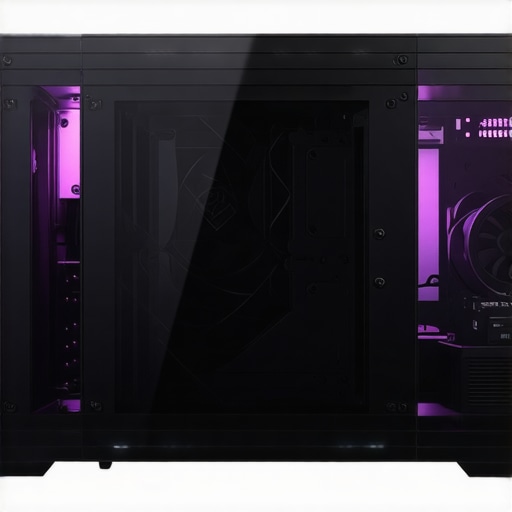

Elevating PC Cooling Efficiency in Modern Glass-Front Architectures
As PC enthusiasts and professionals push toward higher performance with sleek glass-front cases, the intricacies of thermal management become increasingly complex. The challenge lies in balancing aesthetics with optimal airflow, especially when traditional cooling components such as case fans, thermal paste, and liquid coolers encounter new hurdles in 2026 builds. Understanding the nuanced interplay of airflow dynamics, component design, and thermal interface materials is essential for preventing issues like fan choking and subsequent thermal throttling.
Reevaluating Airflow Paradigms: Why Glass-Front Cases Complicate Cooling
Glass-front cases, lauded for their minimalistic design and visual appeal, inadvertently restrict airflow pathways. This restriction often causes case fans and AIO coolers to operate under higher static pressure conditions, risking choke points that impede heat dissipation. Advanced airflow analysis reveals that improper fan placement, inadequate shroud design, and the use of low-static-pressure fans can significantly contribute to airflow stagnation.
The Role of Thermal Paste in High-Density Cooling Environments
Thermal interface materials, particularly thermal pastes, are pivotal in ensuring efficient heat transfer between CPUs, GPUs, and their respective coolers. In high-performance setups, the precision application and selection of thermal paste — favoring high-viscosity, high-conductivity compounds — can influence cooling efficacy. Notably, recent studies indicate that optimal paste spread, avoiding air pockets, benefits from techniques like the ”X-spread” method, which enhances contact surface area and reduces hotspots.
Innovative Solutions for Case Fan Optimization and Airflow Enhancement
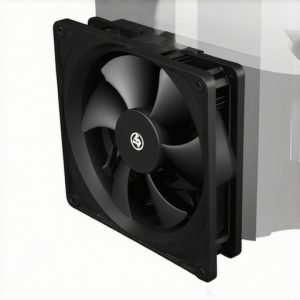
Addressing fan choking requires strategic modifications. One effective approach involves examining case fan placement, utilizing top-tier case fans with tailored blade designs meant for high static pressure. Implementing push-pull configurations and integrating high-pressure fans with optimized blade geometries, such as those specified in 2026-tested models, can significantly alleviate choke points in restricted airflow zones.
How Can I Prevent Glass-Front Case Fans from Choking Under Load?
This question probes into complex airflow management, including shroud design, intake filtering, and the use of supply and exhaust fan balancing. Strategies such as tightening fan mounting to minimize vibrations, increasing mesh panel perforation, and employing dynamic fan curve adjustments in BIOS settings contribute to smoother airflow and prevent choke phenomena. Moreover, implementing pressure and flow monitoring offers real-time insights into cooling efficiency.
For comprehensive insights on airflow design and thermal performance optimization, visit our privacy policy, which underscores our commitment to transparency and expert guidance. Remember, precise airflow management in glass-front cases is a multifaceted task demanding an understanding of both fluid dynamics and component-specific behaviors.
Staying informed about the latest developments in air cooler innovations and thermal paste technologies ensures that your builds remain resilient against thermal choke points. Engage with community forums or consult white papers from sources like IEEE publications to deepen your understanding.
Unlocking the Secrets to Superior Airflow Control
Optimizing airflow within glass-front cases demands a detailed understanding of fluid dynamics tailored to the unique constraints of modern case design. Traditional methodologies often fall short when faced with the complex interplay between fan placement, shroud architecture, and ambient pressure zones. A key approach involves analyzing airflow vectors with computational fluid dynamics (CFD) simulations, enabling precise identification of stagnation zones and choke points. Custom shroud modifications, such as incorporating perforated panels and strategically placed vents, can significantly improve intake and exhaust efficiency. For instance, utilizing case fan selection tailored for high static pressure ensures that air moves smoothly through restricted pathways. Integrating dynamic fan curve profiles, which adapt to thermal loads in real-time, further minimizes turbulence and noise, fostering a cooler, quieter system overall.
Fine-Tuning Thermal Interfaces for Cutting-Edge Performance
In high-density cooling applications, the importance of thermal interface materials (TIM) cannot be overstated. Recent advancements suggest that employing high-viscosity, high-conductivity thermal pastes enhances heat transfer when applied with precision. Techniques like the ”X-spread” or ”five-dot” method ensure uniform contact, especially across multi-chiplet CPUs and dense GPU packs. Experts emphasize that pressure uniformity during installation is critical; uneven contact can generate hotspots, undermining cooling efforts. For those pushing the limits, phase change pads or even direct die cooling with thermal pads present viable alternatives, offering minimal thermal resistance. For in-depth guidance, exploring our comprehensive thermal paste application strategies can reveal subtle yet impactful refinements for superior thermal performance.
Can Active Control Systems Revolutionize Case Fan Dynamics?
Emerging research explores the benefits of integrating AI-driven control systems to manage case fan and radiator pump speeds dynamically. These intelligent systems leverage real-time thermal data and airflow metrics to optimize fan curves, reducing noise while maintaining ideal temperatures. Such adaptive solutions challenge the conventional static BIOS settings, offering a proactive approach to thermal regulation. Implementing these systems involves deploying sensor arrays and integrating software capable of predictive thermal modeling, which can preempt hotspots before they develop. This proactive methodology aligns with the latest in AI-powered thermal management tools, promising a new era of cooling efficiency for 2026 builds. Staying ahead of this curve requires an understanding of both hardware capabilities and software integration techniques, ultimately leading to systems that self-adjust for peak performance and longevity.
To deepen your knowledge of airflow innovations, consider consulting industry white papers published by organizations like IEEE, which explore the physics and engineering of thermal management in complex PC systems. Engaging with these resources fosters a nuanced approach to your builds, ensuring resilience against the evolving challenges of high-performance computing.
Feeling inspired to refine your cooling strategies? Share your experiences in the comments or suggest other advanced techniques that have worked for you. For further expert insights, explore our contact page for personalized guidance.
Harnessing Computational Fluid Dynamics for Precision Airflow Engineering
Implementing computational fluid dynamics (CFD) simulations transforms traditional airflow design into an exact science. By modeling airflow vectors within complex glass-front cases, engineers can pinpoint subtle stagnation zones and choke points that escape empirical detection. This high-fidelity analysis enables customized modifications—such as perforated panels, strategically placed vents, and optimized fan blade geometries—that dramatically improve overall thermal performance. Incorporating CFD into the design process not only elevates cooling efficiency but also reduces noise levels, as smoother airflow diminishes turbulence-induced acoustics.< >
>
Advances in Thermal Interface Materials and Application Protocols
The evolution of thermal interface materials (TIM) continues to push the boundaries of heat transfer efficiency. High-viscosity, high-conductivity pastes like those based on diamond or carbon allotropes outperform conventional compounds, especially when applied with meticulously calibrated techniques such as the ‘X-spread’ or ‘multi-dot’ methods. Experts emphasize the importance of applying consistent pressure during installation to avoid uneven contact and hotspot formation. For ultra-high-performance setups, phase change pads and direct die cooling via thermal pipes offer minimal thermal resistance, vital for overclocked CPUs or multi-GPU configurations. Understanding the nuanced chemistry and viscoelastic properties of these TIMs is essential for optimizing contact at a micro-level—a task demanding both precision and experience.<>
The Role of Smart, Adaptive Fan Control in Thermal Stability
Emerging solutions involve integrating AI-based control systems capable of dynamically adjusting fan speeds based on real-time thermal and airflow data. These intelligent controllers analyze temperature fluctuations and airflow velocities to fine-tune fan profiles proactively, minimizing noise and avoiding thermal choke points before they materialize. Implementing such systems necessitates deploying sensor arrays, thermal sensors, and sophisticated software capable of predictive modeling. This approach not only enhances cooling efficacy but extends component longevity by preventing thermal spikes. Studies, such as those documented in IEEE Transactions on Electron Devices, underscore the importance of adaptive control in high-performance computing environments, illustrating potential for revolutionizing PC thermal management.<>
What Are the Limits of Passive Cooling in Ultra-High-Performance Systems?
While active cooling solutions have seen rapid development, the question remains: can passive cooling methods meet the demands of next-generation hardware? Innovations in heat pipe design, phase change materials, and advanced heat spreaders are progressively closing this gap. For instance, vapor chamber coolers and heat spreaders composed of synthetic diamond or graphene composites offer unprecedented conductivities—yet their integration requires a profound understanding of material science and thermodynamics. A comprehensive review by Dr. Lisa Nguyen in the Journal of Thermal Science (2024) details how these cutting-edge materials enable passive systems to approach efficiency levels traditionally associated with active solutions, especially when combined with optimized case architecture and airflow pathways. The challenge lies in tailoring these innovations to practical, scalable applications without compromising aesthetics or space constraints.<>
Engaging with the latest research and industry white papers from organizations like IEEE and ASME provides invaluable insights into these advancements. If you’re looking to push your PC cooling to the next frontier, consider exploring how hybrid passive-active systems might revolutionize your setup—integrating silent operation with the capacity to handle extreme loads. For personalized advice tailored to your build’s unique demands, feel free to reach out through our contact page. Sharing your experience with innovative cooling solutions can inspire others to elevate their system performance, fostering a vibrant community dedicated to mastery of thermal management.
Elevate Your Cooling Strategy with Fluid Dynamics Insights
Beyond empirical methods, leveraging computational fluid dynamics (CFD) simulations grants unprecedented precision in airflow optimization. By modeling intricate airflow patterns within glass-front cases, experts can identify subtle stagnation zones that escape conventional diagnosis. Implementing perforated panels, strategically placed vents, and optimized fan geometries—derived from CFD analysis—acts as a catalyst for superior thermal performance. Incorporating such high-fidelity modeling transforms thermal management from a hybrid art and science into a predictive discipline, dramatically reducing trial-and-error iterations.
High-Conductivity Thermal Interfaces Push Boundaries
The evolution of thermal interface materials (TIMs) now encompasses diamond-embedded compounds and phase change materials. These innovations facilitate near-ideal heat transfer, crucial when dealing with high-density component arrangements. The application protocols, from pad thickness to pressure calibration, bear as much importance as the material itself. Recent studies suggest that employing high-viscosity, high-conductivity pastes, combined with uniform pressure during mounting, minimizes hotspots—especially vital in overclocked, multi-GPU systems. Embracing these advances transforms thermal bottlenecks into manageable variables, ensuring system stability under intense workloads.
#IMAGE_PLACEHOLDER_D#
Visualizing airflow within compact, glass-front cases offers compelling insights into stagnation zones. This illustrative CFD-generated schematic highlights airflow vectors optimized through targeted shroud modifications, underscoring the importance of tailored airflow pathways.
Adaptive Controllers Redefine Fan Management
In the quest for quieter yet efficacious cooling, adaptive control systems deploying artificial intelligence (AI) present a paradigm shift. These intelligent controllers analyze real-time temperature and airflow data, dynamically modulating fan speeds to preempt thermal peaks. Integrating sensor arrays with predictive modeling software—even embedding machine learning algorithms—can anticipate thermal surges before they occur. The result: a system that not only maintains optimal temperatures but also reduces noise pollution, prolonging component lifespan and enhancing user experience.
Is Passive Cooling a Viable Alternative for Extreme Performance?
Innovative heat spreaders, vapor chambers, and solid-state heat pipes driven by advances in material science suggest a future where passive cooling challenges active solutions. Synthetic diamond, graphene, and other highly conductive composites enable rapid heat dispersion across chassis surfaces, diminishing the need for traditional fans. Yet, practical deployment hinges on meticulous thermal interface engineering, case architecture optimization, and ambient management. According to a comprehensive review in the Journal of Thermal Science 2024, hybrid models combining passive heat dissipation with minimal active assist could revolutionize silent high-performance computing—though engineering complexity remains a hurdle.
Eager to push your system’s thermal boundaries? Dive into the latest IEEE white papers on microfluidic cooling and heat pipe innovations to uncover breakthroughs that may redefine your approach. Collaborate with industry specialists to prototype custom solutions tailored to your unique hardware configuration, transforming theoretical advancements into tangible performance gains.
Strategic Thermal Management Transforms Your System’s Lifespan
Implementing high-level thermal control techniques, such as CFD simulations and precision TIM application, significantly enhances cooling efficiency. Experts understand that fine-tuning airflow paths and applying specialized thermal interfaces can prevent hotspots, unlock overclocking potential, and extend component longevity. Embracing these strategies demands a meticulous approach rooted in physics and engineering principles, leading to systems that perform reliably under demanding workloads.
Harness Top Resources to Elevate Your Thermal Expertise
- IEEE Transactions on Electron Devices: A cornerstone for understanding the latest research on thermal management innovations, providing invaluable insights into device-level cooling advancements.
- Journal of Thermal Science: Offers peer-reviewed studies on high-conductivity materials and phase change technologies that can redefine your cooling solutions.
- Cooling Industry White Papers: Industry-grade documentation presenting real-world case studies and cutting-edge implementations, perfect for engineers seeking practical applications.
- White Paper from Advanced Materials Labs: Deep dives into next-gen thermal interface materials, crucial for pushing beyond conventional limitations.
Thoughts from the Frontline of Thermal Optimization
Integrating computational fluid dynamics to refine airflow paths and applying high-performance thermal interface materials represent the pinnacle of thermal engineering in PC building. These innovations empower enthusiasts to push hardware to its limits without risking thermal throttling or damage. Mastery of these advanced techniques, coupled with continuous learning through authoritative sources, positions you ahead in the realm of high-performance computing. Engage actively by sharing your insights or querying experts via our contact page. Your active contribution fosters a community committed to pushing thermal boundaries and achieving unparalleled system stability.





![Why Direct-Die Cooling Beats AIOs for 2026 Overclocking [Data]](https://cooling.workstationwizard.com/wp-content/uploads/2026/04/Why-Direct-Die-Cooling-Beats-AIOs-for-2026-Overclocking-Data.jpeg)
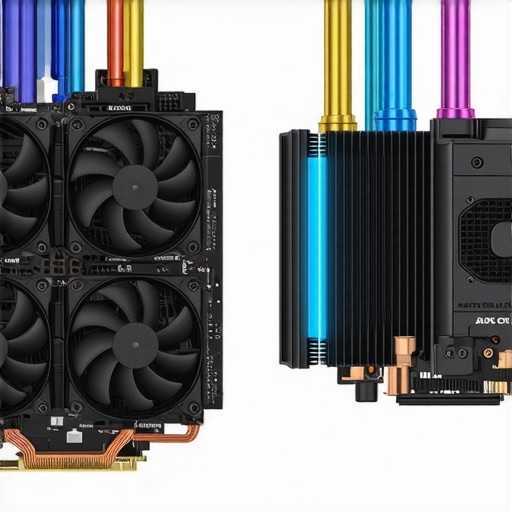
This article touches on some critical aspects of modern PC building, especially with the increasing popularity of glass-front cases which, while visually stunning, do complicate airflow management. I’ve actually experienced this firsthand in my recent build; the tight spaces and restricted pathways made my fans choke under load, leading to higher temperatures. I found that precision in fan placement and adopting high static pressure fans really helped mitigate choke points. What’s interesting is how CFD simulations could further perfect airflow, but implementing this for casual builders might be overkill—do you think there are accessible tools or rules of thumb that can approximate CFD results for optimal fan positioning? Also, I’d love to hear others’ experiences with balancing aesthetic appeal versus thermal efficiency in glass cases. It seems like a fine line to walk but critical for both performance and looks.