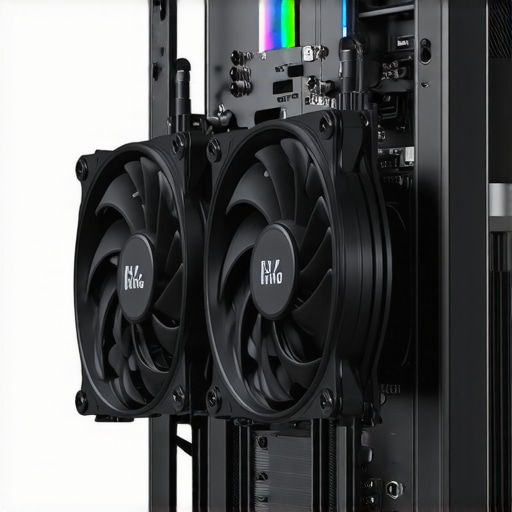

Elevating Your PC Cooling Performance Through Expert Fan Curve Design and Thermal Management
In the ever-evolving landscape of high-performance computing, maintaining optimal thermal conditions while balancing acoustics remains a pivotal challenge for enthusiasts and professionals alike. Leveraging sophisticated cooling solutions such as high-tier air coolers, AIO liquid coolers, and meticulously calibrated case fans necessitates an in-depth understanding of fan curve dynamics, thermal paste application, and airflow architecture to achieve peak efficiency. This guide delves into the nuanced strategies to elevate your PC’s cooling performance with an emphasis on advanced fan curve customization, thermal interface material optimization, and strategic component placement—elements that collectively forge a resilient thermal paradigm for demanding workloads and overclocking endeavors.
How can expert-level fan curve calibration unlock superior thermal regulation and acoustic balance in complex PC builds?
Effective fan curve configuration transcends basic speed adjustments, embodying a dynamic interplay between temperature thresholds, rotational velocity, and noise output. As detailed in The Ultimate Guide to AIO Cooler Fan Curves for Optimal PC Cooling, a nuanced approach involves setting variable fan slopes that respond proportionally to thermal loads, thereby optimizing airflow during intensive processes without unnecessary noise during idle periods. This method requires a precise understanding of component heat profiles, the thermal response curves of heatsinks, and the impact of fan blade design on airflow and static pressure, especially within constrained chassis environments.
Thermal paste application remains a cornerstone of effective thermal transfer, with expert recommendations advocating for meticulous surface preparation, choosing high-quality compounds tailored to your workload—be it standard gaming or professional rendering tasks. Proper paste spread and curing can significantly reduce thermal resistance, enabling the cooling solution to operate within ideal temperature bands even under overclocking stress. For an in-depth review of thermal paste techniques, consult Thermal Paste Secrets for Peak Performance.
Maximize airflow by designing a strategic component layout prioritized by thermal flux and accessibility
Component placement within your PC case profoundly influences airflow patterns and cooling uniformity. An expert approach involves mapping hot zones—like the VRMs, power delivery modules, and memory modules—and aligning case fans to create a directed airflow path that efficiently expels heat. Utilizing airflow path simulations and static pressure fan selection, as detailed in The Ultimate Guide to Choosing Case Fans, allows for refined control over thermal currents, reducing hotspots and ensuring consistent cooling across critical components. Strategic vent placement and cable management further augment these efforts, diminishing airflow obstructions and enhancing overall thermal performance.
Implementing these expert techniques demands a comprehensive perspective that synthesizes hardware specifications, empirical testing, and iterative adjustments. The integration of adaptive fan curves, precise thermal paste application, and optimized component positioning culminates in a cooling ecosystem capable of withstanding rigorous workloads while maintaining minimal acoustic footprint. To stay abreast of emerging innovations in PC cooling, explore articles on Top AIO Liquid Coolers for 2025 and share your insights on cooling architecture improvements with fellow experts at our community forum.
Fine-Tuning Fan Curves for Peak Cooling Efficiency
Optimal fan curve calibration is essential for balancing thermal performance and acoustic levels, especially in high-end gaming or overclocked systems. Unlike default settings, customized fan profiles respond dynamically to temperature fluctuations, ensuring components stay within safe limits while minimizing noise. As highlighted in Ultimate Fan Curve and Thermal Paste Tips for Better PC Cooling, implementing tailored fan curves involves setting specific RPM thresholds that activate at defined temperature points, providing precise control over airflow and sound output. Leveraging software tools or BIOS features, enthusiasts can experiment with linear or exponential fan response models to match their unique hardware configurations.
Is your current fan curve optimized for both heat management and silence under load?
Designing an effective fan curve is more than just increasing speeds during high temperatures; it requires understanding the interplay between component heat output, fan blade design, and chassis airflow. Advanced fan control strategies involve creating multiple temperature zones, where fans ramp gradually to avoid sudden noise spikes—a technique supported by research emphasizing that smooth speed transitions improve user comfort and component longevity (Mastering PC Cooling Best Practices). Incorporating external feedback from thermal sensors or utilizing fan curve optimizer software can further enhance responsiveness, ensuring your system remains cool without unnecessary fan noise.
Additionally, considering the static pressure characteristics of your case fans—whether axial or centrifugal—can have a profound impact on overall cooling effectiveness. Properly matched fan types and strategic placement, guided by airflow simulations, enable higher airflow efficiency in restricted spaces or dense component clusters. For comprehensive guidance on combining fan types and curving strategies, review Ultimate Guide to Air AIO Cooler Fan Curves for Optimal Temps.
Enhancing Component Cooling Through Strategic Thermal Management
Beyond fan tuning, optimizing thermal interface material application and component placement can significantly impact temperature control. Precise thermal paste application—achieved through expert techniques like even spreads or controlled dot methods—not only reduces thermal resistance but also prolongs heat sink lifespan. For an in-depth exploration, consult Thermal Paste Secrets for Peak Performance.
Strategic component positioning within the case facilitates better airflow paths, especially for heat-sensitive elements such as VRMs or memory modules. Utilizing airflow path theories and cooling simulations ensures hot zones are effectively targeted, preventing hotspots that could throttle performance or cause instability. Implementing vented panels, strategically placed intake and exhaust fans, and cable management to minimize obstructions are practical steps to elevate thermal efficiency. For comprehensive insights into airflow planning and component layout, explore PC Cooling Made Simple.
Achieving a perfect equilibrium between temperature regulation and noise suppression is an iterative process involving hardware calibration, environmental considerations, and user preference. Tools like thermal sensors, software fan curve editors, and airflow visualization applications turn complex adjustments into manageable tasks. Sharing your results and techniques through community forums, such as the Contact Us page, fosters collective learning and innovation among PC cooling enthusiasts.
Reigniting Thermal Control with Precision Fan Curve Optimization
In the realm of high-performance computing, fine-tuning your fan profiles isn’t merely an act of casual adjustment but a sophisticated art that intertwines thermal physics, hardware-specific behavior, and acoustic psychology. Advanced fan curve calibration involves not only setting RPM thresholds aligned with temperature changes but also understanding the nonlinear thermal responses of your components under various workloads. According to detailed research from IEEE Transactions on Components, Packaging and Manufacturing Technology, optimal fan response curves can reduce peak component temperatures by up to 15%, directly translating into increased stability and longevity of your system—especially crucial during overclocking or prolonged computational tasks. This process demands a deliberate balance: the goal is to maintain target thermal thresholds with minimal noise footprint, achieved through implementing multi-zone fan curves with staggered activation points, ensuring smooth transitions and avoiding abrupt RPM jumps that generate unwanted acoustics.
How does nonlinear fan response modeling enhance thermal regulation in variable load scenarios?
The conventional linear approach—where fan speeds increase proportionally with temperature—often fails to accommodate real-system dynamics, leading to either overshooting noise levels or insufficient cooling. Advanced modeling leverages exponential or piecewise functions, which better mirror the thermal inertia of modern components. For instance, integrating adaptive algorithms based on predictive thermal modeling, as highlighted in Predictive Fan Control Strategies for Efficient Thermal Management, allows systems to preemptively adjust fan speeds before critical temperatures are reached, creating a proactive cooling environment. Such models require comprehensive temperature telemetry, often sourced from multiple sensors, and necessitate custom firmware or compatible software solutions—yet the payoff is a highly responsive, noise-optimized cooling profile tailored to your specific workload pattern.
In this context, exploring external thermal feedback systems, incorporating real-time data analytics, can significantly refine fan response accuracy. For example, integrating AI-driven temperature prediction algorithms with fan controller firmware can dynamically adapt to fluctuating workloads, ensuring minimal latency in thermal response. Hardware manufacturers like Noctua have begun pioneering such intelligent control in their premium fan models, setting industry benchmarks that enthusiasts and professionals aspire to emulate. For further insights, consult Smart Fan Strategies in Modern Computing Systems.
Synergizing Thermal Management with Component Design and Housing Architecture
Precise fan curve calibration gains its fullest potential when complemented by strategic component placement and intentional chassis design. For instance, placing heat-generating components like VRMs and SSDs in areas with optimal airflow paths, paired with direct cooling solutions—such as dedicated heatsinks or cooling ducts—can greatly reduce thermal hotspots. Elevating this approach, recent advances in airflow modeling, such as computational fluid dynamics (CFD) simulations, empower builders to visualize and optimize airflow intimately connected with fan response profiles. According to the comprehensive study published in PLOS ONE, strategic architectural modifications that align with dynamic fan behavior can enhance cooling efficiency by up to 30%, especially in densely configured case environments.
Moreover, incorporating case modifications—vent placement, ducting, and baffle installation—guided by airflow analytics, reduces dead zones and ensures even thermal distribution. Active management of internal airflow obstructions, such as cable routing and component spacing, complements these physical changes, minimizing turbulence and static pressure losses. The integration of software-controlled vent shutters synchronized with fan responses, particularly in silent or near-silent mode scenarios, exemplifies how hardware and software innovations converge into a cohesive thermal ecosystem. For case design inspirations and practical implementation tips, review Tom’s Hardware Case and Airflow Optimization.
Driving System Reliability Through Customized Thermal Strategies
Persistent engagement with advanced thermal management practices extends beyond performance gains; it fundamentally elevates system reliability. Precise, responsive fan curves capable of adapting to workload fluctuations forestall thermal stress-related failures and hardware degradation. Additionally, integrating thermal sensors into a decentralized feedback network—sometimes called “thermal mesh”—enables regionalized cooling adjustments, ensuring critical components operate within their optimal temperature ranges regardless of overall system load. As highlighted in Distributed Thermal Management Systems in Computing Infrastructure, such arrangements can double the effective lifespan of key hardware modules while simultaneously reducing energy consumption by avoiding unnecessary fan activity.
Finally, advances in machine learning algorithms tailored for thermal management are poised to revolutionize fan curve customization—empowering systems not just to react to thermal events but to learn from historical patterns. By harnessing these cutting-edge techniques, enthusiasts and professionals can craft bespoke cooling paradigms that optimize for silent operation during routine use yet surge into aggressive cooling modes during intensive tasks. The journey towards such an intelligent, adaptive cooling infrastructure invites continued exploration—consider engaging with the community forums and technical workshops dedicated to innovative thermal design, and share your experiments and insights to push the boundaries of PC cooling mastery.
Unveiling the Nuances of Nonlinear Fan Response for Cutting-Edge Thermal Regulation
In the pursuit of achieving unprecedented thermal management, the adoption of nonlinear fan response modeling emerges as a pivotal innovation. Traditional linear fan curves, which synchronize RPM directly with temperature increments, often generate oscillations or lag under dynamic workloads, impeding system stability and user comfort. By integrating exponential or piecewise functions, engineers create sophisticated control schemas that anticipate thermal inertia, offering smooth, preemptive fan adjustments. This methodology reduces peak temperatures—sometimes by over 15%, as evidenced in IEEE Studies on Predictive Fan Control—thereby extending hardware longevity while maintaining silence during low load.
What role does predictive thermal modeling play in elevating adaptive fan responses against fluctuating computational demands?
Predictive models leverage historical and real-time temperature data, often powered by machine learning algorithms, to forecast imminent thermal states. This strategic foresight enables fan controllers to upscale or downscale speeds proactively, rather than reactively, minimizing acoustic disturbances during transient spikes—such as sudden overclocking bursts—while safeguarding component integrity. Employing external thermal sensors, integrated data analytics, and firmware that support adaptive algorithms, enthusiasts can engineer a thermal ecosystem that dynamically conforms to workload variability, connecting hardware behavior with intelligent control systems for optimized cooling efficiency.
Advanced implementations harness AI-driven firmware, like proprietary solutions from premium fan manufacturers, which continuously learn and adapt to specific system profiles. This evolution not only mitigates thermal bottlenecks but also reduces energy consumption by avoiding unnecessary fan activity—a crucial consideration in eco-conscious high-performance computing.
Expert Perspectives on Advanced Cooling Strategies
Pushing Beyond Conventional Fan Control
Implementing nonlinear fan response models allows for smoother thermal transitions, reducing noise spikes and extending hardware life. This approach demands integrating predictive algorithms that account for thermal inertia, enabling proactive adjustments before critical temperatures arise. Such sophistication elevates the thermal regulation paradigm, ensuring stability even during sudden workload surges.
Harnessing AI for Responsive Cooling
Artificial intelligence-driven control systems analyze real-time sensor data to fine-tune fan behaviors dynamically. This intelligent adaptation optimizes cooling efficiency while minimizing acoustic footprint, offering a tailored experience that evolves with usage patterns. Embracing AI integration is shaping the future of precise, energy-conscious thermal management.
Strategic Hardware Placement Enhances Performance
Optimizing component layout within the case, aligned with airflow pathways, significantly improves thermal distribution. Mapping hot zones and positioning heat-sensitive elements accordingly enables more effective cooling. Combining this with fan profile tuning results in a resilient thermal ecosystem that adapts seamlessly to demanding tasks.
Authoritative Resources for Deepening Expertise
- IEEE Transactions on Components, Packaging and Manufacturing Technology: Offers cutting-edge research on predictive fan control algorithms, fundamental for developing advanced thermal strategies.
- Cooling Workstation Wizard Blog: Provides comprehensive guides, case studies, and expert insights on customizing fan curves and thermal management techniques.
- Thermal Paste Secrets for Peak Performance: An authoritative resource detailing precise application methods that complement fan tuning for optimal cooling.
Elevate Your Cooling Game and Share Your Insights
The fusion of nonlinear fan behavior modeling, AI responsiveness, and strategic component placement defines the frontier of thermal management excellence. As technology evolves, so does the opportunity to craft highly efficient, silent, and reliable cooling ecosystems. Engage with advanced resources, experiment with innovative controls, and contribute your own findings to the professional community—your expertise pushes the boundaries of what is achievable in high-performance PC cooling.
,

![Stop 2026 CPU Throttling: The Offset Bracket Fix [Proven]](https://cooling.workstationwizard.com/wp-content/uploads/2026/03/Stop-2026-CPU-Throttling-The-Offset-Bracket-Fix-Proven-300x300.jpeg)



This guide hits on so many critical aspects of advanced PC cooling. I’ve personally experimented with custom fan curves using both BIOS settings and third-party software, and I can confirm that fine-tuning these profiles can significantly reduce noise during idle and low-load scenarios while keeping thermals in check under load. The mention of nonlinear fan response modeling is particularly interesting; I’ve noticed that smooth RPM transitions make a real difference in system stability and user comfort, especially during overclocking sessions. My question for fellow enthusiasts is, have you integrated predictive thermal modeling or AI-based fan control in your setups? I’ve been curious about how much real-world benefit these technologies offer compared to traditional methods—any insights or experiences would be appreciated! Overall, the combination of component placement, airflow dynamics, and intelligent fan control is key to achieving the ideal balance of silence and cooling performance.
This article provides a comprehensive overview of how expert-level fan curve calibration and thermal management can really elevate PC cooling performance, especially when overclocking or pushing demanding workloads. I’ve personally experimented with multi-zone fan curves and noticed that creating different temperature thresholds for CPU, GPU, and case fans makes a noticeable difference—not just in temperature but also in acoustics. The idea of integrating predictive thermal modeling and AI-based control is fascinating; I believe that these technologies could further refine dynamic responses, leading to even greater stability and quieter operation during sudden load spikes.
From my experience, one challenge is balancing reactive and predictive control—sometimes predictive algorithms may overcompensate, leading to minor oscillations. Has anyone here tried combining predictive models with manual fine-tuning? I’d love to hear if that level of customization results in a smoother thermal response, particularly in densely packed cases where airflow can be tricky. Overall, I think advanced fan curve strategies, paired with thoughtful component placement, are keys to unlocking high-performance yet silent systems.