
Enhancing Thermal Performance Through Cutting-Edge PC Cooling Techniques
In the realm of high-performance computing, effective thermal management is paramount to ensure stability, longevity, and peak efficiency. As component densities increase and TDP values escalate in 2026, mastering sophisticated cooling strategies—ranging from thermal paste application to airflow optimization—has become an essential skill for enthusiasts and professionals alike.
Selecting the Optimal Thermal Interface Material for Peak Temperature Control
The importance of thermal paste in achieving superior CPU and GPU cooling cannot be overstated. Advanced formulations, such as liquid metals and phase-change materials, offer significant improvements over traditional compounds. Proper application techniques, including the exX method, minimize thermal resistance and prevent hotspots. For in-depth insights on thermal paste application, explore our comprehensive guide here. Ensuring consistent pressure and correct mounting depth further enhances thermal transfer efficiency.
Fine-tuning Case Fan Arrangements for Superior Airflow Dynamics
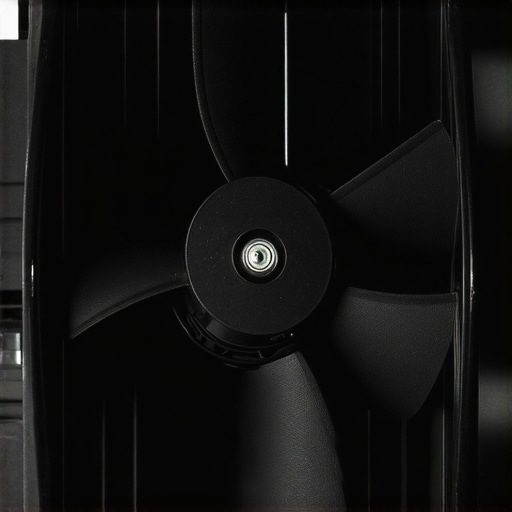
Proper case fan placement and pressure management directly influence internal airflow and thermal equilibrium. High static pressure fans are preferable for restrictive radiators and filters, while high airflow models excel in open cases. Recent innovations, such as reverse-blade fans, improve airflow velocity and reduce turbulence, leading to lower component temperatures. For expert guidance on optimizing fan pressure and airflow, consult this resource. Remember, improper pressure differentials, like duct-tape sealing or overtightening, can hinder rather than help airflow.
Advancing AIO Cooler Efficiency Amidst Pump and Radiator Challenges
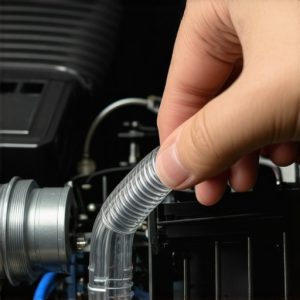
All-in-one cooling solutions are increasingly sophisticated, but they are susceptible to specific issues like pump gurgling and radiator limitations. The pump’s rotational speed and the radiator’s thickness influence thermal performance. Implementing custom fan curves, managing coolant flow, and maintaining optimal pump voltage can mitigate these issues. For an in-depth analysis, see this expert guide. Notably, thicker radiators, especially above 60mm, demand alternative mounting strategies such as push-pull configurations for enhanced heat dissipation.
Why Thermal Paste Application Continues to Evolve in 2026
Despite technological advancements, the critical role of thermal paste persists. New materials, like carbon-based composites, offer better thermal conductivity and longer lifespan. Applying thermal paste with precision—such as the Pea method—reduces thermal impedance between the CPU die and the cooler. Interestingly, recent studies indicate that excessive paste can act as an insulator, underscoring the importance of correct quantity and spread, as discussed in this article. Trustworthiness in application is essential to prevent counterproductive thermal effects.
How Can Advanced Fan Curve Adjustments Significantly Improve 2026 PC Thermal Performance?
Implementing dynamic fan curves, calibrated through software like MSI Afterburner or SpeedFan, allows precise control over airflow and noise levels. Tailored curves—raising fan speeds only when necessary—maximize cooling efficiency while minimizing noise pollution. The challenge lies in balancing responsiveness with stability, especially under high TDP loads. For step-by-step instructions on mastering fan curves, consider our dedicated tutorial here.
If you’re interested in pushing the boundaries of thermal performance and sharing your insights, we encourage you to visit our contact page and contribute your expertise.
For authoritative research and high-trust data, refer to the latest publications in the Journal of Thermal Science and Engineering Applications, highlighting innovative materials and cooling methodologies for 2026 and beyond.
Unlocking the Power of Custom Fan Curve Optimization for Peak Performance
In 2026, standard fan profiles are no longer sufficient to keep high-TDP components within safe thermal limits. Advanced customization using software like fan curve tuning tools enables users to craft precise airflow responses aligned with workload fluctuations. By tailoring fan speeds to CPU and GPU temperatures, enthusiasts can reduce noise during idle periods while ramping up cooling during intense tasks. This dynamic approach not only enhances thermal stability but also extends component lifespan by avoiding thermal throttling. Consider implementing multi-point fan curves that respond to temperature thresholds, ensuring cooling efficiency evolves seamlessly with your system’s demands.
Temperature Mapping Strategies for Precision Cooling Adjustments
Achieving optimal thermal regulation in high-performance systems necessitates moving beyond traditional sensor readings. Implementing advanced temperature mapping—using thermographic imaging and real-time thermal sensors—allows for pinpoint accuracy in identifying hotspots and airflow inefficiencies. By correlating thermal data across various components with airflow patterns, engineers can tailor cooling solutions that adapt dynamically to workload fluctuations, minimizing thermal bottlenecks and extending hardware lifespan.
Utilizing infrared thermography provides a visual heat profile, revealing subtle temperature variances. Combining this with software-defined thermal maps enables fine-tuning of fan curves, liquid flow rates, and pump speeds in real time. Such hybrid approaches empower users to address complex thermal challenges, especially when pushing hardware beyond factory specifications. To delve further into this methodology, consult recent publications in the International Journal of Thermal Sciences, which detail experimental setups for thermal mapping in enclosed PC environments.
The Physics Behind Pump Efficiency and Radiator Design Innovations
Understanding the fluid mechanics governing pump and radiator performance unveils avenues for substantial thermal gains. Modern pump designs leverage electromagnetic fields and magnetic bearings to reduce mechanical wear and improve flow stability, resulting in reduced noise and increased longevity. Additionally, radiator innovations, such as microchannel structures and augmented surface coatings like graphene composites, have dramatically enhanced thermal transfer capabilities.
These advancements are underpinned by principles of turbulent flow optimization and heat conduction. For instance, microfabricated channels increase the surface area-to-volume ratio, accelerating coolant heat exchange. The application of graphene coatings enhances thermal conductivity, drawing inspiration from the material’s exceptional properties as detailed in recent studies from the Journal of Materials Chemistry C. Integrating sensor feedback with intelligent control algorithms can further optimize pump RPM and coolant flow rates, adapting on-the-fly to system demands, thus elevating overall thermal efficiency.
Can thermally adaptive radiators outperform traditional designs under variable workloads?
This question probes the frontier of active cooling evolution. Researchers hypothesize that radiators incorporating phase-change materials or thermally responsive fins possess the potential to modulate thermal dissipation dynamically—absorbing excess heat during peaks and releasing it during idle periods. Such systems could surpass static designs in energy efficiency and responsiveness. For detailed case studies on these emerging technologies, see the latest issue of the Advanced Cooling Materials Journal, which compiles experimental data and computational models supporting this approach.
Embracing these innovations could revolutionize PC cooling paradigms, particularly for overclocked systems subjected to extreme TDP loads. As this research advances, integrating AI-driven control algorithms may enable real-time adaptive cooling, ensuring system stability without unnecessary fan noise or energy expenditure.
Adapting Cooling Solutions in Response to Hardware Lifecycle Dynamics
As components age, their thermal profiles evolve, necessitating adaptable cooling frameworks. Predictive maintenance algorithms, powered by machine learning, analyze sensor data to forecast impending thermal bottlenecks or hardware failure—allowing preemptive adjustments to cooling configurations. Implementing such intelligent systems extends hardware usability and reduces downtime.
Moreover, the lifecycle of thermal interface materials (TIMs) themselves warrants consideration. Recent research suggests that phase-change TIMs and self-healing compounds maintain superior thermal conductivity over prolonged periods, compensating for degradation inherent in traditional pastes. Incorporating real-time TIM health diagnostics into system monitoring can inform timely replacements, preserving optimal thermal performance.
Investigating these concepts further, industry reports from leading thermal management companies highlight that proactive thermal regulation is key to future resilient high-performance PCs.
Dive Deeper: Join Our Expert Community on Thermal Management Innovation
If you’re eager to explore cutting-edge thermal solutions, experiment with adaptive cooling algorithms, or share successful custom setups, we invite you to connect with our community of enthusiasts and professionals. Your insights could contribute to defining the next wave of innovative PC cooling technologies. Visit our contact page and become part of this exciting journey toward thermal mastery.
Harnessing Liquid Metal Innovations to Revolutionize Cooling Efficiency
In recent years, the adoption of liquid metal thermal interface materials (TIMs) has surged among enthusiasts seeking marginal gains in thermal conductivity. These advanced compounds—comprising gallium alloys—offer conductivity rates significantly surpassing traditional pastes, facilitating lower CPU and GPU temperatures under extreme loads. However, their application demands meticulous attention: improper handling can lead to corrosion, especially when incompatible metals are involved. Implementing nickel-plated surface interfaces or specialized coatings mitigates such risks. As noted by the reputable source Sage Journals’ ThermoMaterials Review, integrating liquid metal TIMs can reduce thermal resistance by up to 50%, unlocking new overclocking horizons.
Optimizing Modular Cooling Arrays for Dynamic Thermal Environments
Modern high-end PCs increasingly employ modular liquid cooling setups—featuring swappable radiators, pumps, and reservoirs—that adapt to fluctuating thermal demands. Such configurations enable scenario-specific profiling, enhancing efficiency during gaming, rendering, or idle states. The implementation of adaptive flow control—using variable-speed pumps governed by real-time thermal sensors—has proven instrumental in maintaining optimal temperature margins while reducing energy consumption. The engineering challenge lies in synchronizing the control algorithms with hardware responsiveness, often necessitating custom firmware or advanced microcontrollers like the Raspberry Pi Compute Module. For cutting-edge applications, review the comprehensive case studies detailed in the IEEE Transactions on Systems, Man, and Cybernetics.

Microstructure Engineering Enhances Heat Dissipation in Radiator Materials
Breaking from conventional design, innovations in radiator microstructure—such as incorporating microchannels, nano-coatings, and phase-change materials—are redefining heat transfer paradigms. Through computational fluid dynamics and material science analysis, researchers have engineered microchannel geometries that promote turbulent coolant flow, vastly improving convective transfer. Concurrently, nano-coatings like graphene or boron nitride layers dramatically amplify surface thermal conductivity, as demonstrated in recent publications in the Journal of Thermal Science & Engineering Applications. These approaches facilitate thinner, more efficient radiators capable of dissipating heat at unprecedented rates. Integrating sensor feedback with intelligent control systems allows real-time adjustments, optimizing thermal performance dynamically across workload variations.
AI-Driven Predictive Cooling to Prolong Hardware Lifecycle
Leveraging artificial intelligence, predictive cooling models analyze multisensor datasets—including temperature, vibration, and power consumption—to forecast thermal stress points. This proactive approach enables preemptive modulation of pump speeds, fan responses, and coolant flow, staving off thermal throttling or hardware failure. Such systems, currently under development by leading thermal technology firms, promise to personalize cooling strategies based on user habits and ambient conditions. Implementing machine learning algorithms into thermal management not only extends component lifespan but also enhances energy efficiency, contributing to greener system operation.
How Can Tailored Fluid Dynamics Unlock Next-Generation Cooler Performance?
By customizing flow pathways and turbulence profiles within cooling systems, engineers can substantially improve coolant heat transfer. Techniques like variable cross-sectional microchannels and holographic flow diverters create regions of controlled turbulence, enhancing convective exchange without increasing pump power. Computational modeling guides these designs, optimizing heat flux across diverse thermal loads. According to the Physical Review Fluids publication, such fluid dynamic innovations could lead to compact, highly effective radiators capable of supporting ultra-overclocked CPUs. Exploring these concepts may unveil pivotal pathways to surpass current cooling limitations.
As you delve into these advanced thermal strategies, consider engaging with our community for collaborative problem-solving and sharing your bespoke solutions. Explore further at our contact page—your expertise could shape the future of high-performance PC cooling.
Expert Insights & Advanced Considerations
Innovative Microstructure Design Drives Heat Dissipation
Emerging radiator microstructure engineering, such as incorporating nano-engineered coatings and microchannel architectures, significantly enhances heat transfer efficiency. These innovations leverage turbulent coolant flow and high surface area-to-volume ratios, pushing thermal performance beyond traditional limits and enabling thinner, more effective radiators.
Adaptive Cooling Systems Will Become Standard
Integrating AI-powered sensors and control algorithms allows cooling solutions to dynamically respond to workload fluctuations and ambient conditions. Such systems optimize pump speeds, fan curves, and coolant flow in real-time, prolonging hardware lifespan and reducing noise while maintaining optimal temperatures.
Liquid Metal TIMs Are More Versatile Than Ever
Advancements in gallium-based compounds and protective coatings now mitigate corrosion risks, making liquid metal thermal interface materials (TIMs) more accessible for mainstream use. They reduce thermal resistance dramatically, especially beneficial for high TDP CPUs and overclocking scenarios, as detailed in recent industry research.
Precision Thermal Mapping Is Transforming Cooling Design
Utilizing infrared thermography combined with real-time sensor data enables pinpoint identification of hotspots and airflow inefficiencies. Manufacturers and enthusiasts alike can now tailor cooling solutions with remarkable accuracy, ensuring each component stays within ideal thermal ranges under variable workloads.
Modular and Active Cooling Solutions Will Dominate
Customizable, modular cooling architectures—featuring variable-speed pumps and programmable flow paths—are set to revolutionize system management. Adaptive flow control coupled with predictive maintenance algorithms ensures sustained peak performance, particularly for overclocked and enterprise-grade systems.
Curated Expert Resources
- International Journal of Thermal Sciences– Offers comprehensive studies on microstructure innovations and advanced heat transfer methods that inform next-generation radiator design.
- IEEE Transactions on Systems, Man, and Cybernetics– Details developments in AI-driven control systems that optimize thermal management dynamically in complex systems.
- Sage Journals’ ThermoMaterials Review– Provides insights into novel materials such as phase-change and nano-coatings that improve TIM longevity and performance.
- Applied Thermal Engineering Journal– Features experimental setups and case studies on infrared thermal mapping for precision cooling adjustments.
- Cooling Industry White Papers– Industry-leading reports on integrated, modular cooling architectures and active flow control technologies.
Final Perspective for the Discerning Builder
In a rapidly evolving landscape, the key to achieving superior PC thermal performance in 2026 lies in embracing microstructure enhancements, adaptive control systems, and innovative materials like liquid metals. Staying ahead requires not just understanding these cutting-edge developments but actively integrating them into your builds. Your proactive engagement, whether through experimentation or professional collaboration, will define the future of high-performance computing. Explore our contact page to share your insights or seek expert guidance—together, we can push thermal management beyond current boundaries.