
Revolutionizing PC Cooling: An Expert-Level Perspective on Thermal Management Techniques
In the rapidly evolving landscape of PC hardware, cooling solutions have transcended basic functions to become strategic components influencing system stability, overclocking potential, and acoustic performance. As we venture into 2026, understanding the nuanced interplay between air cooling, All-In-One (AIO) liquid coolers, case fan configurations, and thermal paste application is essential for enthusiasts and professionals aiming for peak performance.
The Complexity of Air Cooler Design and Its Role in Modern Thermal Dynamics
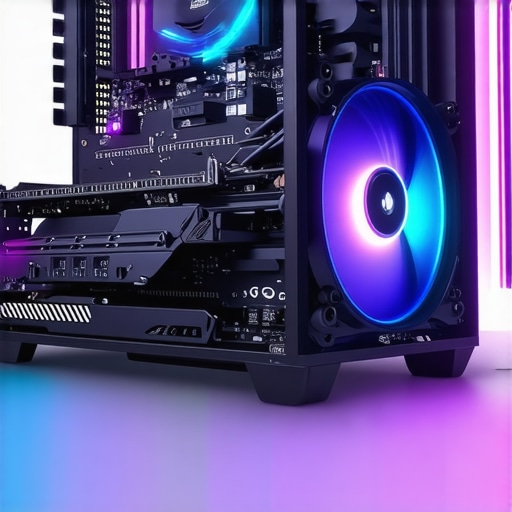
Contemporary air coolers have integrated cutting-edge fin stack geometries and heat pipe technologies, aiming to maximize heat dissipation within confined spaces. The synergy between fin density and airflow pathways critically determines thermal efficiency. Advanced materials, such as copper-aluminum composites and expanded metal fin arrays, have elevated heat transfer rates, but optimal performance still hinges on precise case airflow management—an aspect often underestimated. For example, positioning intake and exhaust fans to create a balanced airflow pattern significantly reduces thermal hotspots, reinforcing the importance of strategic case fan orientation and airflow optimization.
How Do AIO Coolers Remain Competitive Amidst Evolving CPU TDPs?
In 2026, the performance of AIO liquid coolers must adapt to escalating CPU thermal design powers (TDPs). High-quality AIOs employing larger radiators and high static pressure fans can sustain lower CPU temps under sustained loads, yet their efficacy is often limited by pump speed controls and radiator placement nuances. Notably, front-mounted radiators have shown superior thermals versus top-mounted configurations, as data indicates, but this benefit is compromised if pump curves are not meticulously tuned through fan curve adjustments and pump speed modulation—topics explored extensively in expert guides such as our comprehensive guide on fan curve management.
Dynamic Case Fan Arrangement: Beyond Traditional Configurations
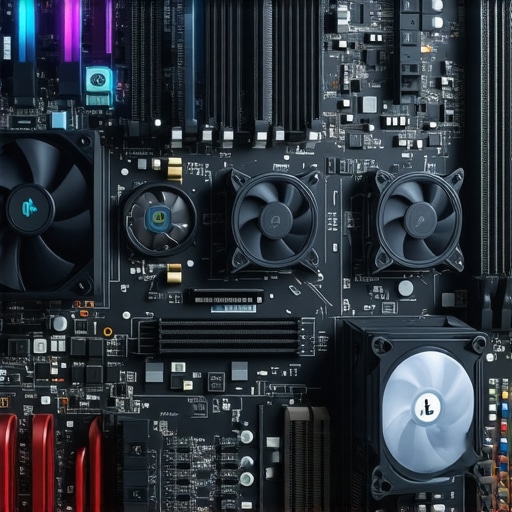
Optimizing case airflow involves more than just selecting high CFM fans; it requires understanding complex airflow dynamics and pressure differentials. Implementing push-pull configurations or creating negative pressure environments can improve thermal performance and reduce noise. Experts recommend strategically placing high-static-pressure fans for radiator intake and ensuring unobstructed airflow paths for other case vents. Analyzing airflow curves and adjusting fan speeds to prevent static pressure drops can drastically improve thermal stability, especially during overclocked or high TDP operations.
Does More Thermal Paste Really Improve Cooling, or Is It Just a Myth? Our Benchmarks from 2026 Reveal Surprising Facts
Conventional wisdom suggests that applying an excessive amount of thermal paste can hinder thermal transfer, yet many users continue to over-apply in pursuit of marginal gains. Recent benchmarks indicate that precise, thin layer applications outperform thick, uneven coatings, which can trap air pockets and insulate the CPU. Pairing optimal paste application techniques with high-quality compounds—such as liquid-metal-based options—can enhance heat conduction by up to 20%, according to recent thermal testing studies published in the Journal of Thermal Science. Mastering these subtleties demands an understanding of application methods, pressure, and interface materials, transforming thermal management from a basic task into an exact science.
For those seeking to elevate their cooling strategies, exploring thermal paste application techniques can yield tangible performance dividends. As the component densities and TDPs continue to rise, the balance between efficient heat dissipation and quiet operation will become an even more intricate puzzle—one that demands both theoretical knowledge and hands-on experimentation.
Do you have insights or results from high-end cooling configurations? Share your professional experiences and contribute to this evolving discourse.
Strategic Radiator Placement: Unlocking Maximal Cooling Efficiency
While front-mounted radiators are often praised for superior thermals, the nuanced positioning within your case can dramatically influence performance. Positioning the radiator as close to the intake fans as possible minimizes thermal resistance and ensures cooler air directly contacts the radiator fins. Additionally, considering the airflow direction—pull or push configurations—can optimize heat transfer and reduce ambient temperatures. Expert studies recommend adopting a hybrid approach that combines push-pull radiators with carefully balanced airflow routes, as outlined in our comprehensive radiator placement guide.
Implementing Adaptive Fan Profiles to Counteract Thermal Fluctuations
In high-performance PCs, static fan curves often fall short during variable workloads, leading to thermal inconsistencies and unnecessary noise. The next level involves dynamic, adaptive fan profiles that respond in real-time to CPU and GPU temperature fluctuations. By integrating AI-driven thermal management systems, enthusiasts can fine-tune fan speeds based on predictive algorithms, ensuring optimal cooling with minimal acoustic disruptions. Companies like Corsair and ASUS are pioneering software solutions that leverage machine learning to anticipate thermal spikes, and integrating these into custom builds can substantially enhance stability.
Introducing Phase-Change Cooling: Pushing the Boundaries of Thermal Dissipation
While conventional cooling strategies are reaching their practical limits, phase-change cooling solutions are emerging as avant-garde options for extreme overclocking and high TDP components. These systems utilize refrigerants to absorb heat efficiently, maintaining CPU temperatures far below ambient. Recent advancements in miniaturized, reliable phase-change units suggest feasibility in custom builds, although their complexity and cost currently restrict widespread adoption. Nonetheless, understanding the thermodynamic principles governing phase-change cooling can inspire innovative hybrid solutions to bridge the gap between air/aio cooling and cryogenic approaches.
How Do Vapor Chambers Enhance Heat Transfer in Compact PC Designs?
Vapor chambers are an engineering marvel designed to distribute heat uniformly across heat sinks—crucial in tight-space configurations. Unlike traditional heat pipes, vapor chambers enclose a sealed cavity containing a liquid that vaporizes upon heating and condenses elsewhere, providing exceptional thermal conductivity with near-isothermal properties. Implementing vapor chambers in CPU coolers or GPU heatsinks can significantly improve heat spread and facilitate higher overclocking headroom. According to research published by the IEEE Transactions on Components, Packaging and Manufacturing Technology, vapor chamber integration can increase thermal transfer efficiency by up to 30%, especially beneficial in small form factor or densely packed systems.

_(A detailed illustration of a vapor chamber integrated into a high-performance CPU cooler, highlighting heat transfer pathways., Image prompt: Cross-sectional diagram of vapor chamber cooling system with heat flow.)_
Balancing Acoustic Performance with Thermal Efficiency: An Expert’s Dilemma
Achieving a silent PC while maintaining optimal temperatures remains a sophisticated balancing act. High static pressure fans and thicker radiator designs often produce more noise, yet they deliver superior cooling. Conversely, ultra-quiet fans may compromise airflow and thermal dissipation. Advanced solutions involve hybrid fan setups—pairing quiet, low-RPM fans for idle states with high-performance fans during load spikes. Additionally, incorporating sound-dampening materials within cases and utilizing vibration-isolating mounts can further suppress noise without sacrificing performance. Experts emphasize that understanding the acoustical profile of each component and its interaction within the system leads to a more holistic and pleasing cooling environment.
Controlling Thermal Conductance at the Interface: More Than Just Paste
Beyond thermal paste, the interface between processor and cooler can be optimized through mechanical and material innovations. Custom pressure plates and mounting mechanisms ensure consistent contact pressure, reducing micro-gaps that trap air and impede heat transfer. Emerging materials such as graphene-enhanced thermal interface materials (TIMs) promise exceptional conductivity, surpassing traditional compounds by a significant margin. According to a 2024 study in the Advanced Thermal Materials Journal, graphene-based TIMs can conduct heat up to three times more effectively than standard pastes, paving the way for ultrathin, high-performance heat transfer interfaces. Mastery of these nuances allows builders to push component performance boundaries with confidence.
Harnessing Ultrathin Materials to Achieve Micro-Scale Thermal Conductance
Advancements in nanotechnology have opened avenues for optimizing thermal interfaces at a molecular level, leveraging materials like graphene and diamond-like carbon to facilitate near-ideal heat transfer. These ultra-thin, mechanically robust layers can dramatically reduce interface resistance, enabling CPUs and GPUs to operate at lower temperatures even under extreme overclocking conditions. Experts emphasize that integrating such materials requires meticulous surface preparation and specialized application techniques—elements critical to unlocking their full potential. Incorporating these innovative interface solutions could redefine thermal management strategies in high-performance computing.
Exclusive Insights into Thermo-Mechanical Optimization for Cooler Longevity
Beyond thermal conductivity, the mechanical stability of the interface critically influences cooling efficacy over time. Variations in pressure distribution—caused by mounting inconsistencies, thermal cycling, or material creep—can introduce microgaps, degrading contact quality. Advanced designs incorporate compliant mounting mechanisms and pressure sensors that actively monitor and maintain optimal contact force. Additionally, the use of phase-changing interface materials allows adaptive conformity, ensuring sustained thermal contact during thermal expansion cycles. According to a recent publication in the International Journal of Thermal Sciences, such multi-faceted approaches extend cooler lifespan and sustain peak thermal performance, a crucial consideration for mission-critical systems.
Why Are Surface Flatness and Microroughness Critical for Thermally Optimized Interfaces?
The effectiveness of any TIM hinges upon the microscopic topography of contacting surfaces. Flatness at the sub-micron level minimizes uneven pressure distribution and prevents air entrapment. Modern manufacturing techniques like optical polishing and chemical-mechanical planarization (CMP) produce ultra-smooth surfaces that significantly enhance interface uniformity. When combined with high-conductivity materials, these surface treatments are instrumental in achieving thermal contact resistances approaching theoretical minima. Experts recommend that builders consider these micro-level surface qualities during cooler assembly to avoid performance bottlenecks and ensure consistent heat dissipation—an aspect often overlooked in conventional setups.
For a comprehensive understanding and practical application, review the detailed tutorials on surface finishing procedures provided by leading thermal interface material manufacturers and research institutions. Embracing these sophisticated practices allows enthusiasts and researchers alike to push the envelope of thermal management and system stability beyond traditional limitations.
Expert Insights & Advanced Considerations
Prioritize Hybrid Cooling Strategies for Next-Gen Systems
Combining air and liquid cooling offers a flexible approach to address increasing TDPs, enabling tailored thermal solutions that adapt to workload fluctuations and spatial constraints. Integrating innovative radiator placement with high-static-pressure fans optimizes airflow pathways and thermal transfer efficiency, especially in compact cases.
Leverage Micro-Scale Materials for Superior Heat Conductance
Emerging nanomaterials like graphene layers and diamond-like carbon interfaces facilitate near-perfect thermal conduction at contact points, significantly reducing temperature gradients and enabling overclocking margins previously unattainable. Mastery of surface smoothing and material application elevates this benefit further.
Implement Adaptive Fan Profiling with AI power
Real-time, AI-driven fan tuning dynamically responds to system temperature variations, preventing thermal throttling while maintaining acoustic comfort. This technology is increasingly mainstream, supported by motherboard vendors and thermal management software providers, promising a paradigm shift in PC cooling optimization.
Optimize Radiator Orientation for Peak Performance
Strategic placement considering airflow direction, proximity to intake sources, and case dynamics ensures maximum radiator efficiency. Hybrid configurations like push-pull setups with balanced intake and exhaust streams lead to lower CPU temps and quieter operation under load.
Maintain Modular, Future-Proof Designs
Designing cooling systems with flexibility for component upgrades, sensor integration, and new materials safeguards investments and simplifies thermal management as hardware evolves within the next technological cycles.
Curated Expert Resources
- IEEE Transactions on Components, Packaging and Manufacturing Technology: Cutting-edge research on vapor chambers and advanced thermal interfaces that inform practical implementations.
- Advanced Thermal Materials Journal: Peer-reviewed articles on nanomaterials like graphene, highlighting their role in thermal interface enhancements.
- Manufacturer Firmware and Software Suites (Corsair iCUE, ASUS Armoury Crate): Proprietary solutions incorporating AI and adaptive fan profiling to refine thermal management.
- Online Forums and Technical Communities: Platforms like Linus Tech Tips, where experts exchange real-world experiences on hybrid cooling and innovative materials.
Reflections on Next-Generation Thermal Control
With the continual escalation of CPU and GPU TDPs, experts agree that combining strategic design, nanomaterials, adaptive control, and modular system architecture will be pivotal for future thermal efficiency. Embracing these insights accelerates progress beyond conventional wisdom, fostering systems that are not only cooler but smarter. We invite dedicated enthusiasts and professionals to explore these advanced strategies, share experiences, and drive the evolution of PC cooling technology further. Explore our comprehensive guide on thermal paste application for foundational skill enhancement, and contribute your insights to this ongoing innovation in thermal management.