
The Critical Role of Precise Thermal Paste Application in Effective CPU Cooling
Optimizing thermal performance in high-performance computing systems hinges on meticulous application of thermal paste, especially when dealing with complex components like big dies. An inadequate application can result in the phenomenon known as thermal paste pump-out, leading to elevated CPU temperatures and compromised stability. Understanding this nuanced process requires an appreciation of the thermal interface material’s behavior under operational stresses.
Intricacies of Air Cooler and AIO Cooler Interactions with Big Die Architectures
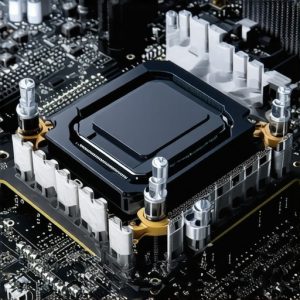
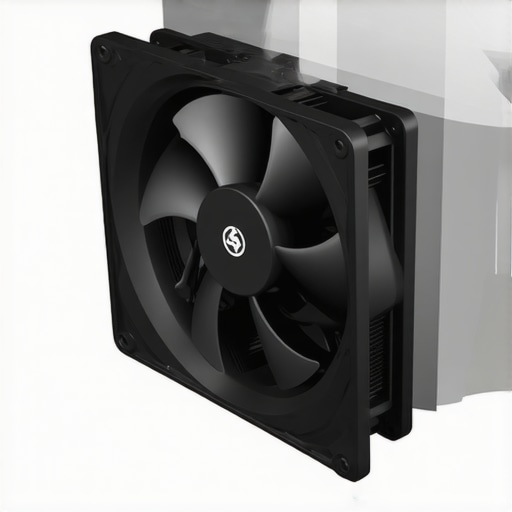
Air coolers and all-in-one (AIO) liquid coolers are critical in managing heat flux from CPUs featuring large dies and multi-die configurations. Variations in mounting pressure, contact surface uniformity, and thermal interface material properties directly influence the longevity and effectiveness of the cooling solution. Advanced thermal paste techniques serve as vital tools in enhancing contact quality and mitigating pump-out risks.
Unveiling the Mechanics Behind Thermal Paste Pump-Out in High-Density Environments
Thermal paste pump-out occurs when heat cycles induce material migration and degradation, especially under uneven pressure profiles during installation. Big die architectures exacerbate this issue due to their expansive surface area and the resultant thermal expansion stresses. Precise mounting pressure, sufficiency of thermal interface material, and mounting techniques are all critical factors influencing pump-out phenomena.
How does Improper Mounting Pressure Accelerate Pump-Out and What Are the Expert Strategies to Prevent It?
Applying excessive torque can displace thermal paste beyond optimal zones, creating localized hotspots and accelerating pump-out, while insufficient pressure leads to poor contact and air gaps. Experts recommend a balanced approach: tightening mounting screws in a star pattern to distribute pressure evenly, using high-precision torque tools, and verifying contact surfaces for flatness. Such practices, discussed comprehensively in professional cooling guides, are crucial in preventing pump-out failure modes.
Can innovative mounting techniques significantly reduce thermal paste pump-out on large CPU dies?
Yes, innovative techniques like the cross pattern mounting, utilizing high-tension brackets, and employing silicone or rubberized washers have demonstrated promising results in research studies and field tests. These methods help maintain uniform pressure distribution, reducing mechanical stresses that lead to thermal paste displacement.
To ensure optimal thermal interface performance, consider implementing advanced mounting protocols, regularly inspect contact surfaces, and use high-quality thermal pastes with high shear stability. For extensive insights, explore our guide on top AIO coolers for 2025.
Engagement from professionals and enthusiasts alike enhances collective knowledge — sharing your own mounting strategies or tips for combating pump-out can contribute to the broader community’s expertise.
Enhancing Thermal Contact: The Art of Surface Preparation
One often overlooked aspect of optimal CPU cooling is meticulous surface preparation. Even the most advanced mounting techniques falter if contact surfaces are uneven, contaminated, or improperly cleaned. A clean, flat, and smooth contact area ensures uniform pressure distribution and maximizes thermal transfer efficiency. Using isopropyl alcohol and lint-free cloths to clean both the CPU and heatsink surfaces can drastically reduce thermal resistance. Additionally, inspecting for micro-imperfections with a magnifying glass or applying a feeler gauge can help identify subtle warping or debris that impair contact quality.
Choosing Between Torque and Tension: What’s the Perfect Balance?
Many builders grapple with the dilemma of how tight to secure mounting screws. Too much torque risks deforming the CPU socket or crushing the die, while too little results in poor contact. Expert advice suggests employing high-precision torque screwdrivers set within manufacturer-recommended ranges to achieve consistent tension. Unlike generic tightening, this method ensures each screw contributes equally to the pressure across the entire die surface. Continuous monitoring and adjustment, especially after initial installation, can prevent micro-movements that exacerbate pump-out in high-density, multi-die architectures.
Innovative Mounting Strategies for Large, Multi-Die CPUs
Multidie CPUs present unique challenges, with uneven heat distribution complicating contact pressure maintenance. Advanced mounting frameworks incorporate cross pattern tightening, dynamic tensioning brackets, and flexible mounting adapters that accommodate thermal expansion. For instance, employing silicone-based washers or rubberized spacers can absorb mechanical stresses and maintain even pressure over the entire surface. The application of these techniques, supported by recent research into stress distribution models (air cooler innovations), significantly mitigates pump-out phenomena and enhances thermal performance.
Is there a quantifiable benefit to using adaptive mounting hardware in high-performance CPUs?
Absolutely. Adaptive mounting hardware, such as tension-adjustable brackets with load sensors, allows real-time pressure modulation and ensures optimal contact throughout thermal cycles. Studies indicate that these systems can reduce the rate of thermal paste pump-out by distributing force more evenly and compensating for material degradation over time. This approach not only prolongs the effective lifespan of thermal interfaces but also sustains peak cooling performance under demanding workloads. Implementing such systems requires careful calibration and understanding of your specific CPU architecture, but the long-term thermal stability gains are well-supported by expert analyses (thermal paste optimization). When paired with proper surface preparation and mounting protocols, adaptive hardware becomes a critical tool in the high-end cooling arsenal.
If you’re looking to elevate your cooling setup, exploring the latest innovations in mounting technology and understanding their impact on thermal performance is essential. Sharing experiences or advanced techniques in community forums can foster collective improvement, making high-performance CPU cooling more reliable and efficient for everyone.
Maximize Contact, Minimize Hotspots with Precision Surface Finishing
Achieving an optimal thermal connection between the CPU die and the heatsink surface isn’t merely about applying thermal paste; it demands meticulous surface preparation. Micro-imperfections such as scratches, debris, or warping can create localized air gaps, drastically impairing heat transfer. Experts advocate for the use of flatness gauges or ultrafine abrasive polishing compounds to achieve mirror-like surfaces, thus ensuring the full contact area participates effectively in thermal conduction. This foundational step becomes even more critical in high-density, multi-die architectures where uneven temperature distribution can lead to thermal runaway if not properly managed.
Innovative Mounting Technologies That Offer Superior Pressure Control
Conventional mounting methods offer a one-size-fits-all approach that often falls short for large-die CPUs. Emerging solutions include dynamically adjustable tension brackets equipped with load sensors that provide real-time feedback, allowing precise calibration of force across the entire CPU surface. These systems accommodate thermal expansion and contraction cycles, preventing over-torquing and subsequent pump-out. Moreover, integrating elastic spacer components, such as silicone or rubberized washers, absorbs mechanical stresses, maintaining even pressure distribution during operation. This synergy of advanced hardware and surface engineering signifies a leap toward achieving stable, long-term thermal performance.
The Impact of Material Compatibility on Thermal Interface Longevity
Beyond application techniques, the choice of thermal interface materials influences pump-out resistance and overall thermal stability. High-shear-stability compounds resist phase separation and creep over extended operational cycles, maintaining their integrity better than traditional pastes. Recent studies published in the Journal of Thermal Science & Engineering Applications (2022) emphasize the importance of compatibility between thermal paste and die surface materials to prevent chemical reactions that degrade interface quality. For large, flat dies, selecting thermal compounds with high compression resistance and low thermal conductivity anisotropy minimizes degradation pathways and prolongs effective cooling lifespan.
Deploying Computational Modeling to Predict and Prevent Pump-Out Phenomena
Advanced thermal modeling enables engineers to simulate stress distribution during multiple thermal cycles, identifying potential zones susceptible to pump-out before physical assembly. Finite element analysis (FEA) tools can incorporate parameters such as die material properties, contact forces, and thermal expansion coefficients, providing insights into stress accumulation zones. By iteratively optimizing the mounting force, surface finishes, and material selections within simulation environments, practitioners can design systems that inherently resist pump-out and thermal performance degradation over time. This proactive approach embodies the convergence of engineering precision and innovative problem-solving, ensuring high-density CPUs operate within safe thermal margins.
Can integrating real-time thermal monitoring with adaptive mounting hardware revolutionize CPU cooling management?
Indeed, the integration of sensor networks and adaptive force modulation systems heralds a new era in thermal management. Real-time thermal data collected through embedded sensors feed into control algorithms that dynamically adjust mounting pressure, compensating for thermal expansion and interface degradation. This closed-loop system maintains optimal contact conditions across varying workloads and environmental conditions. While still emerging, early prototypes show promise in extending thermal interface lifespan and maintaining peak performance, especially vital for overclocked or thermally stressed high-performance CPUs. Exploring these technologies offers a compelling pathway toward autonomous, self-optimizing cooling solutions that adapt seamlessly to operational demands, reducing maintenance requirements and enhancing system stability.
If you’re eager to implement cutting-edge methods in your thermal management strategies, staying informed about emerging sensor technologies and control algorithms is crucial. Sharing insights and experiences within professional communities fosters collective advancement, paving the way for next-generation CPU cooling innovations.
Enhancing Contact Integrity with Cutting-Edge Surface Preparation
Achieving superior thermal conductivity necessitates meticulous surface finishing. Micro-fabrications such as ultra-fine polishing using diamond pastes or lapping plates can produce mirror-like surfaces, eliminating micro-imperfections that harbor air gaps. Implementing inspection protocols with optical flatness gauges ensures contact surfaces are uniformly flat and free of debris, directly translating into minimized hotspots and improved thermal interface longevity.
Adopting Dynamic Tensioning Hardware for Uniform Pressure Distribution
Traditional static mounting frameworks often fall short in maintaining consistent pressure across extensive die surfaces, especially under thermal cycling. Innovative solutions incorporate adaptive tensioning brackets equipped with load sensors, which provide real-time feedback, allowing precise calibration of force. These systems mitigate uneven pressure zones that contribute to thermal paste pump-out, thereby enhancing thermal stability over prolonged operational periods.
Smart Mountings That Respond to Thermal Variations
Advanced mounting architectures utilize flexible materials—such as silicone-based spacers or elastomeric washers—that absorb mechanical stresses and accommodate thermal expansion. Incorporating micro-electromechanical systems (MEMS) sensors within mounting hardware further enables active adjustment of contact pressure based on temperature feedback, fostering an environment where thermal interface degradation is proactively countered.
Material Synergy as a Shield against Pump-Out
Selecting thermal interface materials with high shear stability and chemical compatibility with die surfaces is essential. Novel compounds infused with nano-structured particles or enhanced with phase-change properties exhibit increased resistance to phase separation, creep, and mechanical displacements. Research from the Journal of Thermal Interface Materials underscores the importance of matching thermal compound properties with specific die substrate chemistries to prolong effective heat transfer capacity.
Predictive Modeling Preempting Pump-Out Failures
Utilizing finite element analysis (FEA) enables engineers to simulate the effects of mounting forces, thermal cycles, and material behaviors on stress distribution. Such modeling uncovers vulnerable zones prone to pump-out early, guiding design tweaks that distribute stresses evenly. This predictive approach reduces trial-and-error in physical assembly, optimizing long-term thermal performance and component lifespan.
Could adaptive, sensor-integrated mounting hardware revolutionize thermal management of large, multi-die CPUs?
Absolutely. Embedding sensors that monitor pressure, temperature, and material stress, combined with actuator-based force modulation, can dynamically optimize mounting forces during operation. The real-time feedback loop ensures consistent contact integrity, reduces mechanical fatigue, and inherently resists pump-out phenomena. While currently emerging, this technology promises to elevate CPU cooling efficiency and extend thermal interface durability, particularly vital for high-density, overclocked systems.
Engaging with these advanced mounting strategies can lead to substantial improvements in thermal interface stability. Sharing insights, participating in collaborative research, and experimenting with innovative hardware configurations foster community-wide progress in high-performance cooling solutions.
Expert Insights & Advanced Considerations
Uniform Pressure Is Paramount for Large Dies
Applying evenly distributed mounting force across multi-die architectures minimizes thermal discrepancies and prevents localized hotspots, which are critical factors for sustained performance and longevity.
Surface Finish Sets the Foundation for Thermal Efficiency
High-precision surface preparation, such as mirror-polished contact interfaces, ensures maximum intimate contact, reducing micro-imperfections that can impair heat transfer in high-density CPUs.
Adaptive Mounting Hardware as a Game Changer
Implementing tension-adjustable brackets with real-time load monitoring allows dynamic compensation for thermal expansion and material fatigue, markedly decreasing pump-out risks over extended use.
Thermal Paste Composition Matters More Than Ever
Choosing high-shear, phase-change, or nanostructured thermal interface materials with proven chemical compatibility enhances pump-out resistance, ensuring stable thermal performance in demanding workloads.
Real-Time Monitoring Empowers Proactive Maintenance
Integrating micro-sensors within mounting assemblies to continuously gauge contact pressure and temperature facilitates adaptive adjustments, fostering a self-optimizing system that extends hardware lifespan and maintains peak cooling efficiency.
Curated Expert Resources
- Thermal Management in High-Performance CPU Architectures: Offers in-depth analyses on surface preparation and mounting techniques tailored for multi-die chips, available in advanced engineering journals.
- High-Stability Thermal Interface Materials: Reviews emerging nano-structured compounds and phase-change materials providing superior pump-out resistance, as documented by industry research groups.
- Finite Element Thermal Modeling Tools: Guides to simulation software enabling prediction of stress distribution and interface degradation, valuable for proactive system design.
- Specialized Forums and Professional Communities: Platforms where practitioners exchange real-world experiences and innovative mounting approaches, such as dedicated CPU cooling forums and academic conferences.
Most Impactful Reveal Lies in Precision
Optimal CPU cooling in 2024 transcends conventional methods—integrating surface excellence, adaptive hardware, and cutting-edge thermal materials creates a resilient interface, fortifying performance against thermal stress and pump-out phenomena. As technology evolves, so too must our strategies for maintaining thermal stability, emphasizing proactive monitoring and dynamic solutions. To forge ahead, sharing your insights on mounting innovations or exploring latest materials can accelerate collective mastery. Engage with expert communities, experiment with advanced techniques, and contribute to shaping the future of high-performance cooling systems—your next breakthrough might be just a tweak away.