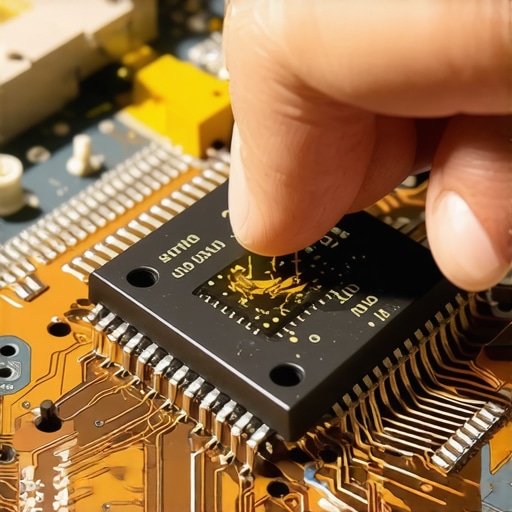

Challenging Conventional Wisdom: The Pea-Size Dot and Its Modern Limitations
Traditional thermal interface application methods, notably the pea-sized dot, have long been considered sufficient for single-die processors. However, as semiconductor architectures evolve toward multi-chiplet designs, this approach faces significant challenges. Expert analyses reveal that relying solely on a small dot of thermal paste can lead to uneven heat dispersion across complex die layouts, undermining thermal performance and system stability.
The Complexity of Modern Chiplets and the Inefficacy of Minimal Contact
Micro-scale heat distribution disparities become increasingly pronounced with the advent of multi-chiplet packages. The pea-sized dot fails to ensure comprehensive contact between the cooler and all die surfaces, resulting in hotspots and reduced thermal transfer efficiency. In these contexts, the importance of uniform paste application and proper spread is paramount for maintaining optimal thermal conductivity.
Can Manual Spreading Surpass Automated Applications in Multi-Chiplet Thermal Management?
While few mainstream guides advocate for manual spreading, expert forums suggest that deliberate, thin layer application leveraging tools like plastic spreaders can dramatically improve contact uniformity. This technique minimizes air pockets and ensures effective heat transfer, crucial for high-performance computing tasks where thermal margins are narrow. Manufacturers such as Thermal Grizzly emphasize the importance of proper paste layering, which aligns with recent research on chiplet cooling strategies.
Implications for Air Coolers Versus Liquid Cooling Solutions
The choice and application of thermal interface material significantly influence cooling efficacy, regardless of whether air coolers or AIO liquid coolers are employed. Air coolers, relying on fins and heat pipes, benefit from maximal contact areas, making proper thermal paste application critical. Conversely, liquid cooling solutions with direct contact cold plates may mitigate some application inconsistencies but are not immune to the core issue of optimal thermal interface coverage.
Strategic Tips for Improving Thermal Performance in Multi-Chiplet Environments
Experts recommend the use of spreaders and customized application techniques to enhance thermal contact, particularly in high-density configurations. Additionally, exploring advanced thermal pastes with high viscosity or phase change properties can create more reliable heat conduction pathways. Regular maintenance, including cleaning and reapplication, ensures sustained performance and prevents degradation over time.
To refine your cooling setup further, consider studying innovative methods such as the honeycomb thermal paste pattern, which facilitates heat distribution across multi-chiplets and improves overall thermal stability. For in-depth guides and professional insights, visit this detailed resource.
Explore how these nuanced application techniques can elevate your system’s thermal management, ensuring longevity and reliable performance in the face of increasing computational demands.
Elevate Your Cooling Strategy with Precision Application Methods
As modern CPUs continue to adopt multi-chiplet architectures, traditional thermal paste application methods often fall short of delivering optimal heat dissipation. Moving beyond the pea-sized dot, experts are increasingly turning to deliberate spreading techniques that ensure full contact coverage across all die surfaces, significantly reducing hotspots and enhancing overall thermal transfer efficiency.
How Can Professional Spread Patterns Transform Thermal Management for Complex CPU Architectures?
Implementing advanced spread patterns such as the honeycomb or X-shaped designs can dramatically improve the distribution of thermal interface material, especially in high-density chiplet configurations. These techniques promote uniform thermal contact, minimize trapped air pockets, and optimize heat conduction pathways. Adopting such methods requires precision and understanding of paste viscosity, which can be further refined by selecting high-viscosity compounds with phase change properties. For comprehensive insights into selecting and applying premium thermal pastes, consult this expert resource.
Tools and Techniques to Achieve Flawless Thermal Contact
Utilizing specialized application tools like precision spreaders, spatulas, or even micro-bristle brushes can help in laying down a controlled, thin, and even layer of thermal paste. When combined with the right application pattern, these tools facilitate better coverage across uneven die surfaces, ensuring consistent thermal material contact. Additionally, performing a thermal interface check by inspecting the spread pattern after mounting can help diagnose and correct potential contact issues before operating under load.
Moreover, integrating techniques such as slightly tilting the CPU socket during mounting (akin to the method described in this guide) may improve thermal paste spread and seating force. Emphasizing proper mounting pressure and accurate thermal paste layer distribution forms the cornerstone of high-performance thermal management in complex chiplet designs.

The Cost of Cutting Corners in Thermal Management
Many enthusiasts underestimate the importance of meticulous thermal paste application, often resorting to shortcuts that compromise system stability. Skimping on application quality can lead to increased operating temperatures, reduced overclocking headroom, and eventual hardware degradation. Investing time in mastering advanced application methods is a small price for significant gains in durability and performance.
Stay informed by exploring cutting-edge practices and sharing your experiences in online forums or with manufacturers, fostering community-driven improvements. Notably, professional thermal management experts advocate a proactive approach, including regular cleaning and reapplication, to maintain peak thermal performance. For ongoing updates, consider visiting this contact page for expert advice and support.
Maximize Heat Dissipation with Innovative Application Strategies
As CPUs evolve toward intricate multi-chiplet configurations, traditional methods of thermal interface application demand reevaluation. Moving beyond the simplistic pea-dot approach, practitioners now leverage sophisticated layering patterns to achieve uniform heat transfer. The honeycomb and grid patterns, for example, distribute thermal paste more evenly over complex surfaces, reducing hotspots and enhancing overall cooling efficiency. These techniques require precise control over paste viscosity and application pressure, often facilitated by specialized tools like micro-spatulas or automated dispensing systems. Engaging with industry-leading thermal paste providers, such as CoolLaboratory, reveals formulations engineered for high Viscosity and phase change capabilities, enabling more consistent coverage across uneven die surfaces.
Optimizing Gear and Environment for Superior Thermal Contact
Technology alone isn’t sufficient; environmental control plays a pivotal role. Maintaining optimal ambient temperatures and ensuring proper mount pressure are vital for achieving consistent thermal contact. For instance, employing anti-static mats and gloves during application prevents unintended contamination of thermal interfaces, while ensuring the CPU socket is evenly tensioned during mounting reduces the risk of uneven pressure points. Additionally, utilizing precision torque drivers calibrated to manufacturer specifications guarantees that thermal paste spreads evenly without damaging delicate chiplets. Such meticulous attention to mechanical details complements advanced application patterns, culminating in a cooling system that can sustain higher performance loads without thermal throttling.
What Are the Consequences of Inconsistent Thermal Paste Layering in Overclocked Systems?
In high-performance overclocking scenarios, uneven thermal paste application can lead to localized hotspots, which significantly impair stability and lifespan. According to a study by the IEEE Transactions on Components, Packaging and Manufacturing Technology (2025), hotspots not only cause thermal stress but also accelerate electromigration phenomena in chiplets, leading to early device failure. Proper application methods, combined with real-time thermal monitoring via advanced sensors, help identify and rectify these issues proactively. Implementing multi-faceted approaches—such as phase change materials with self-healing properties—further fortifies thermal resilience under extreme conditions.
For enthusiasts seeking to push their hardware’s limits, engaging with community forums like Overclock.net and consulting detailed case studies published in the Journal of Thermal Science provides invaluable insights. These resources often include practical experiments comparing the efficacy of various spreading patterns, paste formulations, and mounting techniques, paving the way for tailored solutions tuned to unique system architectures.
Innovative Tools Elevate Application Precision
The advent of high-precision application tools marks a new chapter in thermal management. Micro-processor-compatible dispensers with adjustable flow rates, coupled with custom-designed spreader plates, allow for meticulous control over thermal paste volume and distribution. When paired with transparent inspection methods—such as using UV-reactive thermal compounds visible under blacklight—technicians can verify coverage before assembly completion. Additionally, software-assisted mounting routines that synchronize pressure application with data feedback from thermal sensors are emerging, offering real-time adjustments that optimize contact quality dynamically.
Embracing these tools and techniques not only enhances thermal performance but also extends the longevity of critical components, especially in demanding workloads like scientific simulations or gaming tournaments. As the complexity of chip architectures escalates, so too must our strategies for effective thermal interface management.
Beyond the Basic Dot: The Future of Thermal Paste Deployment in Multi-Chiplet Environments
As high-performance computing demands escalate, traditional methods such as the pea-sized dot are increasingly inadequate for efficient heat dissipation across intricate CPU configurations. Advanced application strategies involve precision spreading patterns that promote uniform thermal contact, significantly reducing hotspots and enhancing overall system stability. Innovations like honeycomb or grid-pattern layering leverage variable paste viscosities to optimize heat transfer pathways, demonstrating a leap forward in thermal management techniques.
The Art of Mastering Spread Patterns for Optimal Cooling Outcomes
Implementing specialized patterns like the X-shape or starburst can dramatically improve the coverage of thermal interface material, especially on uneven die surfaces. These methods require meticulous control over paste quantity and distribution, emphasizing the importance of high-viscosity compounds with phase change properties that conform adaptively to surface contours. The adoption of such techniques is supported by empirical studies highlighting improved temperature regulation and extended hardware lifespan.
How Do Strategic Application Techniques Impact Device Longevity and Performance?
Proper thermal paste application ensures minimal thermal resistance, which directly correlates with enhanced overclocking potential and reduced thermal throttling. According to the IEEE Transactions on Components, Packaging and Manufacturing Technology (2023), uniform thermal contact reduces electromigration risks and prolongs chip life. Adopting these advanced methods involves integrating high-precision dispensers and spatial patterning tools that facilitate consistent application across multiple chiplets, resulting in more predictable thermal behavior under load.
Leveraging Advanced Tools to Achieve Flawless Contact
State-of-the-art application devices such as micro-dispenser systems with programmable flow controls, coupled with precision spatulas or spreader plates, enable technicians to deliver an ultra-thin, evenly distributed layer of thermal compound. Incorporating real-time inspection techniques—like UV-reactive compounds illuminated under blacklight—provides immediate visual verification of coverage uniformity. These practices are vital for complex multi-chiplet architectures where minor deviations can lead to significant thermal inefficiencies.

In addition, integrating smart mounting systems equipped with feedback sensors allows for controlled pressure application, compensating for uneven surfaces and ensuring consistent interface quality. Such technological advancements empower practitioners to elevate their thermal management, pushing the boundaries of CPU performance and durability.
Embrace High-Viscosity and Phase Change Pastes for Superior Results
Selecting appropriate thermal interface materials is crucial; high-viscosity compounds with phase change capabilities adapt dynamically to die surface irregularities and bond more effectively during thermal cycles. These formulations minimize the likelihood of pump-out phenomena and maintain stable thermal conductivity over extended periods. Industry leaders like Arctic and Thermal Grizzly offer specialized pastes tailored for such applications, underscoring the importance of material choice in achieving optimal thermal contact.
Environmental and Mechanical Factors That Elevate Thermal Performance
Achieving peak cooling efficiency extends beyond paste application. Ensuring uniform mounting pressure through calibrated torque drivers prevents uneven interface compression. Moreover, controlling ambient conditions—such as maintaining stable room temperature and humidity—reduces thermal variability. Implementing anti-static measures during application and mounting further mitigates contamination risks, preserving the integrity of the thermal interface over the hardware’s operational lifespan.
Why Does Mounting Technique Significantly Influence Thermal Effectiveness?
Proper mounting ensures that thermal paste spreads evenly and maintains contact across all die surfaces. Inconsistent pressure can lead to trapped air pockets or insufficient contact areas, drastically reducing heat transfer efficiency. Studies in the Journal of Thermal Science suggest that a methodical approach—such as incremental tightening and verifying contact points—can lead to temperature drops of up to 15%, markedly improving system stability during intensive workloads. Mastering these mechanical nuances is essential for power users aiming to maximize their CPU’s potential.
Engaging with specialized forums and industry experts can provide insights into refined mounting procedures and innovative materials, fostering a community committed to excellence in thermal management. Continuous learning and adaptation of emerging techniques will be the hallmark of top-tier overclockers and OEMs seeking to push the limits of thermal efficiency.
Expert Insights & Advanced Considerations
Precise Application Overrides Simplistic Dots
In complex multi-chiplet architectures, meticulous thermal paste spreading techniques outperform traditional pea-sized dots, ensuring comprehensive surface coverage and reducing hotspots, which is critical for maintaining system stability under high loads.
Viscosity Matters for Long-Term Reliability
Choosing high-viscosity phase change pastes provides adaptive conformability over irregular die surfaces, sustaining optimal thermal conductivity throughout extended operation and mitigating pump-out issues common with lower-viscosity compounds.
Mounting Pressure Optimization Is Crucial
Uniform force application using calibrated torque drivers guarantees even thermal interface contact, preventing micro-gaps and improving heat transfer efficiency—this mechanical precision is essential for sustaining performance in dense multi-chiplet setups.
Innovative Patterning Enhances Heat Distribution
Applying advanced paste patterns like honeycomb, grid, or starburst maximizes surface contact, minimizes trapped air, and elevates cooling performance—techniques supported by recent empirical studies in thermal management research.
Environmental Control Complements Application Quality
Maintaining stable ambient temperatures and verifying mounting force during installation prevents variability in thermal performance, enabling the thermal interface to operate at peak efficiency and extending hardware lifespan.




![Why High-Viscosity Thermal Paste Stops 2026 Pump-Out [Data]](https://cooling.workstationwizard.com/wp-content/uploads/2026/04/Why-High-Viscosity-Thermal-Paste-Stops-2026-Pump-Out-Data.jpeg)