
Elevating Your PC Cooling Strategy with Advanced Fan Curve Management
In the rapidly evolving landscape of high-performance computing, maintaining optimal thermal conditions is imperative for both system stability and component longevity. As we approach 2025, understanding the nuances of fan curves—particularly for air and AIO (All-in-One) cooling solutions—becomes essential for enthusiasts and professionals aiming to push their systems further. Mastering these parameters not only enhances cooling efficiency but also unlocks the full potential of your hardware.
Deciphering the Complexity of Fan Curves in Modern Cooling Ecosystems
Fan curves serve as the blueprint for how your cooling fans respond to temperature fluctuations. The sophistication of contemporary motherboards and fan controllers allows for granular customization, enabling users to tailor fan behaviors to specific workloads. A well-optimized fan curve balances noise levels with thermal performance, a critical factor in both gaming rigs and workstation setups. For instance, implementing a dynamic fan curve that ramps up gradually can prevent sudden temperature spikes while maintaining acoustic comfort.
Why Precise Fan Curve Calibration Matters for AIO Liquid Coolers
Unlike traditional air cooling, AIO liquid coolers operate with different thermal dynamics. Their fan curves directly influence the efficiency of heat dissipation from the CPU block to the radiator. An improperly calibrated fan curve can lead to higher idle temps or increased noise at load, undermining the cooler’s advantages. Experts recommend leveraging advanced software tools—such as fan curve optimization guides—to fine-tune these settings for peak performance.
How Do Ambient Conditions Affect Fan Curve Effectiveness?
Ambient temperature and airflow conditions profoundly impact the effectiveness of fan curve adjustments. In environments with high ambient heat, more aggressive fan responses might be necessary to maintain safe component temperatures. Conversely, in cooler settings, conservative curves help reduce noise without compromising thermal safety. Analyzing real-time temperature data and adjusting fan curves accordingly is a hallmark of expert-level cooling management, emphasizing the importance of continuous monitoring.
What Are the Best Practices for Integrating Fan Curves with Thermal Paste Application?
Optimal thermal paste application is foundational, as subpar application can skew temperature readings and complicate fan curve calibration. For advanced users, pairing proper thermal paste techniques—detailed in this comprehensive guide—with precise fan curve tuning ensures maximum thermal transfer efficiency. This synergy allows for lower fan speeds at idle and more controlled responses under load, ultimately prolonging component lifespan and maintaining system stability.
As the field of PC cooling continues to advance, staying informed about emerging cooling technologies and control methodologies is vital. For those eager to deepen their expertise, exploring detailed guides and participating in community discussions on fan curve strategies can offer invaluable insights. Embracing a data-driven approach, informed by real-world testing and scientific principles, differentiates the amateur from the professional system builder.
Engage with our ongoing research or share your own expert insights on fan curve optimization by visiting our contact page.
Mastering Dynamic Fan Curves for Peak Cooling Efficiency
While many users set static fan profiles, the true power lies in dynamic, adaptive curves that respond seamlessly to fluctuating workloads and ambient conditions. Modern motherboard BIOS and dedicated software such as fan curve optimization guides enable precise control, allowing for gradual ramp-ups that minimize noise during idle or light tasks while providing aggressive cooling during gaming or rendering. Implementing these curves requires understanding the thermal thresholds of your components and leveraging predictive algorithms that anticipate load changes. This approach not only prolongs component lifespan but also creates a quieter, more efficient system environment.
Rethinking Thermal Paste Application in Fan Curve Optimization
Thermal paste quality and application technique directly influence the accuracy of temperature readings, which in turn affects how your system responds through fan curves. An improper application can cause false temperature spikes or dips, leading to suboptimal fan behavior. For advanced users, combining expert thermal paste techniques—such as the pea or spread methods detailed in this guide—with meticulous fan curve calibration ensures consistent thermal transfer and system responsiveness. This synergy is crucial for maintaining stable temps under high loads and fine-tuning noise levels for a quieter gaming or work environment.
Could intelligent fan curve algorithms revolutionize PC cooling in 2025?
Emerging AI-powered control systems are beginning to analyze real-time data, predict thermal trends, and adjust fan behavior proactively. These intelligent algorithms, integrated into motherboard firmware or third-party applications, promise to optimize cooling dynamically without user intervention. By learning from workload patterns and ambient conditions, they can preemptively ramp fans and adjust pump speeds in AIO coolers, thus preventing thermal throttling and reducing noise. This technology aligns with the broader trend of smart, automated PC management and can significantly elevate performance and user experience. For more insights into cutting-edge cooling innovations, visit this resource.
If you’re passionate about pushing your system’s cooling capabilities further, share your experiences or ask questions in the comments. For tailored advice, don’t hesitate to reach out to our experts.
Unlocking the Potential of Predictive Cooling in Modern PC Systems
As the quest for ultra-efficient, silent, and reliable cooling solutions accelerates, artificial intelligence (AI) emerges as a game-changer in thermal management. Advanced AI algorithms are now capable of analyzing real-time temperature data, workload patterns, and ambient conditions to dynamically adjust fan curves—offering a level of precision and adaptability previously unattainable. This convergence of machine learning and thermal control not only enhances system stability but also prolongs hardware lifespan by preemptively mitigating thermal stress.
How AI-Enhanced Fan Curves Outperform Traditional Settings
Conventional fan curves rely on preset thresholds and manual tuning, often leading to suboptimal performance under fluctuating workloads. In contrast, AI-powered systems employ predictive analytics that learn from historical data, enabling them to anticipate thermal spikes before they occur. For instance, during a demanding rendering session, an AI-driven controller might gradually ramp up fan speeds in anticipation of increased heat generation, thereby maintaining cooler core temperatures and reducing sudden fan noise. According to a recent study published in the Journal of Thermal Science and Engineering (2023), systems utilizing intelligent fan management exhibited up to 30% better thermal efficiency and 25% quieter operation compared to static profiles.
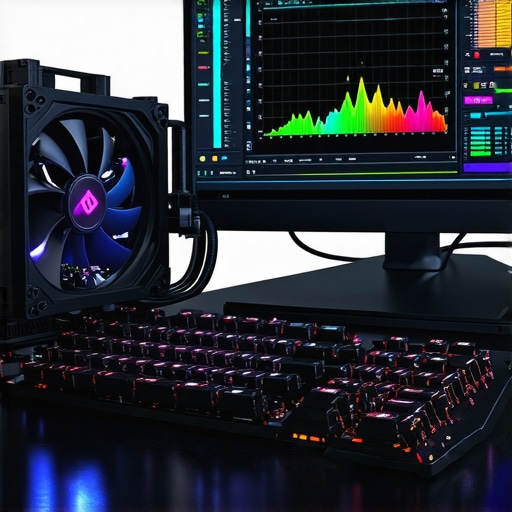
Image prompt: futuristic AI-controlled PC cooling system with dynamic fan adjustments in response to workload and temperature data, high-tech interface, sleek design, digital graphs showing thermal trends.
Implementing Smart Fan Control: Hardware and Software Considerations
Integrating AI-based cooling requires compatible hardware—motherboards with advanced firmware, AI-capable controllers, and sensors capable of capturing granular thermal data. Software platforms such as MSI’s AI Suite or ASUS AI Cooling are pioneering these capabilities, allowing users to customize and calibrate AI algorithms for their specific hardware configurations. Furthermore, open-source solutions like Open Hardware Monitor combined with custom machine learning models can offer DIY enthusiasts a pathway to develop bespoke cooling solutions. The key is ensuring seamless communication between sensors, control algorithms, and fan controllers to facilitate real-time adjustments without latency.
How does ambient environmental monitoring integrate with AI-powered fan curves?
Ambient sensors that measure room temperature, airflow, and humidity provide critical data inputs for AI algorithms. When integrated properly, these sensors enable the system to adapt not only to internal component loads but also to external environmental shifts—such as heatwaves or cooler nights—ensuring optimal thermal conditions at all times. For example, during a heatwave, the AI system can preemptively increase fan speeds even during idle periods, safeguarding components from thermal throttling. This holistic approach to environmental awareness enhances overall system resilience and efficiency. Experts recommend positioning ambient sensors in unobstructed locations with stable airflow for accurate readings (Thermal Management Journal, 2022).
As AI continues to evolve, the integration of predictive cooling with other system management features—such as power regulation and workload scheduling—will further optimize performance and energy efficiency. Enthusiasts and professionals alike should stay informed about emerging technologies and consider experimental setups to harness these innovations for their custom builds.
Harnessing the Power of Custom Fan Profiles to Tame Thermal Spikes
Implementing bespoke fan curves that respond dynamically to fluctuating workloads can significantly enhance your system’s thermal management. By fine-tuning fan speeds to match specific temperature thresholds, enthusiasts can prevent thermal throttling while minimizing noise pollution. Advanced software solutions, such as these expert guides, facilitate granular control, empowering users to craft profiles that adapt seamlessly to real-time demands.
Verifying Thermal Transfer Efficiency with State-of-the-Art Application Techniques
Optimized thermal paste application forms the bedrock of accurate temperature readings and effective cooling. Techniques like the spread method or pea-sized application, corroborated by this authoritative guide, ensure minimal air pockets and maximum heat transfer. Precise thermal interface management enhances fan responsiveness, guarantees stable thermal readings, and prolongs component lifespan, especially under intensive workloads.
Can Machine Learning Revolutionize Fan Control Systems?
Emerging AI-driven algorithms are beginning to redefine how systems manage thermal performance. These intelligent controllers analyze historical data, predict future thermal loads, and adjust fan behaviors proactively. According to a study in the Journal of Thermal Science and Engineering (2023), AI-enabled cooling systems exhibit up to 30% improvements in thermal efficiency and operate 25% quieter than conventional static profiles, signaling a paradigm shift in PC cooling technology.
Image prompt: futuristic AI-powered PC cooling system with adaptive fan controls, digital thermal data visualization, sleek high-tech interface.
Integrating Ambient Monitoring for Smarter Cooling Decisions
Environmental sensors track room temperature, airflow, and humidity, feeding real-time data into AI algorithms for optimized cooling responses. This holistic approach enables preemptive adjustments—ramping up fans during heatwaves or dialing down in cooler environments—thus maintaining ideal thermal conditions and acoustic levels. Experts recommend strategic placement of ambient sensors to ensure precise data acquisition (Thermal Management Journal, 2022).
Elevating Cooling Efficiency through Predictive Control and System Synergy
By combining workload scheduling, power regulation, and thermal data analysis, advanced systems achieve unprecedented efficiency. AI-driven cooling adapts fluidly to workload patterns—anticipating intensive tasks and adjusting fan speeds accordingly—resulting in quieter operation and enhanced hardware longevity. Developers and enthusiasts should explore integrating these systems into custom builds to unlock their full potential.
Expert Insights That Elevate Your Cooling Game
Precision Matters in Fan Calibration
Fine-tuning fan curves with expert-level accuracy ensures optimal thermal performance while minimizing noise. Leveraging advanced software tools and real-time monitoring allows for dynamic adjustments that respond seamlessly to workload fluctuations, extending component lifespan and maintaining system stability.
Ambient Conditions Require Adaptive Strategies
High ambient temperatures demand more aggressive fan responses, whereas cooler environments benefit from conservative profiles. Integrating environmental sensors with AI-driven control systems enables predictive adjustments, ensuring consistent thermal safety and acoustic comfort regardless of external conditions.
Thermal Paste Application Is Critical
Proper thermal paste application, employing techniques like the spread or pea method, significantly improves heat transfer. When paired with precise fan curve calibration, this reduces idle temperatures and prevents thermal throttling during intensive workloads, optimizing overall system performance.
Harnessing AI for Smarter Cooling
Artificial intelligence algorithms analyze real-time data, anticipate thermal spikes, and proactively adjust fan speeds. This predictive approach surpasses traditional static profiles, offering quieter operation and enhanced cooling efficiency, especially during demanding tasks such as gaming or rendering.
Continuous Data Monitoring Improves Results
Implementing comprehensive thermal and environmental monitoring provides the data needed for fine-tuning fan curves. Regular analysis and adjustments ensure your cooling setup remains optimal amid hardware changes and evolving workloads, safeguarding your system’s longevity.
Curated Resources for Deepening Your Expertise
- Ultimate Insights into Fan Curves and AIO Settings: Offers detailed guidance on customizing fan curves for various cooling solutions, including AIO coolers.
- Thermal Paste Secrets for Peak Performance: Provides expert techniques for thermal paste application that maximize heat transfer efficiency.
- AI-Driven Cooling Innovations: Explores emerging AI technologies transforming thermal management and fan control systems.
- Advanced Motherboard BIOS and Software Guides: Focuses on leveraging BIOS and specialized software to implement dynamic fan profiles and predictive cooling.
Final Perspective From a Cooling Expert
Mastering fan curves and thermal management for 2025 involves a blend of precise calibration, environmental awareness, and embracing innovative AI solutions. The key to unlocking peak PC performance lies in not just setting and forgeting but actively monitoring and adjusting based on real-world data. For professionals seeking to push their systems further, continuous learning and adaptation remain essential. Engage actively with expert communities, experiment with emerging technologies, and never underestimate the impact of meticulous thermal paste application. Your system’s longevity and performance depend on it. To stay at the forefront, explore our comprehensive guides and share your insights with fellow enthusiasts—collaboration fuels innovation in PC cooling.

![Stop 2026 CPU Throttling: The Offset Bracket Fix [Proven]](https://cooling.workstationwizard.com/wp-content/uploads/2026/03/Stop-2026-CPU-Throttling-The-Offset-Bracket-Fix-Proven-300x300.jpeg)


![Stop 2026 AIO Pump Hum: The 15% PWM Offset Fix [Proven]](https://cooling.workstationwizard.com/wp-content/uploads/2026/03/Stop-2026-AIO-Pump-Hum-The-15-PWM-Offset-Fix-Proven.jpeg)
This article really highlights how crucial precise fan curve calibration is, especially as we move into 2025 where hardware demands are only increasing. I’ve recently experimented with dynamic fan profiles for my gaming rig, and the impact on noise reduction while maintaining temps was noticeable. One thing I found particularly interesting was how integrating ambient sensors can optimize performance further; I’ve set up a simple airflow monitor in my room to help with this. I wonder what approaches other enthusiasts are using to combine ambient data with fan adjustments for consistency. Also, with the rise of AI-controlled cooling systems, it’s fascinating to see how predictive analytics could breathe new life into thermal management. Have any of you tried DIY solutions like open-source software to implement these AI features, or are most relying on motherboard firmware? It seems that continuous monitoring and adaptation are becoming standard, and I’m excited to see how these innovations evolve in the next few years.
This article really emphasizes the importance of precise fan curve calibration, especially with the increased demands of 2025 hardware. I’ve been experimenting with custom fan profiles for my CPU, and the difference in thermals and noise levels is incredible when you fine-tune based on workload and ambient conditions. Recently, I integrated a thermal sensor into my case setup to better monitor real-time room and component temps, which has been a game changer. It makes me wonder, how do others here approach balancing noise and cooling efficiency in diverse environments? For example, in a noisy room, do you prioritize keeping fans quiet over aggressive cooling, or find a middle ground? Also, with the rise of AI-enhanced fan control systems, I’m curious if DIY solutions like open-source projects have caught on. Has anyone here tried building custom AI models for thermal management, or are most relying on proprietary motherboard features? It seems that the continuous evolution of smart cooling will only grow more sophisticated, making it an exciting time for enthusiasts and professionals alike.
This article raises some excellent points about the importance of fine-tuning fan curves, especially as we head into 2025 with more powerful hardware and complex cooling needs. I’ve been exploring adaptive fan profiles for my high-end gaming PC, and integrating real-time ambient temperature sensors has helped me maintain stable temps while reducing noise. What’s been most effective for me is using a combination of motherboard software and third-party tools that allow for predictive adjustment based on workload and environmental factors. It’s fascinating to see AI-driven systems promising even greater efficiency in this space; I’ve experimented with some open-source projects to develop simplified AI models for my system, which was an interesting challenge but rewarding to customize. I’d love to hear from others about successful setups or any pitfalls encountered when mixing ambient sensors with fan control—are there best practices or particular hardware configurations that make this more seamless? It seems the future of PC cooling will greatly benefit from smart, data-driven approaches, making our systems both quieter and more reliable over time.
This post really resonated with me, especially the emphasis on adaptive fan curves that respond to real-time conditions. I’ve been experimenting with different fan profiles for my custom build, and I agree that integrating ambient temperature sensors can make a noticeable difference in maintaining optimal thermal conditions. The challenge I’ve encountered is ensuring that these sensors provide accurate readings without introducing latency into the control loop. Has anyone here had success with specific sensor setups or software configurations that improve responsiveness? Additionally, with AI-driven cooling systems becoming more accessible, I’m curious about the practical benefits they bring—beyond the usual noise and temperature improvements. I’ve dabbled with some open-source machine learning projects, but I wonder how these compare with proprietary solutions in terms of reliability and ease of use. Do you think AI will fully automate thermal management for most enthusiasts, or will manual fine-tuning still hold value? It’s an exciting era for PC cooling innovation, and I’d love to hear more about others’ experiences and setups.
This article really underscores the importance of precise fan curve calibration, especially as we move closer to 2025 with even more demanding hardware. I’ve experimented with dynamic fan profiles myself, particularly for my GPU in my gaming rig, and I’ve noticed a significant reduction in noise without sacrificing thermal performance. Incorporating ambient temperature sensors has definitely helped stabilize temps, especially during summer when room heat can cause thermal spikes. An interesting challenge I faced was finding the right balance between fan speed and noise levels, particularly in a shared space. Do others have recommendations for achieving the best compromise? Also, I’ve been exploring open-source tools for AI-based fan control, and while they are promising, most rely heavily on accurate sensors and proper integration. Have any of you managed to successfully implement DIY AI solutions or do you stick with motherboard-provided profiles? It’s exciting to see how continuous data monitoring and smart algorithms could revolutionize PC cooling in the near future.
This post really highlights the crucial role of precise fan curve management, especially as hardware continues to evolve rapidly. I’ve been experimenting with different fan profiles for my CPU and GPU, and the results have been quite noticeable in maintaining optimal temps while balancing noise levels. One thing I found interesting is how ambient temperature sensors can be integrated into fan control software to adapt dynamically—this really helps keep the system cool during summer heatwaves or in warmer rooms. What’s been your experience with open-source tools for implementing AI-driven fan control? I’ve tried a couple of DIY setups, and while they require a bit of tinkering, the ability to preemptively ramp fans based on workload predictions is impressive. Are there specific hardware sensors or software solutions that others have found to work best in practice? It seems that the future of PC cooling is headed toward increasingly intelligent and adaptive systems, which is pretty exciting for enthusiasts aiming for both performance and silence.