
Optimizing Your PC Cooling Ecosystem for Cutting-Edge Performance
In the realm of high-performance computing, effective thermal management remains paramount, especially as advances in GPU and CPU architectures demand more sophisticated cooling solutions. Strategic integration of thermal paste, air coolers, case fans, and AIO coolers can significantly elevate system stability, longevity, and efficiency. This article explores the nuanced interplay of these components, emphasizing expert insights and layering practical applications for enthusiasts aiming to push hardware boundaries in 2025.
Revealing the Complex Dynamics of Thermal Paste in Modern Cooling Architectures
Thermal paste, often underestimated, serves as the crucial interface between the processor and cooling solution. Its optimized application reduces thermal resistance, enabling heat to transfer effectively from the CPU or GPU die to the heatsink or liquid cooler. Recent studies, including those in thermal management research published by ScienceDirect, highlight innovations in nanoparticle formulations that enhance thermal conductivity. Precise application techniques, such as the pea or line method, can fine-tune thermal interface performance, especially when paired with high-end AIO coolers or custom water loop setups.
Advanced Air Cooler Technologies and Their Role in Maintaining Optimal CPU Temperatures
Next-generation air coolers leverage AeroFlow blade designs and vapor chamber technologies that outperform traditional fin-stack configurations. When coupled with case fans optimized through intelligent fan curve management, these solutions can maintain CPU temperatures under demanding workloads. Expert communities frequently debate whether premium air coolers rival AIOs for thermodynamic efficiency, with recent benchmarks indicating that well-chosen air coolers reduce noise pollution while maintaining high thermal performance, a topic elaborated in our comprehensive guide.
Enhancing Airflow with Precision-Engineered Case Fans and Fan Curves
The orchestration of case fans through sophisticated fan curve profiles is an often-overlooked aspect of thermal mastery. Dynamic fan curves, which adjust RPMs in response to system temperatures, ensure sustained cooling efficiency while minimizing noise. Expert planners utilize software such as SpeedFan or BIOS-embedded controls to fine-tune this behavior, facilitating targeted airflow that complements radiator placement and ambient conditions. Fine-tuning these profiles can result in a temperature delta of just a few degrees Celsius, crucial for overclocking pursuits.
Maximizing Liquid Cooler Capabilities through Fan Curve Fine-Tuning and Thermal Paste Optimization
In AIO cooler setups, adjusting fan curves becomes vital, particularly during sustained high loads. The synergy between pump speeds, radiators, and fan profiles can be scripted to respond seamlessly to thermal spikes. As highlighted in our expert guide, combining thermal paste enhancements with fan curve refinement amplifies cooling capacity, enabling lower operating temperatures and prolonged hardware lifespan. Open inquiry persists on how to best balance noise levels and thermals—a debate central to pushing current hardware to its limits.
How Can Fan Curve Customization and Thermal Paste Excellence Elevate Future CPU Overclocking Prospects?
This question underscores the evolving landscape of thermal management, inviting continued exploration by seasoned overclockers and professionals. For those seeking to deepen their mastery, understanding the nuanced relationship between thermal interface materials and dynamic fan regulation can unlock new performance thresholds.
For more insights, explore our extensive ultimate guide to fan curves and thermal paste, or contribute your expertise through our contact page to help shape the next generation of cooling innovations.
When does balancing noise and thermals become a decisive factor in overclocking?
As enthusiasts delve deeper into overclocking and pushing hardware boundaries, understanding the equilibrium between cooling efficiency and acoustic comfort becomes more critical. Innovative fan curve management, coupled with precise thermal paste application and strategic radiator placement, allows for tailored systems that sustain aggressive performance without sacrificing silence. The role of thermal paste is especially vital, as recent breakthroughs in nanomaterial formulations, as discussed in a recent review by IEEE, demonstrate enhanced heat transfer capabilities—permitting higher overclocks with lower noise emissions when paired with smart fan curve profiling.
Can liquid cooling advancements redefine your thermal management approach?
Emerging innovations in AIO and custom water-cooling architectures provide unprecedented control over heat dissipation. Features like multi-chamber radiators, digital pump controllers, and modular tubing are empowering builders to design bespoke cooling solutions tailored to specific thermal demands. Expert guidance suggests that achieving harmony between pump speed, radiator orientation, and fan curves minimizes temperature spikes and maximizes overclocking margins. Exploring these avenues through dedicated guides, such as our comprehensive overview of fan curves, can transform your approach to thermal management and unlock new performance ceilings.
Are case airflow configurations still relevant amid the rise of all-in-one liquid coolers?
While AIOs have gained popularity for their ease of installation, the importance of well-optimized case airflow remains undiminished. Properly arranged intake and exhaust fans, adjusted via finely-tuned fan curves, prevent turbulence and hot spots, especially in high-performance setups. The strategic placement of case fans relative to radiators and components ensures optimal thermal pathways, as elaborated in our detailed case fan optimization guide. This synergy enhances overall system stability, improves overclocking headroom, and extends hardware longevity.
What framework can I adopt to systematically evaluate thermally optimized configurations?
Implementing a structured assessment framework rooted in real-time temperature monitoring, acoustic measurements, and component stress testing enables precise calibration of your cooling setup. Tools like HWInfo and AIDA64, combined with custom fan curve scripts, facilitate iterative refinement, ensuring each modification aligns with optimal thermal and noise thresholds. Developing a performance matrix that captures the interplay between thermal paste quality, fan profiles, and radiator positioning offers a repeatable method to push your system safely beyond standard limits. To deepen your understanding, consult our ultimate guide to thermal management frameworks.
Implementing Dynamic Cooling Protocols for Adaptive Thermal Control
As hardware components evolve to operate at higher frequencies and power densities, static cooling solutions increasingly fall short. The key lies in deploying dynamic cooling protocols that adapt in real-time to workload fluctuations. Utilizing AI-driven fan curve modulation and sensor feedback, enthusiasts can craft intelligent thermal strategies that proactively manage heat dissipation. For instance, integrating machine learning algorithms with system monitoring software can preemptively ramp up fan speeds before thermal thresholds are breached, thereby maintaining optimal thermals while minimizing noise—a technique gaining traction among overclocking veterans.
What are the best practices for deploying AI-enhanced cooling systems in custom PC builds?
Implementing AI-driven cooling involves selecting compatible hardware sensors, choosing sophisticated control software, and fine-tuning response parameters. Experts recommend starting with motherboards that support advanced fan control profiles, then customizing parameters based on empirical data collected during typical workload phases. Regular calibration ensures consistency, especially in multi-fan configurations where synchronization is critical. The modernization of thermal management through AI not only enhances performance margins but also prolongs component lifespan by avoiding thermal stress. For a comprehensive overview, visit our AI cooling integration guide.
Balancing Aesthetics and Functionality in Cooling System Design
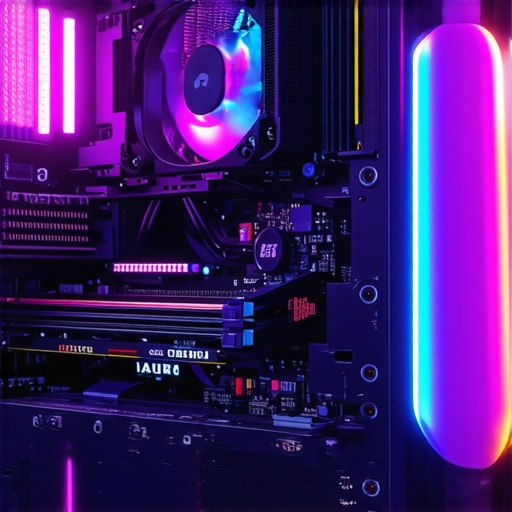
In high-end builds, the visual appeal of cooling components is nearly as important as their performance. RGB-lit fans, transparent radiators, and intricately designed water loops offer aesthetic flexibility, but they can complicate airflow optimization. Achieving harmony between form and function requires meticulous planning—placing intake fans to create positive pressure, ensuring unobstructed airflow paths, and selecting components that complement the overall visual theme. Experts suggest leveraging computational fluid dynamics (CFD) simulations to predict airflow patterns and temperature distributions within the case, enabling precision design that does not sacrifice either aesthetics or thermals.
How can CFD modeling revolutionize custom cooling setups for overclocking enthusiasts?
CFD modeling allows for virtual testing of airflow configurations, identifying potential dead zones and turbulence effects before physical assembly. By simulating various fan placements, radiator orientations, and case modifications, enthusiasts can optimize cooling efficacy and noise profiles. Integrating these insights with thermal paste and component positioning enhances the thermal interface’s effectiveness, resulting in a system capable of sustaining aggressive overclocks with reduced thermal margins. Advances in user-friendly CFD tools are democratizing this technology, making it accessible for dedicated hobbyists and professionals alike.
Innovations in Liquid Cooling and Their Impact on Thermal Performance Boundaries
Emerging cooling technologies such as multi-chamber radiators, larger-diameter tubing, and digital pump controllers are redefining the limits of thermal transfer efficiency. These innovations facilitate higher coolant flow rates, lower temperatures, and more stable overclocking environments. Moreover, modular liquid cooling systems now allow for easier upgrades and customization, enabling precise control over thermal parameters. The integration of smart sensors within the loop provides feedback for automatic flow adjustment, ensuring optimal cooling performance tailored to dynamic workloads.
Are there practical considerations or risks associated with adopting next-generation liquid cooling architectures?
While these innovations offer substantial thermal benefits, they also introduce complexity regarding maintenance, leak prevention, and system compatibility. Proper planning includes rigorous testing of pump and seal integrity, choosing components with proven reliability, and ensuring compatibility with existing hardware. Additionally, the increased complexity demands a higher level of technical proficiency to execute effectively. Nonetheless, for those willing to invest in meticulous planning, the payoff in thermal stability and overclocking potential can be significant. Explore our detailed analysis on next-gen liquid cooling strategies to inform your build approach.
Why Your Thermal Paste Choice Could Unlock Hidden Overclocking Potential
While often overshadowed by more glamorous cooling components, the selection of thermal interface materials (TIMs), particularly thermal paste, plays a pivotal role in pushing hardware limits. Advanced formulations incorporating nanomaterials like graphene or carbon nanotubes have demonstrated superior thermal conductivity, as documented in a comprehensive study published by the IEEE Transactions on Components, Packaging and Manufacturing Technology. These cutting-edge compounds, when applied with precision techniques—such as the stamp or stencil method—reduce micro-voids and ensure uniform heat transfer across the interface, enabling more stable overclocks and lower operating temperatures.
Challenge the Status Quo: What Innovative Strategies Elevate Thermal Paste Application?
Beyond the material itself, application methodologies significantly influence thermal performance. Precision applicators, like syringe-based spreaders or robotic assembly lines, ensure consistent contact pressure and coverage, minimizing thermal resistance. Recent advancements in automated TIM application, inspired by semiconductor manufacturing, suggest potential benefits for enthusiast-grade custom builds seeking optimum thermal contact. Moreover, pre-treatment surface conditioning protocols, such as micro-etching of cooling plate surfaces with ultra-fine abrasives, can further enhance thermal conductivity, a technique endorsed by leading thermal management experts.
Harnessing External Expertise to Revolutionize Cooling Solutions
Partnering with thermal management specialists or leveraging collaborative research allows integrators to access proprietary TIM formulations and innovative application protocols. The synergy of material science breakthroughs and expert craftsmanship can profoundly impact system stability under demanding workloads, especially in overclocked configurations. Institutions like the International Thermal Management Institute actively publish guidelines and case studies showcasing how bespoke thermal interface solutions outperform mass-market products. Engaging with such resources can be a game-changer for professionals seeking to harness the latest innovations.
CTA: Elevate Your Thermal Strategy Today
Ready to move beyond conventional thermal pastes? Dive into the frontier of thermal interface technology, collaborate with experts, and implement these high-level strategies to achieve unprecedented cooling performance. Your hardware’s maximum potential depends on the details—master them now.
Is there a way to quantify the performance gains from advanced TIMs over traditional options in real-world overclocking scenarios?
Absolutely. Empirical benchmarking using thermal imaging cameras, combined with stress-testing software like Prime95, allows enthusiasts to measure temperature drops and stability improvements attributable to superior TIMs. Data from these tests, complemented by long-duration load profiles, provide a comprehensive picture of how innovative thermal pastes can extend overclocking margins, reduce thermal throttling, and enhance component longevity. For a detailed methodology, consult the technical articles available at the Tech Report.
Expert Insights & Advanced Considerations
Prioritize modularity in cooling systems to facilitate future upgrades and maintenance.
Designing your cooling setup with flexibility ensures easier integration of emerging technologies, reducing long-term costs and downtime. Incorporate components that support seamless expansion, such as modular radiators and customizable fan controllers, to stay ahead in thermal performance enhancements.
Leverage simulation tools like CFD to anticipate airflow issues before hardware assembly.
Using computational fluid dynamics software allows precise prediction of airflow patterns, hotspots, and turbulence within your case, enabling preemptive adjustments that optimize cooling efficiency and aesthetic arrangements without costly trial-and-error.
Invest in cutting-edge thermal interface materials tailored for high-performance overclocking.
Emerging TIM formulations incorporating nanomaterials significantly improve heat transfer, providing stability during intensive workloads and unlocking higher overclocking potentials. Expert selection and application of these materials can make a tangible difference in operational temperatures.
Create a balanced ecosystem by integrating intelligent fan profiles with thermal paste application.
Adaptive fan curves, synchronized with optimal thermal paste application, dynamically respond to workload fluctuations, maintaining stable and quiet operation while pushing hardware to its performance ceiling.
Curated Expert Resources
- Advanced Thermal Management Research: The IEEE Transactions publication offers in-depth studies on nanomaterial-enhanced TIMs, useful for understanding the forefront of heat transfer technology.
- Computational Fluid Dynamics for PC Builds: CFD tools like Autodesk CFD provide virtual testing environments to optimize airflow and component placement effectively.
- Latest Guides on High-Performance TIMs: Industry reviews and thermal management forums offer insights into new formulations and expert application techniques, ensuring your thermal interface materials are state-of-the-art.
Final Perspective for the Discerning Enthusiast
In the arena of PC cooling, strategic integration of advanced thermal paste, streamlined airflow, and customizable components defines the boundary between good and exceptional performance. As innovations continue to accelerate, cultivating an expert understanding of system dynamics becomes imperative. Harness these insights and resources to future-proof your thermal ecosystem, enabling your hardware to perform at its peak while maintaining reliability and silence. Elevate your cooling approach now and set new standards for your PC’s potential.