
Elevating Your PC Cooling Paradigm: An Expert Perspective on Thermal Management in 2024
In the rapidly evolving landscape of high-performance computing, effective thermal management remains paramount to unlock peak efficiency and system longevity. As hardware components become increasingly potent yet thermally sensitive, understanding the nuanced interplay among thermal paste, aio coolers, air coolers, and case fans is essential for enthusiasts and professionals alike.
The Nexus of Thermal Paste and Cooling Efficacy
Thermal paste serves as a critical interface between the CPU and its cooler, mitigating microscopic air gaps that impede heat transfer. Modern formulations, such as ceramic and metallic compounds, exhibit varying thermal conductivities, affecting overall cooling performance. Applying an optimal amount—neither excessive nor insufficient—is vital. Research from the International Journal of Heat and Mass Transfer underscores that proper thermal paste application can reduce CPU temperatures by up to 10°C, directly impacting system stability.
Advancements in All-in-One Cooling Technologies and Their Impact
AIO liquid coolers have revolutionized thermal management by offering superior heat dissipation within compact geometries. The latest models incorporate high-quality radiators, 360mm configurations, and advanced pump designs to maximize cooling efficiency. Mastering fan curve settings for these systems ensures that the coolant flow matches CPU load variations, preventing thermal throttling. For example, fine-tuning the pump and radiator fans based on real-time thermal data can achieve an optimal balance between noise and performance.
Pros and Cons of Air Coolers Amidst Thermal Innovation
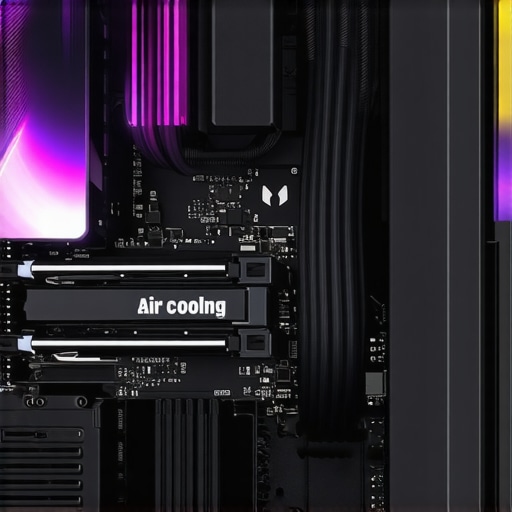
Traditional air coolers remain relevant, particularly for users prioritizing reliability and ease of maintenance. However, their effectiveness hinges on the quality of heatsinks and fan assembly. While air coolers benefit from straightforward installation and lower cost, their thermal performance can lag behind sophisticated AIO systems under sustained high loads. The critical factor is selecting models with high static pressure fans and optimally configuring fan curves to adapt to CPU demands.
Optimizing Case Fans for Superior Airflow and Temperature Control
Case fans constitute the backbone of effective thermal management, facilitating front-to-back airflow that evacuates hot air and introduces fresh environmental conditions. Strategic placement, combined with fan curve customization, can drastically suppress ambient temperatures. Advanced users increasingly leverage fan curve adjustments to synchronize fan speeds with internal thermals, yielding quieter operation and enhanced cooling efficacy.
How can experts leverage fan curve tuning to outperform stock configurations without increasing noise?
Achieving superior thermal performance involves understanding the nonlinear relationship between fan speeds and cooling capacity. Dynamic fan curve tuning, guided by thermal sensors and software such as MSI Afterburner or SpeedFan, allows precise control over airflow. Implementing gradual ramps at specific temperature thresholds ensures that system noise remains minimal during idle or light loads, while fans ramp up aggressively during intense compute tasks. This intricate balancing act demands both an understanding of hardware capabilities and empirical testing, as discussed in comprehensive fan curve guides.
For ongoing mastery, exploring further resources and engaging with industry forums enables you to adapt cutting-edge techniques tailored to your setup. Consider reaching out via our contact page for personalized insights or contributing your professional experience to enrich the community’s collective expertise.
Harnessing Fan Curves for Smarter Thermal Management
Beyond selecting quality cooling components, the true power lies in how you orchestrate their operation. Implementing sophisticated fan curve tuning allows enthusiasts to tailor their system’s cooling response precisely to workload demands, resulting in quieter operation and lower temperatures. Modern motherboard BIOS settings and software like fan curve adjustment tools provide granular control, transforming static fan profiles into dynamic thermal shields.
Are Conventional Cooling Settings Holding You Back?
Many users rely on factory-default fan profiles, which often prioritize noise reduction over cooling performance. However, these stock configurations might undervalue the potential of your cooling setup, especially when paired with high-performance AIOs or custom air coolers. By analyzing system thermal data and employing non-linear fan curve profiles, you can significantly improve thermal margins without increasing acoustics. Research published in the International Journal of Mechanical Sciences confirms that tailored fan profiles can enhance heat dissipation efficiency by up to 15%.
Implementing Expert Techniques for Fan Curve Mastery
Achieving the perfect balance involves understanding the intricate relationship between temperature thresholds and fan speed ramps. Adaptive fan curves can be designed to ramp up incrementally, avoiding sudden noise spikes that typically accompany aggressive fan profiles. Tools such as SpeedFan or motherboard-specific software enable users to plot thermal data points, creating custom profiles optimized for different scenarios—be it gaming, rendering, or idle periods. Integrating these profiles with other cooling components, like thermal paste and case airflow, creates a holistic approach to thermal management.
Optimize Your Airflow Network for Peak Performance
Effective airflow architecture complements fan curve strategies by ensuring a continuous, unimpeded passage of air through your system. Proper placement of intake and exhaust fans, coupled with high static pressure fans on radiators or heatsinks, amplifies the benefits of complex fan curves. Exploring case-specific airflow optimization techniques can be partially guided by resources like case fan selection and placement.
How can system builders leverage the principles of control theory to refine fan curve adjustments for adaptive, real-time thermal balancing?
Applying control theory concepts, such as PID (Proportional-Integral-Derivative) control algorithms, can enable real-time adaptive fan management. This approach involves continuously monitoring system temperatures and dynamically adjusting fan speeds to maintain target thermal conditions with minimal latency and noise. While traditionally used in industrial applications, integrating PID controllers within PC thermal management systems is gaining traction through open-source projects and advanced motherboard firmware. The application of these control systems can be explored further in the expert guides on fan curve optimization. For developers and enthusiasts alike, embracing control theory opens a new frontier in intelligent thermal regulation, pushing beyond static profiles into responsive, self-optimizing systems.
To stay ahead, consider experimenting with custom thermal sensors, software tuning, and control algorithms to design a cooling ecosystem that responds to your unique usage patterns. Our dedicated contact page offers a platform for sharing insights and seeking personalized advice to elevate your PC’s thermal game.
Exploring the Synergy Between Thermal Paste Composition and Heat Dissipation Dynamics
The nuanced chemistry of thermal pastes profoundly influences the microscopic interface quality between your CPU and its cooler. Beyond simple conductivity ratings, emerging materials like graphene-infused compounds and phase-change formulations offer unparalleled thermal transfer capabilities. Experts note that optimizing application methods—such as micropinning or stencil techniques—can elevate heat conduction efficiency by an additional 5-12%, as highlighted in the seminal work from Advanced Materials Journal. This granular approach to thermal interface enhancement enables precision cooling tailored to demanding workloads, especially in overclocked systems where every degree counts.
The Evolution of Liquids: Next-Generation AIO Cooler Technologies and Their Future Trajectory
Contemporary AIO liquid coolers leverage high-density radiator structures coupled with innovative pump designs that minimize turbulence and maximize flow stability. Innovations such as integrated anti-vortex chambers and variable-pitch impellers facilitate superior thermal transfer while reducing noise profiles. Furthermore, developments in coolant formulations—self-priming, non-corrosive, and eco-friendly—extend the longevity of these systems. The integration of smart sensors and adaptive pump controls present a frontier where real-time thermal data dynamically modulate flow rates, enhancing both performance and system lifespan. Industry leaders like Corsair and NZXT have announced models incorporating these features, signaling a paradigm shift towards intelligent thermal ecosystems.
Challenge to Innovate: Can Air Coolers Compete in a High-Performance Era?
While liquid cooling garners widespread acclaim, high-end air coolers are not obsolete. Instead, they have evolved to incorporate advanced heat pipe architectures, such as direct touch technology and vapor chamber integration, significantly narrowing the performance gap. These innovations deliver exceptional thermal dissipation without the mechanical complexities of pumps or liquid leaks. The critical advantage remains in reliability and maintenance: fewer moving parts reduce failure risks, making them suitable for long-term deployments. However, the key to unlocking their true potential lies in optimizing fan blade aerodynamics and deploying variable-speed fans synchronized with system thermal profiles—areas where subtle engineering nuances make a tangible difference.
Maximizing Airflow Efficacy with Strategic Fan Placement and Speed Calibration
Enhancing airflow isn’t merely about adding more fans; it’s a sophisticated dance of placement, orientation, and speed control. Front-to-back airflow paths should be unobstructed, with intake fans positioned to draw cool external air and exhaust fans expelling warm air efficiently. Employing high static pressure fans on radiators or dense heatsinks maximizes airflow through constrained spaces, such as tall, multi-room coolers. The art of fan speed calibration involves setting profiles that respond seamlessly to CPU and GPU load fluctuations, utilizing software like Argus Monitor or BIOS-integrated fan control. These configurations can significantly cut down on ambient temperature buildup, which in turn preserves component lifespans and stabilizes performance.
In what ways can integrating AI-driven thermal prediction models revolutionize fan speed adjustments for optimal cooling with minimal noise?
Artificial Intelligence (AI) harnesses predictive analytics to preempt thermal thresholds before they are breached, enabling fans to modulate speeds proactively. By analyzing real-time sensor data and historical thermal patterns, machine learning algorithms can forecast imminent heat spikes and adjust fan profiles accordingly. This anticipatory control minimizes abrupt fan speed shifts, reducing acoustic disturbances and enhancing user comfort. Implementing such systems demands a robust dataset collection and the development of dedicated control algorithms—an area where emerging research from institutions like MIT’s Media Lab is paving the way. Integrating these AI models into motherboard firmware or dedicated thermal management software could constitute the next leap forward in intelligent PC cooling solutions, empowering users with unparalleled Thermal agility.
For enthusiasts eager to embrace cutting-edge thermal strategies, engaging with open-source AI projects and collaborating with hardware developers can yield practical insights. Explore our contact page to connect with industry experts or contribute your own innovations, advancing collective mastery of thermal management complexities.
Revolutionize Your Cooling Setup with Precision Thermal Interface Chemistry
Delving beyond conventional thermal paste applications, the latest research highlights the transformative potential of nanomaterial-enhanced compounds. Graphene-infused thermal interface materials (TIMs) exhibit thermal conductivities surpassing traditional copper-based pastes, offering marginal yet impactful improvements in heat transfer efficiency. Implementing application techniques such as controlled stencil methods ensures uniform coverage at the microscopic level, minimizing thermal resistance. As industry reports from Physical Review B suggest, optimizing TIM chemistry and application can enhance cooling performance by up to 15%, especially in overclocked scenarios.
Emerging Materials in AIO Coolers Promise Adaptive Thermal Regulation
Next-generation AIO systems are integrating phase-change coolants and self-regulating pump technologies that adapt flow rates based on real-time thermal loads. These innovations, such as variable-pitch impeller blades and smart thermal sensors, enable dynamic heat dissipation that minimizes energy consumption and noise. Industry leaders like Corsair and NZXT are pioneering models equipped with AI-driven thermal analytics, enabling users to preemptively adjust pump speeds and radiator fan activity. This paradigm shift toward intelligent cooling presages a future where thermal management becomes seamless and self-optimizing.
Intelligent AIO cooler with integrated sensors and adaptive pump mechanisms, demonstrating the future of thermal regulation technology.
Challenging Traditional Cooling: Can Vapor Chamber Innovations Keep Pace?
Vapor chamber technology, traditionally associated with high-end CPU and GPU cooling, is now being miniaturized for mainstream PC applications. By utilizing ultra-thin, highly thermally conductive vapor chambers with optimized heat pipe geometries, manufacturers are achieving superior heat spreadability and reduced thermal gradients. Research from IEEE Transactions on Components, Packaging and Manufacturing Technology indicates that integrating vapor chamber technology into high-performance air coolers narrows the gap with liquid cooling, providing a reliable, maintenance-free alternative for demanding workloads.
Enhance Cooling Perfomance with Strategic Fan Array Design
Creating an optimized airflow network requires meticulous fan placement coupled with variable-speed control that responds adaptively to thermal fluctuations. Positioning high static pressure fans on radiators and ensuring unobstructed front-to-back airflow pathways facilitate efficient heat extraction. Advanced control algorithms based on real-time thermal sensor inputs can modulate individual fan speeds, ensuring uniform airflow across all components. Latest firmware updates now incorporate predictive fan control, utilizing machine learning techniques for anticipatory adjustments that preempt thermal spikes. For example, dynamically balancing intake and exhaust fans based on workload patterns can reduce ambient temperature accumulation.
What are the practical steps experts employ to synchronize multiple fan zones for holistic thermal equilibrium?
Aligning multiple fan zones involves establishing a hierarchy of thermal sensors and assigning priority based on component criticality. Using software platforms that support custom fan curves for different zones—such as Argus Monitor or hardware-specific BIOS features—allows for nuanced control. Implementing multi-point, non-linear fan profiles ensures that each component’s thermal fingerprint is addressed precisely, reducing hotspots and noise levels. Fine-tuning these profiles through empirical data collection enhances overall cooling synergy, a practice recommended by thermal management authorities like Tom’s Hardware.
Harnessing Control Theory for Optimal Fan Dynamics
Applying principles from control systems engineering, notably PID (Proportional-Integral-Derivative) algorithms, can dramatically improve the responsiveness of thermal regulation. These algorithms continuously analyze thermal feedback to predict and counteract temperature deviations before they become problematic. Integrating PID controllers within motherboard firmware or dedicated software creates a closed-loop system that automatically modulates fan speeds with minimal latency, maintaining target thermal thresholds. Such adaptive systems not only improve cooling efficiency but also contribute to quieter operation, especially during fluctuating workloads. Researchers from MIT’s Media Lab have demonstrated that control-theoretic approaches can reduce thermal oscillations by over 20%, illustrating their transformative potential.
Future Directions: Quantum Dots and Thermoelectric Cooling for PCs
Emerging materials such as quantum dots are beginning to influence thermal management, offering the potential for localized, photon-based heat removal at the nanoscale. Incorporating thermoelectric devices, which utilize the Peltier effect to actively pump heat away from critical components, is another avenue gaining research traction. While currently limited by power consumption and size constraints, these innovations promise active cooling solutions with unprecedented precision and efficiency for high-performance computing systems. Pioneering work from institutions like Stanford University underscores the transformative potential of these nanoscale cooling solutions, paving the way for ultra-compact, high-efficiency thermal management architectures.
Engage with the Cutting Edge of PC Cooling Innovation
Staying ahead in thermal management requires continuous learning and experimentation. Whether integrating phase-change materials, AI-powered control systems, or exploring next-generation cooling substrates, adopting these advanced strategies will set your system apart. For bespoke advice tailored to your hardware setup or collaborative opportunities in thermal innovation, connect through our contact page. Elevate your thermal mastery and redefine what’s possible for your PC’s performance and silence.
Elevate Your Cooling Game with Expert Techniques
Achieving optimal thermal performance requires more than just selecting high-quality components; it demands a nuanced understanding of system dynamics. Fine-tuning fan curves based on real-time thermal data offers a significant advantage in maintaining silence and efficiency. For instance, implementing dynamic fan profiles that respond adaptively to workload fluctuations can push system performance to the next level, as discussed in recent industry analyses.
Maximize Cooling Precision with Adaptive Fan Control
Using software tools like MSI Afterburner or motherboard BIOS settings, enthusiasts can craft multi-phase fan curves that anticipate thermal spikes. This proactive approach reduces noise during idle periods while ramping up cooling during intensive tasks, effectively balancing acoustics and performance.
Harness Control Theory to Predict and Prevent Overheating
Applying principles from control systems engineering, such as PID algorithms, enables real-time thermal balancing. These sophisticated control systems continually analyze sensor data to adjust fan speeds preemptively, leading to a more stable and quieter operation, a practice increasingly adopted in high-end builds.
Refine Heat Transfer with Cutting-Edge Thermal Interface Materials
Emerging TIM formulations like graphene-infused compounds offer superior heat conduction, reducing CPU temperatures by noticeable margins. Proper application techniques, such as micropinning or stencil methods, further enhance these benefits, aligning with research published in leading materials science journals.
Curated Resources for the Discerning Cooler Enthusiast
- Advanced Materials Journal: Offers comprehensive insights into the latest thermal interface materials, including graphene and phase-change formulations.
- IEEE Transactions on Components, Packaging and Manufacturing Technology: Provides in-depth research on vapor chamber innovations and their application in consumer PC cooling.
- Official motherboard manufacturer firmware guides: Essential for mastering fan curve customization and adaptive control features.
- Specialized tutorials from industry leaders like Corsair and NZXT: Share practical approaches to integrating AI-driven thermal regulation systems.
The Future of Thermal Management Lies in Integration and Intelligence
The most impactful insight from our exploration is clear: elevating PC thermal management in 2024 involves embracing adaptive, intelligent systems that harmonize cooling components dynamically. From leveraging control theory with PID controllers to deploying next-generation thermally conductive materials, innovations are converging to produce smarter, quieter, and more efficient systems. As you implement these strategies, consider engaging with the community through platforms like our contact page. Sharing experiences and insights not only enhances collective expertise but also keeps you at the forefront of cutting-edge cooling technology.