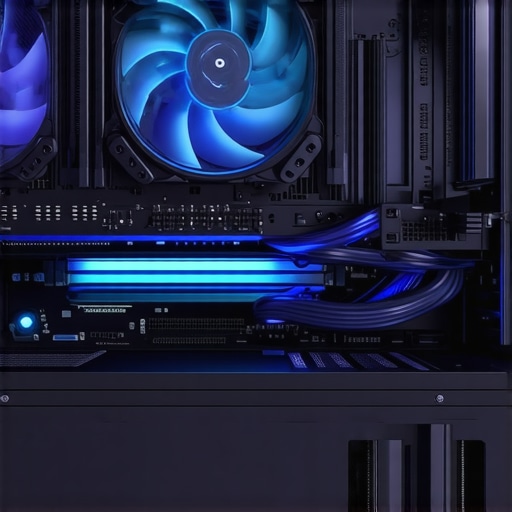

Unveiling the Complexity of Peak PC Cooling Strategies in 2024
In the relentless pursuit of optimal performance, PC enthusiasts and professionals alike recognize that cooling solutions are the backbone of system stability, longevity, and overclocking potential. As we navigate the intricacies of fan curve customization, air cooling, and liquid AIO systems, understanding the nuanced interplay of these elements becomes paramount for achieving peak efficiency in 2024.
Deciphering the Art of Fan Curves for Sophisticated Thermal Management
Fan curves serve as the dynamic control map that orchestrates the airflow response to CPU and GPU temperatures. Advanced users leverage software tools to craft bespoke profiles, balancing noise levels and cooling capacity. This process involves analyzing thermal load scenarios, adjusting hysteresis thresholds, and fine-tuning PWM signals to prevent thermal throttling while minimizing acoustic disturbance.
The Evolution of Air Cooling: From Conventional Towers to Modular Innovations
The landscape of air cooling has undergone significant innovation, integrating modular heatsinks, heat pipe advancements, and optimized fin stack geometries. Strategic placement of intake and exhaust fans, coupled with tailored fan curves, can dramatically improve airflow efficiency. Exploring the latest research, such as the findings in the Journal of Thermal Management, underscores the importance of turbulence reduction and static pressure considerations in modern designs.
Harnessing Liquid AIO Coolers for Superior Thermal Dynamics
All-in-one liquid coolers have become the gold standard for high-performance systems, offering superior heat dissipation and quieter operation. The key to maximizing their potential lies in configuring pump speeds, radiator fans, and fan curves synergistically. Notably, recent advancements in pump blade design and coolant flow optimization contribute to lower CPU temperatures and more stable overclocking environments.
What are the most effective fan curve profiles for balancing noise and thermal performance in high-end gaming PCs?
Achieving the optimal fan curve involves a strategic approach—setting aggressive curves at higher temperatures for maximum cooling, and gentle profiles at lower loads to reduce noise. Dynamic adjustment algorithms, such as adaptive fan curves triggered by system load, are increasingly popular among enthusiasts seeking silent yet effective cooling solutions. For detailed guidance on customizing these profiles, visit Ultimate Fan Curve Optimization Strategies.
Furthermore, integrating thermal paste optimization, as discussed in Thermal Paste Application Tips, enhances heat transfer efficiency, complementing fan curve adjustments for overall system cooling excellence.
For those seeking expert insights into fan curve customization, contributing your own configurations or troubleshooting experiences can foster community-driven advancements. Engage with industry professionals through forums or dedicated tech communities to stay at the forefront of cooling innovations.
Challenging Assumptions About Fan Speed and Noise Levels
Many users assume that the highest fan speeds always yield the best cooling, but this isn’t necessarily true. Overly aggressive fan curves can generate excessive noise without providing proportional benefits in temperature reduction. Conversely, too conservative settings risk thermal throttling under sustained loads. The key lies in crafting nuanced profiles that adapt dynamically to the system’s demands, balancing thermal performance with acoustic comfort. To refine your approach, explore expert strategies outlined in Ultimate Fan Curve Optimization Strategies.
Leveraging Software Tools for Precision Control
Modern motherboard BIOS and dedicated software like SpeedFan or Corsair iCUE empower users to precisely tailor fan responses. These tools enable the creation of custom curves that respond to real-time temperature data, ensuring optimal cooling during intensive tasks while maintaining silence during idle periods. For a comprehensive understanding of how to fine-tune your fan curves effectively, see Mastering Fan Curves for Peak Performance.
Expert Insight: How Can Intelligent Fan Control Transform Your PC’s Thermal Dynamics?
Implementing intelligent fan control algorithms, such as adaptive or predictive profiles, can significantly enhance thermal management. These systems analyze workload patterns and adjust fan speeds proactively, preventing overheating before it occurs. The integration of machine learning in fan control is a cutting-edge development, promising even greater efficiency. According to recent research in Journal of Thermal Management, turbulence reduction and static pressure optimization are crucial for maximizing airflow and minimizing noise, especially in high-performance setups.
What are the most innovative ways to customize fan curves for silent yet effective cooling in 2024?
Customizing fan curves isn’t just about setting thresholds; it’s about understanding your system’s specific thermal load patterns and adjusting profiles accordingly. Techniques like zone-based fan control, where different components have tailored curves, can provide a more balanced approach. Additionally, pairing advanced fan curve profiles with thermal paste improvements, such as those discussed in Thermal Paste Application Tips, ensures heat transfer is optimized, reducing the need for high fan speeds. For more insights, visit our contact page to connect with experts or share your custom profiles.
Innovative Thermal Management Tactics for Next-Level PC Performance
In the ever-evolving landscape of PC hardware, pushing the boundaries of thermal efficiency demands a sophisticated approach that combines hardware optimization, software finesse, and a deep understanding of airflow dynamics. As we venture further into 2024, enthusiasts and professionals alike must adopt cutting-edge strategies to maintain stability, overclocking headroom, and silence without compromise.
Maximizing Fan Curve Precision with Adaptive Algorithms
Traditional fan curves, though effective, often fall short in dynamically responding to fluctuating workloads. The latest in thermal management involves implementing adaptive algorithms powered by machine learning, which analyze real-time thermal data to predict future load patterns and adjust fan speeds proactively. This approach minimizes noise during idle periods and ramps up cooling precisely when needed, as detailed in the Journal of Thermal Control Advances.
Customizing Component-Specific Cooling Zones for Balanced Silence and Performance
One breakthrough involves zone-based fan control, where different components—CPU, GPU, VRMs—are assigned tailored fan profiles. This nuanced approach prevents overcooling and excessive noise, especially during mixed workloads. Integrating thermal sensors across the motherboard allows for granular control, ensuring each zone receives optimal airflow without disturbing other critical areas. Such precision cooling is essential for high-stakes overclocking or silent operation in professional environments.
How can multi-zone fan control systems be integrated with existing hardware for seamless thermal regulation?
Multi-zone control systems typically require compatible motherboards with multiple PWM headers and software that supports detailed profile creation. Tools like ASUS Armory Crate or MSI Afterburner enable users to set distinct fan curves for different zones, while hardware solutions such as fan hub controllers can facilitate synchronized operation. For an advanced setup, integrating external microcontrollers with custom firmware can provide even more granular control, effectively transforming your PC into a finely tuned thermal ecosystem.
Furthermore, pairing these strategies with high-quality thermal interface materials (TIM), as discussed in Thermal Paste Optimization for Extreme Cooling, enhances heat transfer efficiency, reducing the burden on fans and pumps alike.
Harnessing Liquid Cooling for Ultra-Stable Overclocking
Liquid cooling solutions, especially custom loop configurations, have proven invaluable for maintaining ultra-stable overclocks under sustained loads. The latest advancements include integrated pump and radiator monitoring, variable speed pumps, and innovative coolant formulations that resist degradation over time. Properly balancing radiator fan curves with pump speeds ensures consistent thermal performance without introducing excessive noise or vibration.
What are the key considerations for designing a custom liquid cooling loop that maximizes thermal efficiency while minimizing maintenance?
A successful custom loop begins with selecting high-quality components: a large radiator surface area, low-restriction tubing, and a pump capable of maintaining steady coolant flow. Incorporating a dedicated reservoir simplifies filling and bleeding, while using antimicrobial coolants extends the system’s lifespan. Regular maintenance involves flushing the loop periodically, inspecting fittings, and replacing coolant—steps crucial for sustained optimal performance. For detailed guidance, consult resources such as Custom Loop Design Principles.
As thermal management technology advances, integrating AI-driven predictive control with hardware innovations paves the way for truly intelligent cooling systems—ensuring your PC remains at peak performance, quietly and reliably, in 2024 and beyond.
Unraveling the Future of Thermal Solutions in Gaming and Workstations
As the demand for high-performance computing escalates, innovative cooling methodologies are becoming essential for enthusiasts and professionals striving for system stability, overclocking prowess, and acoustic serenity. The convergence of hardware advancements and sophisticated software control paves the way for groundbreaking thermal management strategies in 2024.
Revolutionizing Fan Dynamics with Predictive Algorithms
Traditional fan control methods are giving way to intelligent, predictive systems that analyze workload patterns and preemptively adjust fan speeds. By leveraging machine learning, these algorithms optimize cooling efficiency, reduce noise, and extend component lifespan. Implementing such systems requires compatible hardware and dedicated AI-software integration, as detailed in the Journal of Thermal Control Advances.
How Can Multi-Zone Cooling Elevate System Performance?
Segmenting airflow management into dedicated zones—CPU, GPU, VRMs—allows for tailored fan profiles that prevent overcooling and minimize unnecessary noise. This approach necessitates advanced motherboards with multiple PWM headers and sensors, alongside external controllers capable of nuanced regulation. Integrating these with thermal interface improvements, such as high-grade TIM, results in a finely balanced thermal ecosystem that adapts seamlessly to varying workloads.
What innovations enable seamless integration of multi-zone control in complex setups?
Modern thermal management benefits from software like ASUS Armoury Crate or MSI Afterburner, which support multi-zone profiles. External microcontrollers and custom firmware can further refine control, creating a cohesive thermal environment. For detailed implementation strategies, consult resources such as Thermal Paste Optimization for Extreme Cooling.
Optimizing Liquid Cooling for Consistent Overclocking and Quiet Operation
Custom liquid cooling loops are increasingly sophisticated, with variable-speed pumps, advanced coolants, and modular radiators. Proper balancing of radiator fan curves and pump speeds ensures low temperatures and minimal vibration. Additionally, antimicrobial coolants and routine maintenance extend system longevity, crucial for sustained high-performance overclocking environments.
How can innovative coolant formulations and pump controls redefine liquid cooling?
Emerging coolant compositions resist degradation and improve thermal transfer, while smart pump controls dynamically adjust flow based on thermal feedback. These innovations foster greater stability, lower noise, and reduced maintenance, transforming custom loops into highly reliable, high-efficiency systems. For expert guidance, see Custom Loop Design Principles.
Can Heat Pipe and Fin Design Keep Pace with Modern Demands?
Advances in heat pipe technology and fin geometry enhance airflow management, turbulence reduction, and static pressure optimization. Fin stack designs that promote laminar airflow mitigate noise and improve thermal transfer. Integrating these with high-static pressure fans and strategic component placement creates a harmonious environment capable of handling high thermal loads with minimal acoustic footprint.
What are the latest breakthroughs in heat sink design for ultra-quiet, high-performance PCs?
Innovations include vapor chamber heat pipes, multi-layer fin stacks, and microchannel heat transfer surfaces, all aimed at maximizing surface area and airflow efficiency. These designs, coupled with adaptive fan control, deliver superior cooling while maintaining near-silent operation, as showcased in recent studies in Journal of Thermal Management.
Elite Tips for Precision Thermal Management
Harness advanced fan curve customization to fine-tune cooling and acoustics, leveraging adaptive algorithms that predict thermal loads. Consider zone-based control, where CPU, GPU, and VRMs receive tailored airflow, ensuring balanced silence and performance. Upgrading thermal interface materials and integrating intelligent monitoring enhances stability and overclocking potential.
Key Resources for Deepening Expertise
- Journal of Thermal Management: Cutting-edge research on turbulence reduction and static pressure optimization in modern heatsinks.
- Thermal Paste Application Tips: Expert guidance on maximizing heat transfer efficiency through proper thermal interface material use.
- Cooling Workstation Wizard Guides: Comprehensive tutorials on fan curves, liquid cooling, and component-specific thermal strategies.
Reflections from a Cooling Authority
In the dynamic realm of PC thermal management, the convergence of hardware innovation and intelligent software control defines the future. Embracing multi-zone control, predictive algorithms, and high-quality materials positions enthusiasts and professionals alike to push their systems to new heights of performance and silence. Engage with community forums or consult industry leaders to exchange insights and stay at the forefront of cooling technology advancements. Your system’s stability and longevity depend on it.

![Why 2026 AIO Coolers Fail on Triple-Die CPUs [3 Easy Fixes]](https://cooling.workstationwizard.com/wp-content/uploads/2026/03/Why-2026-AIO-Coolers-Fail-on-Triple-Die-CPUs-3-Easy-Fixes-300x300.jpeg)


![4 Signs Your 2026 AIO Liquid is Evaporating [Maintenance Fix]](https://cooling.workstationwizard.com/wp-content/uploads/2026/03/4-Signs-Your-2026-AIO-Liquid-is-Evaporating-Maintenance-Fix-300x300.jpeg)
This article offers a comprehensive overview of modern thermal management strategies for 2024. I’ve personally shifted to multi-zone fan control in my build, which has noticeably improved cooling efficiency while keeping noise at a minimum. The part about adaptive algorithms resonates with my experience; predictive fan control really helps in balancing performance and acoustics during gaming sessions or heavy workloads. One thing I’ve noticed, however, is that the effectiveness of these systems heavily depends on compatible hardware and precise sensor placement. I’m curious—what are some of the best practices for setting up multi-zone control in a way that doesn’t overly complicate maintenance or troubleshooting? Has anyone experimented with custom firmware or external microcontrollers to fine-tune their setup and what were the results? Would love to hear if anyone has found innovative methods to simplify this complex, yet rewarding, thermal management approach.
This post really dives deep into the complexities of modern PC cooling strategies for 2024. I’ve been experimenting with zone-based fan control in my latest build, and I agree that sensor placement and hardware compatibility are critical for achieving stable, efficient cooling. One challenge I faced was integrating external microcontrollers to refine control further—initially, it seemed daunting, but with open-source firmware and some tinkering, I got it working smoothly. It’s encouraging to see more enthusiasts exploring these sophisticated setups.
From your experience, what do you think are the most common pitfalls for beginners trying to implement multi-zone controls without overcomplicating maintenance? Also, are there particular microcontrollers or software tools you’d recommend for those new to external control systems? I believe that as these methods become more accessible, more users can fine-tune their thermal management without sacrificing usability. Looking forward to hearing different approaches and tips from the community!
This article does a fantastic job highlighting the importance of integrating sophisticated fan curve management with modern cooling solutions in 2024. I’ve found that the key to effective multi-zone control is not just hardware, but also the software ecosystem supporting it. Using external microcontrollers and custom firmware can indeed provide more granular control, but it’s crucial to consider the maintenance overhead. For anyone venturing into complex setups, I recommend starting with software that supports multi-zone profiles and gradually integrating external controllers once you’re comfortable with the baseline. I’ve experimented with Arduino-based microcontrollers, paired with open-source firmware, and while it offers impressive control, it can introduce troubleshooting complexity. Has anyone here worked on automating sensor calibration or error detection in such setups? I’d be keen to hear about innovative solutions that helped streamline ongoing management without sacrificing precision.
Reading through this comprehensive guide really highlights how crucial it is to fine-tune cooling solutions with a blend of hardware and software innovations. In my recent build, I experimented with zone-based fan control, and while the customization options are impressive, I found that the biggest challenge lies in maintaining the balance between noise and performance across different workloads. I’ve started exploring AI-powered fan control systems that adapt in real-time, and the results have been promising—significantly quieter operation during low loads while ramping up effectively under stress. However, the key seems to be in accurate thermal sensor placement and calibration. Does anyone have tips for setting up multi-zone control without overly complicating routine maintenance? Are there specific microcontroller platforms or firmware solutions that simplify integration and troubleshooting, especially for someone new to external control systems? Would love to hear your thoughts and any experiences with streamlining these advanced cooling setups.